
Dr. Mark Joseph O’Connell
Professor of Fashion Studies | Fashion Historian | Author
Dr. Mark Joseph O’Connell is a tenured Professor of Fashion Studies at Seneca Polytechnic (Toronto) and an internationally published scholar specializing in fashion history, material culture, and the cultural and political economies of dress. His research examines fashion as a site where identity, labour, colonialism, gender, sexuality, and power intersect, with a particular focus on North American and transnational contexts.
He is the author of Canadian Fashion Economies: A Select History of Fashion Culture, Commerce, and Colonization (Bloomsbury Academic), alongside multiple scholarly and creative books exploring fashion, LGBTQ+ histories, AIDS, and visual culture. His peer-reviewed research appears in leading international journals including Fashion Theory, Textile: The Journal of Cloth & Culture, Fashion, Style & Popular Culture, Critical Studies in Men’s Fashion, and related interdisciplinary publications.
Dr. O’Connell’s work is grounded in object-based and archival research, and he has served as a visiting researcher at major cultural institutions including the Royal Ontario Museum, the American Museum of Natural History, and the Fashion Institute of Technology (New York). During the 2025–2026 academic year, he is a visiting researcher in Paris as part of an academic sabbatical. His research has been presented internationally at conferences, museums, and universities across Canada, the United States, Europe, and the United Kingdom.
In recognition of his scholarly expertise, Dr. O’Connell serves as an external examiner for doctoral research, including at the University of Technology Sydney, and contributes to the discipline through editorial service as a peer and book reviewer for Fashion Theory and Bloomsbury Academic Publishing.
Committed to public scholarship and knowledge mobilization, Dr. O’Connell regularly delivers invited talks and public lectures for museums, cultural institutions, and community organizations, including Pride Month keynote events and public lecture series. His work bridges scholarship, teaching, and public engagement, advancing critical conversations around fashion, ethics, history, and cultural memory.
Selected links:
https://scholar.google.ca/citations?user=baA-8wYAAAAJ
Books:
Canadian Fashion Economies: A Select History of Fashion Culture, Commerce, and Colonialization. London: Bloomsbury. (June 2025)
https://www.bloomsbury.com/ca/canadian-fashion-economies-9781350357365/
Lilac Time at the Rodeo 2: Marie Debris, David Wojnarowicz & Martin Wong
Lilac Time at the Rodeo: Stories of Identity, AIDS & Fashion. Toronto: Markoconnellstudio.
Chapters:
Author (2021) “Social Instruction: Ursula Franklin and the Dematerialized Fashion Marketplace” in What Would Ursula Franklin Say?. Eds., Kanishka Sikri, Katie Mackinnon & Leslie Regan Shade. Toronto: The McLuhan Centre at the University of Toronto. https://reprisingtherealworld.hcommons.org/what-would-ursula-franklin-say-collection/?mc_cid=fed2eeadfb&mc_eid=237e0a2442
Author (2016) “Two Way Street: Transnational Fashion Education as a Model for Equity and Sustainability”, in Conference Proceedings Fourth International Conference on Asian Studies 2016. Eds. N.S. Cooray and Prabhath Patabendi. ISBN 978-0-9951985-7-9. Nairobi, Kenya: International Center for Research & Development (ICRD): 125-134.
Articles:
O’Connell, Mark Joseph (2026) “You Wanna Be on Top? America’s Next Top Model, Cultural Chaos, and the Accidental Invention of Influencer Culture.” Seneca Fashion Diversity Project. Seneca School of Fashion. Toronto: Seneca Polytechnic. DOI: 10.5281/zenodo.18624551 https://zenodo.org/records/18624551
Author (2026) “Simulacra in Silk: Haraway’s Cyborg, Performative ‘Femininity’, and the Aesthetics of the Automaton on the Margiela Runway” Fashion Theory, 1–36. https://doi.org/10.1080/1362704X.2026.2614117
Author (2025) “Encoding Fashion, Decoding Identity: Patrick Kelly’s Southern Queer Aesthetics Through Stuart Hall’s Theory of Representation” Textile, Journal of Cloth & Culture.
Author (2025) ‘‘Fashion for Art’s Sake’: WilliWear, Georg Simmel and the Imbrication of Fashion and the Avant Garde” Seneca Fashion Diversity Project, Seneca Polytechnic. DOI: 10.5281/zenodo.14941406
Author (2025) “Seamless Transitions: Fashion Collections as Pedagogical Tools” Fashion Practice: Design, Creative Process and the Fashion Industry Journal (forthcoming)
Author (2023) Book Review: “Beverly Lemire, Laura Peers, and Anne Whitelaw, eds. Object Lives and Global Histories in Northern North America: Material Culture in Motion, C. 1780-1980. Vol. 32. McGill-Queen’s Press-MQUP, 2022.” Fashion Theory Journal
https://www.tandfonline.com/doi/full/10.1080/1362704X.2023.2243766
Author (2023) “Fire on the Island: Chester Weinberg and the First Generation Lost to AIDS”, Men’s Fashion in the Age of Aids, a special issue of Critical Studies in Men’s Fashion. https://intellectdiscover.com/content/journals/10.1386/csmf_00063_1
Author (2023) “Rich Relations: The Evolution and Uneasy Symbiosis of Art and Fashion” The Reviews Issue, Fashion, Style & Popular Culture (10) DOI: https://doi.org/10.1386/fspc_00048_1
Author (2022) “Arc’teryx and the Luxury of Disruption: Sustainable Drivers of a Fashionable Brand”, Luxury Studies: The In Pursuit of Luxury Journal, 1 (2): 161-182. DOI: https://doi.org/10.1386/ipol_00012_1
Author (2022) “Face First: Way Bandy, Cosmetics and AIDS” Fashion, Style & Popular Culture, 9 (12): 1-21. DOI: https://doi.org/10.1386/fspc_00127_1
Author (2022) “Natural Practices: The Creative Autonomy Encoded within First Nations Dye and Weaving Processes of the Chilkat Blanket” Textile, Journal of Cloth & Culture, 1-16. DOI: 10.1080/14759756.2022.2047486
Author (2022) “Fashion Remains: Rethinking Fashion Ephemera in the Archive, by Marco Pecorari” (Book review) Fashion Theory, 26 (3): 442-451. DOI: 10.1080/1362704X.2022.2028371
Author (2021) “Y Sin Embargo Te Quiero” (And Yet, I Love You): An Ethnographic Study of Economic Policy and Colonial Hegemonies Encoded in the Recommodification of Used Garments” Textile: The Journal of Cloth & Culture, 19 (3): 313-327. DOI: 10.1080/14759756.2021.1909207
Author (2021) “Succès de Scandale: Homophobia, and Abject Marketing in Fashion” Queer Studies in Media & Popular Culture, 6 (2):175-192. DOI: 10.1386/qsmpc_00052_1
Author (2021) “Browsing the Virtual Boutique with Baudrillard: The New Realities of Online, Device-Based, Luxury Fashion Design & Consumption”. Luxury in the Age of Technology: 3rd Special Issue, In Pursuit of Luxury Journal, 7 (1):11-27. DOI: 10.1386/dbs_00018_1
Author (2021) “Traditional Weaving Cultures in a Global Market: The Case of Zapotec Weavers” (Spanish Title): “‘Artistas, no Artesanas’, Autonomía Creativa y Económica Dentro de la Producción Artesanal Indígena en Oaxaca, México” International Journal of Fashion Studies, 8(1): 85-103. DOI: 10.1386/infs_00038_1
Author (2020) “Mors Naviculam: The Globalization of Canadian Fashion through Trade, Policy and Regulation” (PhD Thesis). Toronto: Ryerson & York University.
Author (2020) “Rich Relations: The Evolution and Uneasy Symbiosis of Art and Fashion” Fashion, Style & Popular Culture, 7 (1) DOI: https://doi.org/10.1386/fspc_00048_1
Author (2019) “Sweetarts: The Politics of Exclusion and Camping Out with Susan Sontag at the Met” Fashion Theory, 26 (1): 27-65. https://doi.org/10.1080/1362704X.2019.1687807
Author (2019) “Beauty in a Box: Detangling the Roots of Canada’s Black Beauty Culture, by Cheryl Thompson” (Waterloo: Wilfrid Laurier University Press, 2019)” (Book review) Fashion Theory, 24 (5): 804-807. https://doi.org/10.1080/1362704X.2019.1684058
Author (2019) “Lux Perpetua: Future Pioneers Utilizing Historical Precedent as Design Innovation within Fashion.” Textile: The Journal of Cloth & Culture, 18 (2): 1-18. https://doi.org/10.1080/14759756.2019.1663573
Author (2019) “Sine Qua Non: An Exploration of a ‘Catholic Imagination’ at the Met”, Fashion Studies 2 (1). https://doi.org/10.38055/FS020110.
Author (2016) “From Versailles to the Ganges, Dress as a Form of Sartorial Nationalism”, SELS Review. Seneca College Press, Toronto
Full list of my publications can be found on my Google Scholar page: https://scholar.google.ca/citations?view_op=list_works&hl=en&hl=en&user=baA-8wYAAAAJ
Conference Presentations, Refereed Abstract
Nov. 2023 (New York, NY): “Seneca College Canadian Fashion Diversity Project: A Hybrid Faculty-Student Research Initiative Exploring Visibility and Equity within the Canadian Cultural Landscape” Archiving Fashion: Mapping Fashion Collections Conference at FIT.
June 2023 (Toronto): “Well Worn: The Fashion Museum as a Pedagogical Tool for Ethics, Diversity & Inclusion” Apparel Affinity Group Annual Conference. June 2, 2023.
May-June 2023 (Toronto): “Uniform Communication: Gordon Shadrach and the Politics of Embodied Power” Canadian Communication Association Congress CCA23. May 30 to June 2, 2023.
May 2022: (Milan, Italy): “Arc’teryx & the Luxury of Disruption: Sustainable Drivers of a Fashionable Brand” In Pursuit of Luxury Conference, Politecnico di Milan, 26th May, 2022.
April 2022 (London, UK): “Techniques from the Time Before Us”: The Chilkat Dancing Blanket as a Safeguard of Canadian First Nations Culture” at the Sartorial Society Series, U.K. Week 3: Place Making, 7th April, 2022 (virtual).
July 2021 (London, UK): “The Hunger: Nascent Realities of Dematerialized Fashion Design & Consumption” Re-Imagining Global Fashion Business: New Models, Values and Ideas, Thursday 22nd-Friday 23rd July 2021, Coventry University, London (virtual).
July 2021 (London, UK): “Cosmetics, Glamour and AIDS: Way Bandy, Scott Barrie and Halston” at the Sartorial Society Series, U.K. Week 5: Trauma & the Legacies of Loss, 1st July 2021, Speakers: Lucy Adlington, Mark O’Connell & Kimberly Lamm (virtual).
June 2021 (Cardiff, Wales): “Y Sin Embargo Te Quiero (And Yet I Love You) Economic Policy Encoded in the Consumption of Used Garments” at the Secondhand Cultures in Unsettled Times Symposium, June 15-16, 2021. School of Journalism, Media & Culture, Cardiff University, Wales (virtual).
May 2021 (London, UK): “In Pursuit of Luxury, Special Issue of: The Journal of Design, Business & Society” Panelist: In Pursuit of Luxury Conference 2021 (virtual).
May 2021 (Philadelphia, PA): “Shocking Pink: Homophobia and Abject Marketing in the Digital Age” at the Fashion, Style & Queer Culture Conference: May 20-22, 2021 https://drexel.edu/fashion-style/ Drexel University.
Nov. 2020: (Toronto, ON) “Natural Practices: The Creative and Economic Autonomy Encoded Within Indigenous Dye Processes” Natural Dyes in Northeast America Conference, Royal Ontario Museum (virtual).
December 2018, (Toronto, ON): “Future Pioneers, Utilizing Historical Precedent as Design Innovation within Fashion” Future Communications Conference 2018, York University/ Ryerson University.
Oct. 2018, (New York, NY): “Cover Me: The Hudson’s Bay Point Blanket as a Metonymic of Colonial Incursion and Nascent Canadian Nationhood” LIM Conference, Fashion Now & Then, LIM College, NYC.
March 2018 (Toronto, ON): “Heilige Röcke (Holy Skirts) and Liturgical Linings: The Use of Manuscript Materials in the Production of Garments” Book History and Print Culture Colloquium, Massey College, University of Toronto.
Oct. 2017 (New York, NY): “’Actually, I’m in Havana’, Clandestina: An Ethnographic Study of Economic Policy and Colonial Hegemonies Encoded in the Consumption of Used Garments in Cuba” Fashion Now & Then Conference, LIM College, NYC.
May 2017 (Toronto, ON): “Rich Relations: The Evolution and Uneasy Symbiosis of Art and Fashion”, Nouveau Reach, Past, Present and Future of Luxury, Ryerson University.
April 2017 (Toronto, ON): “Bio-Dye, India: An Ethnographic Analysis of a No-Harm Dye Facility, that Looks at both Philosophical and Operational Concerns” Communication and Culture Graduate Studies Symposium 2017, York/Ryerson, Ryerson University.
Nov. 2016 (Toronto, ON): Future Communications Conference, York/Ryerson, “Second Hand News: Cultural and Economic Messages Encoded in the Consumption of Used Garments”, Technology, Medium and Communication panel. York University.
Oct. 2016 (New York, NY): “Appropriate(d) Attire: The use of Canadian First Nations Art Motifs in Fashion”, Fashion Now & Then Conference, LIM College, NYC.
June 2016 (Toronto, ON): “Two Way Street: Transnational Fashion Education as a Model for Equity and Sustainability” Fourth International Conference on Asian Studies 2016, Ryerson University.
Oct. 2015 (New York, NY): “The Fashion Museum as a Pedagogical Tool” Fashion Now & Then Conference, LIM College, NYC.
Professional Engagements
- Royal Ontario Museum Toronto, Nov 2019. Visiting researcher in the anthropology department of the ROM, examining Chilkat blankets.
- American Museum of Natural History, New York, Oct 2019. Visiting researcher in the anthropology department of AMNH, examining Chilkat blankets and ceremonial regalia.
- American Museum of Natural History, New York, Aug 2019. Visiting researcher in the anthropology department of AMNH, examining Chilkat blankets and ceremonial regalia.
- Unarte Universidad del ArteMexico, 2019. Lecture “Sostenibilidad, Tintes Naturales y Diseño Colectivo” (in Spanish) was given on March 27, 2019 at the School of Design at Unarte University.
- Ibero, Universidad Iberoamericana PueblaMexico, 2019. Lecture “El Paisaje de la Moda Canadiense y la Investigación de Sostenibilidad de la Moda” (in Spanish) was given on March 26, 2019 at the School of Design at Ibero University.
- D\X Design Exchange, Toronto & Arcteryx Lecture, November (2016). “The Future of Sustainable Fashion” Part of the Lecture Series: Design Toronto 2016
- FIT Fashion Institute of Technology. New York, 2015. Visiting scholar at the Fashion Institute of Technology (FIT) School of Graduate Studies in New York for the month of May, 2015
Conference Presentations:
Techniques From the Time Before Us”: The Chilkat Dancing Blanket as a Safeguard of Canadian First Nations Culture
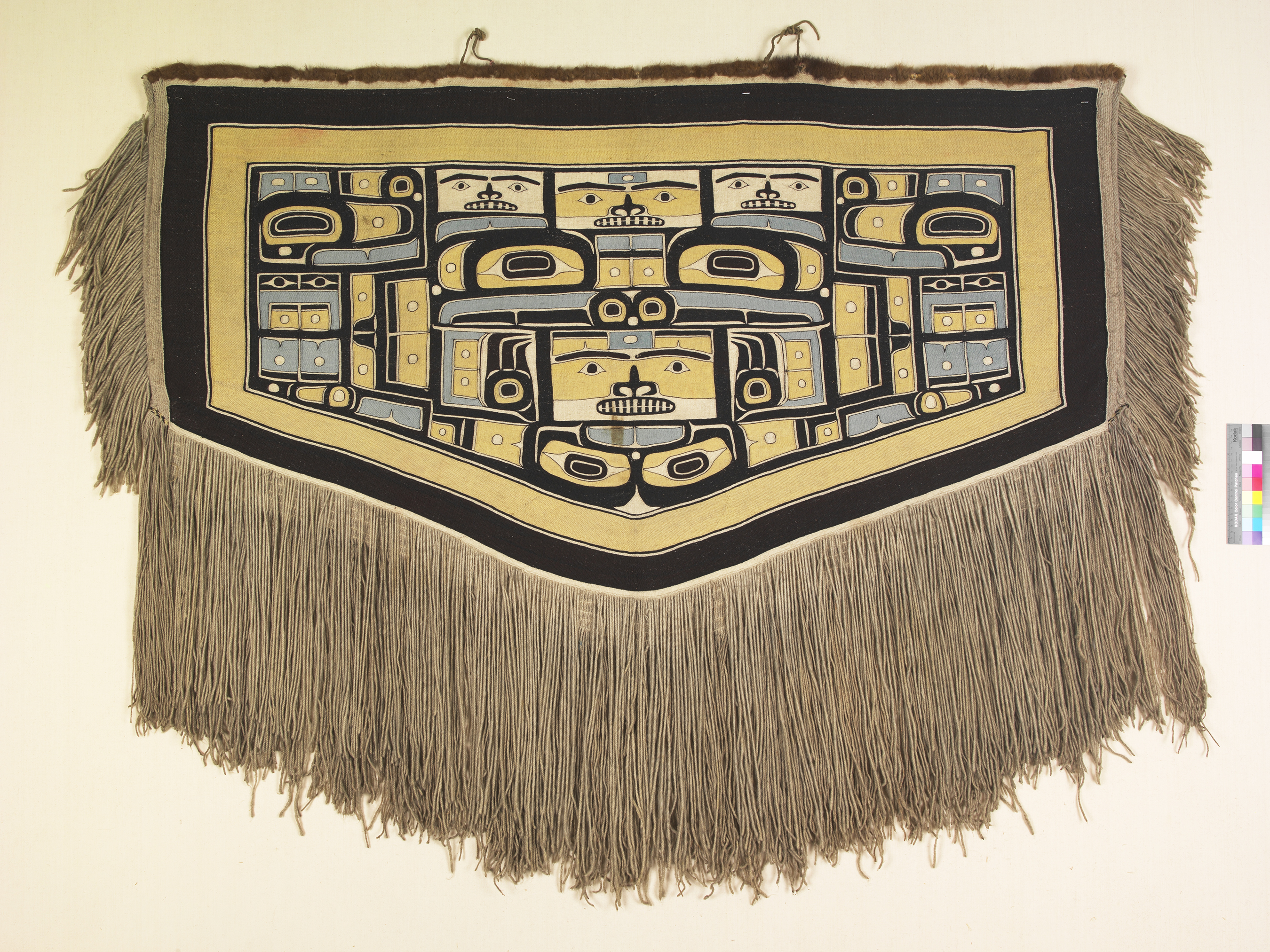
Sartorial Society Series, Week 3: Place Making 7 April, 2022
(20-minute paper)
Abstracts
Succès de Scandale: Homophobia, Racism and Abject Marketing in Fashion (2021)
Queer Studies in Media & Popular Culture
Abstract:
Succès de Scandale, the manipulation of outcry over the deliberately shocking, has been used frequently to garner notoriety and fame in the past. Currently, fashion brands are notorious for dropping crypto-offensive items into their marketing and then backing off with a meagre apology when customers react with legitimate offence. Social media hashtags generate viral visibility, and the associated brand is amplified exponentially. Engaging in this dance between the edgy and the truly offensive becomes tactical for brands to appear ‘cool’, and to push back against notions of the ‘politically correct’. However, as consumers become increasingly inured to the abject, brands go to ever-greater lengths to generate publicity they hope will translate to higher sales. Shocking visual tropes become increasingly provocative to engage the online masses, moving into dangerously racially charged and homophobic territory at times. Offensive? Certainly. Of larger concern, though: are there deeper consequences to reckless dissemination of scandalous content?
Full article is here: https://www.ingentaconnect.com/content/intellect/qsmpc/2021/00000006/00000002/art00006
Y Sin Embargo Te Quiero” (And Yet, I Love You): An Ethnographic Study of Economic Policy and Colonial Hegemonies Encoded in the Recommodification of Used Garments (2021)
Textile the Journal of Cloth and Culture
Abstract:
The colonial project of redistributing secondhand clothing globally can be seen fully realized in the current manifestation of the trans-global distribution of secondhand garments. In Havana however, the Clandestina brand brilliantly subverts this process. Their products are made up of old t-shirts and garments that originated in North America and Europe and were purchased cheaply through government-run Cuban stores. These are then re-cut and re-sewn into stylish shapes and silk-screened with graphics that subvert the original messages of the t-shirts. This essay examines the history of secondhand clothing as well as the current impacts of the glut of secondhand goods. It also highlights the fledgling entrepreneurial movement happening in Cuba, wherein an independent business can be operated within a trade-sector, in this case: tailoring or dressmaking. Methodology examines the sociohistorical development of the modern used clothes distribution economy, and also includes an interview with the Clandestina designers. Examining in particular how they took a commodity that was completely devalued (dumped on another marketplace), and through their ingenuity and “revolutionary vision” created a product far more valuable than the original materials. By doing so, Clandestina has created a product that is uniquely Havanero, but ready to take on the world.
https://www.tandfonline.com/doi/abs/10.1080/14759756.2021.1909207
Traditional Weaving Cultures in a Global Market: The Case of Zapotec Weavers (2021)
The International Journal of Fashion Studies
Abstract:
Carpets woven in Mexico today use design elements found at historical sites in the vicinity of their manufacture, and local Indigenous weaving techniques function within an unbroken line of traditional familial wisdom. The weaving culture of the Zapotec Nation of Oaxaca now exists at the juncture of multivalent competing visual, economic and cultural mediators, which makes for a compelling case study to examine the impacts of globalization, as well as the preservation of creative and cultural autonomy. This article describes site visits to Zapotec weaving ateliers, and also examines the history of Zapotec weaving traditions, and contemporary community engagement within these (now globalized) processes. The methodology employed is an object-based exploration of a Zapotec weaving. Fieldwork was conducted in the winter of 2019. It included an ethnographic observation of master Zapotec weavers within their ateliers; an observation of the original design inspirations at pre-Columbian architectural sites; artefact observation at the Museo Textil de Oaxaca; as well as practice-led natural dye research. Textile weaving is a natural site for the study of political agency and ‘cultural citizenship’, as it functions within a structure that safeguards traditional knowledge, as well as collectivizes local labourers within production flows.
https://www.ingentaconnect.com/contentone/intellect/infs/2021/00000008/00000001/art00006
Browsing the Virtual Boutique with Baudrillard: The New Realities of Online, Device-Based, Fashion Design & Consumption” (2021)
3rd Special Issue: In Pursuit of Luxury Journal in collaboration with the Journal of Design, Business & Society.
Abstract:
Contemporary engagement with fashion is with slick simulacra, daydreams, and digital fantasies; an impossible promise of a beautiful, de-corporealized perfection. The virtualizing of fashion consumption has in turn dematerialized garments completely. Although late to the party, the consumer engagement with online luxury fashion has grown exponentially. Extremely expensive items are now purchased before they are engaged with physically. Therefore, within the new realities of device-based, fashion design and consumption, the “wow” factor and virtual considerations are paramount. There should be no surprise though that these garments align so closely with our taste, our consumption habits, and our life patterns, they have been designed to do just that. In this research through observation of a garment that was virtual before it became physical, the ascendant contemporary structure of modern fashion retail is analyzed. This research explores how physical aspects of clothing have been de-valued by the technology of modern capitalism, even as the importance of the “look” has ascended. Another important aspect of the research is the seductive aspects of the marketing of fashion goods. The methods of procurement in addition to the physical characteristics of the object itself undergo a close analysis; how we as consumers are shaped by our methods of consumption as much as by our goods now. This research uses an object-based method, a process wherein both intrinsic and extrinsic information can be gleaned from the close examination of a garment; as well as an interview with a fashion journalist who witnessed the re-organization of a leading fashion website into a retail portal. This data is then combined with relevant theoretical frameworks to form “grounded theory”. The dematerialization of the modern “boutique” that has now migrated online, the incipient forms of marketing to engage consumers, and ultimately the re-contextualization of the body and understanding of the self, all catalyzed by online consumption are considered. As garments are now as ephemeral and placeless as the mechanism for the acquisition, an examination of the manufacture and dissemination of fashion product is warranted; and this in turn provides a more nuanced understanding of the ontology of luxury garments as well as their consumption in the modern fashion retail agora.
https://www.ingentaconnect.com/content/intellect/dbs/2021/00000007/00000001/art00003
Rich Relations: The Evolution and Uneasy Symbiosis of Art and Fashion (2020)
Fashion Style and Popular Culture
Abstract:
From its earliest roots, art was used to codify and communicate what is fashionable, powerful and luxurious. Recently, however, through institutional mega art projects like the Fondation LV and the Fondazione Prada, fashion seeks not just to legitimize itself, but to position itself as patron-cum-collaborator. Up until now the art world has been happy to take the money, but has been ambivalent towards the commercialization that co-branding brings. However, as the highest grossing exhibits at hallowed cultural institutions – like the McQueen retrospective at the Met – have been fashion based. It seems, as of late, the fashion industry has gone past sponsorship and now seems to be colonizing the environs of the art world itself. These new imbrications hold significance for a broad range of related topics such as creative appropriation, feminist theory, and issues of gendered representation and power. As such, the politics of criteria for inclusion and collection must now become a necessary aspect of the dialogue within fashion, art and museum studies, and the thinking that situates them as discrete entities that exist within autonomous domains irrelative to each other also needs to be challenged. This article explores the cartography between autonomous art culture, fashion marketing, and fashion exhibition, and the increased blurring of their overlapping borders. It also looks at the commercialization of the museum and fine art institutional domain.
https://www.ingentaconnect.com/content/intellect/fspc/pre-prints/content-intellect_fspc_00048
“Sweetarts: The Politics of Exclusion, and Camping Out with Susan Sontag at the Met” (2019)
FASHION THEORY
“I have a confession to make, here, lean in a little closer, I’ll whisper it:
I went to the Camp exhibition at the Met, fully expecting not to like it…”
Abstract:
Camp, historically a coded communication of queer identity has been recently dragged out of the closet and into the limelight with the exhibition “Camp, Notes on Fashion” (2019) at the Metropolitan Museum of Art in New York. While a lot of the fashion that was on display was kitschy, and certainly fun and clever, some of it left the exhibition vulnerable to criticism that it was not actually Camp. Also, an exhibition like this while overtly very gay-positive brings up many issues about the packaging and presentation of queer culture. This essay involves a review of the exhibition itself as well as an examination of the criteria for inclusion or (sometimes deliberate) exclusion of key elements of Camp: the abject, consumerism, and queer liberation to name a few. As well as what self-appointed arbiter of Camp, Susan Sontag inadvertently communicated about her own conflicted relationship with what would eventually become queer culture in her 1964 Partisan Review essay “Notes on Camp,” which formed the theoretical bedrock of this exhibition. Research methodology employs “grounded theory” which seeks to broaden the parameters of “data” to include ethical concerns and the voices of non-dominant groups, who are traditionally excluded from economic evaluations, and normative mainstream concerns. Research methods involve an experiential review of the exhibition itself, as well as a deeper exploration of the themes on display, and an analysis of visual rhetoric and elements of queer political theory that were brought up by this type of display within this venue. As the definition of Camp is political, contextual and in a state of constant evolution, the examination of this in a museum setting provides a rich locus for analysis from queer, visual culture and social theory perspectives. In the spirit of the original Sontag article, a “Camp” list better situated in contemporaneity is also included.
Keywords: Queer theory, politics of representation, fashion exhibition, Susan Sontag, Camp
https://www.tandfonline.com/doi/full/10.1080/1362704X.2019.1687807
(Review) Beauty in a Box: Detangling the Roots of Canada’s Black Beauty Culture
FASHION THEORY
Beauty in a Box: Detangling the Roots of Canada’s Black Beauty Culture by Cheryl Thompson (Waterloo: Wilfrid Laurier University Press, 2019)
Abstract
With her recent publication Beauty in a Box: Detangling the Roots of Canada’s Black Beauty Culture, Dr. Cheryl Thompson provides an in-depth exploration of the history and evolution of the Canadian beauty industry, in particular focusing on hair products for black consumers, but within this analysis has also brought in relevant and timely discussions concerning: politics of representation, access to markets, and the machinations of capitalism within the beauty industry. She situates her research within cultural studies and her topics include advertising history, media studies, and histories of race and racism. Combining archival and anecdotal research she fills in a “gap in the historical record” to include the histories of pioneering black Canadian beauty entrepreneurs as well as the socio-cultural (and health) experiences of their customers. She also discusses the politics and implementation of marketing campaigns that created and advertised specific paradigms of beauty, with concomitant processes that required product-intensive regimes, and also criticized “natural” modes of personal care and presentation. By focusing on the economic and social practices of black Canadians engaging with the industrialized beauty economy—both local and multinational—Dr. Thompson has also provided valuable information around much larger normative societal practices regarding personal appearance and identity.
Full review from the Fashion Theory journal:
https://www.tandfonline.com/doi/abs/10.1080/1362704X.2019.1684058?journalCode=rfft20
Keywords: politics of black hair; Canadian black entrepreneurship; black feminism; Canadian fashion history; transnational beauty culture
“Sine Qua Non: An Exploration of a ‘Catholic Imagination’ at the Met” (2019)
Fashion Studies
Abstract:
Recently, the Metropolitan Museum of Art in New York, a hallowed cultural institution, was transformed into an ecclesiastical couture extravaganza through the installation of the Anna Wintour Costume Institute’s latest exhibition, Heavenly Bodies: Fashion and the Catholic Imagination. This exhibition showcased papal finery as well as gorgeous couture gowns juxtapositioned with icons from the Met’s collection in various galleries, some even installed within vitrines where fashion objects nestled right in beside antiquities. This exhibition went on to become the highest attended (and therefore also highest grossing) exhibition in the museum’s history, and while undoubtedly a beautiful spectacle, it also bought up relevant issues of didactic cultural display, the incursion of commercial interests in public institutions, and which voices are included and which are excluded from this specific display. Of particular note are some of the other messages that have been inspired by a Catholic “imagination,” both implicit and explicit, especially in how they relate to LGBTQ+ people and the original intentions of some of the designers. Ultimately, the exhibition inadvertently illuminates what is truly worshiped by a contemporary, urbane, non-believer living in a secular society: fashion. This paper is an exploration of some of the larger themes that are brought up when secular and religious iconography are brought together in a large-scale public institutional display, and also includes an experiential review of the exhibition by the author at both the Met 5th Avenue as well as the Cloisters locations.
Key Words: fashion theory; queer theory; museum exhibition; social justice; politics of inclusion; social value versus social justice
https://www.fashionstudies.ca/sine-qua-non
“Lux Perpetua: Future Pioneers Utilizing Historical Precedent as Design Innovation Within Fashion” Mark O’Connell (2019)
Textile the Journal of Cloth and Culture
Abstract:
Could the future of fashion be found in the past? As a result of the cumulative negative effects of over-consumption of fashion globally and the commensurate resource depletion this requires, as well as the sometimes catastrophic impacts on the laborers who make them, the accelerated pace of current fast fashion systems are now fundamentally unsustainable. There are however fashion producers who are putting sustainability at the forefront of their entrepreneurial ambitions and are focusing their formidable creative energies and expertise into incorporating re-use principles deeply into their design ethos, and developing no-harm, no-waste production models. Eileen Fisher and friends of light are both New York based garment manufacturers who are pioneering techniques that are in fact grounded within historical traditions: re-making garments and weaving to form respectively. This essay includes a description of the processes of these innovative design practitioners that was derived from site visits, and interviews with principles in both organizations and also includes a contextualization of the historical and philosophical antecedents of their respective operations. It also looks at the communication encoded in alternative paradigms of fashion production. Keywords: fashion sustainability, zero-waste fashion, ethical fashion, artisanal weaving, Eileen Fisher
O’Connell, Mark. 2019. “Lux Perpetua: Future Pioneers Utilizing Historical Precedent as Design Innovation within Fashion.” Textile: 1-18.
https://www.tandfonline.com/doi/full/10.1080/14759756.2019.1663573
Dr. Mark Joseph O’Connell (PhD Communication and Culture, Ryerson University and York University: “Mors Naviculam: The Globalization of Canadian Fashion through Trade, Policy and Regulation”; MA Fashion, Ryerson University; BA, OCADU) is a professor of fashion studies at Seneca College, Toronto, Canada. His research explores the potential for social justice reforms in transnational fashion production and supply chains, both from higher education and within public policy perspectives. His essays have been published in Fashion Theory; Textile: The Journal of Cloth and Culture; The International Journal of Fashion Studies; Fashion, Style & Popular Culture; Queer Studies in Media & Popular Culture and Fashion Studies. In addition to his academic work Mark is also an artist and writer, and prior to teaching worked as a designer both in-house at M.A.C Cosmetics and for his own clothing line Modular Menswear.
 markoconnellstudio