
Yam & Flaxmeal Bread (Bread Machine)
There are days when you want a hearty homemade loaf but also want a little extra nutrition baked in. I used some yam and blended it smooth with flaxseed using my Vitamix. The result was a soft, slightly sweet loaf with beautiful colour and a moist tender crumb.
If you do not have a powerful blender, definitely steam the Yam first in the microwave.
Because of the yam purée and flaxmeal, this dough is very sticky, which is completely normal, resist the temptation to add too much extra flour or the bread can turn (even more) dense. The bread machine handles the hydration perfectly and produces a moist, flavorful loaf that stays fresh for days.
Bread Machine Yam & Flaxmeal Bread
Ingredients
1 cup warm water
2 tbsp oil or melted butter
1 tbsp honey or sugar
1 tsp salt
4 cups bread flour (or all-purpose flour)
1¼ tsp bread machine yeast
1/4 Yam
I used the basic White loaf cycle on my Bread Machine
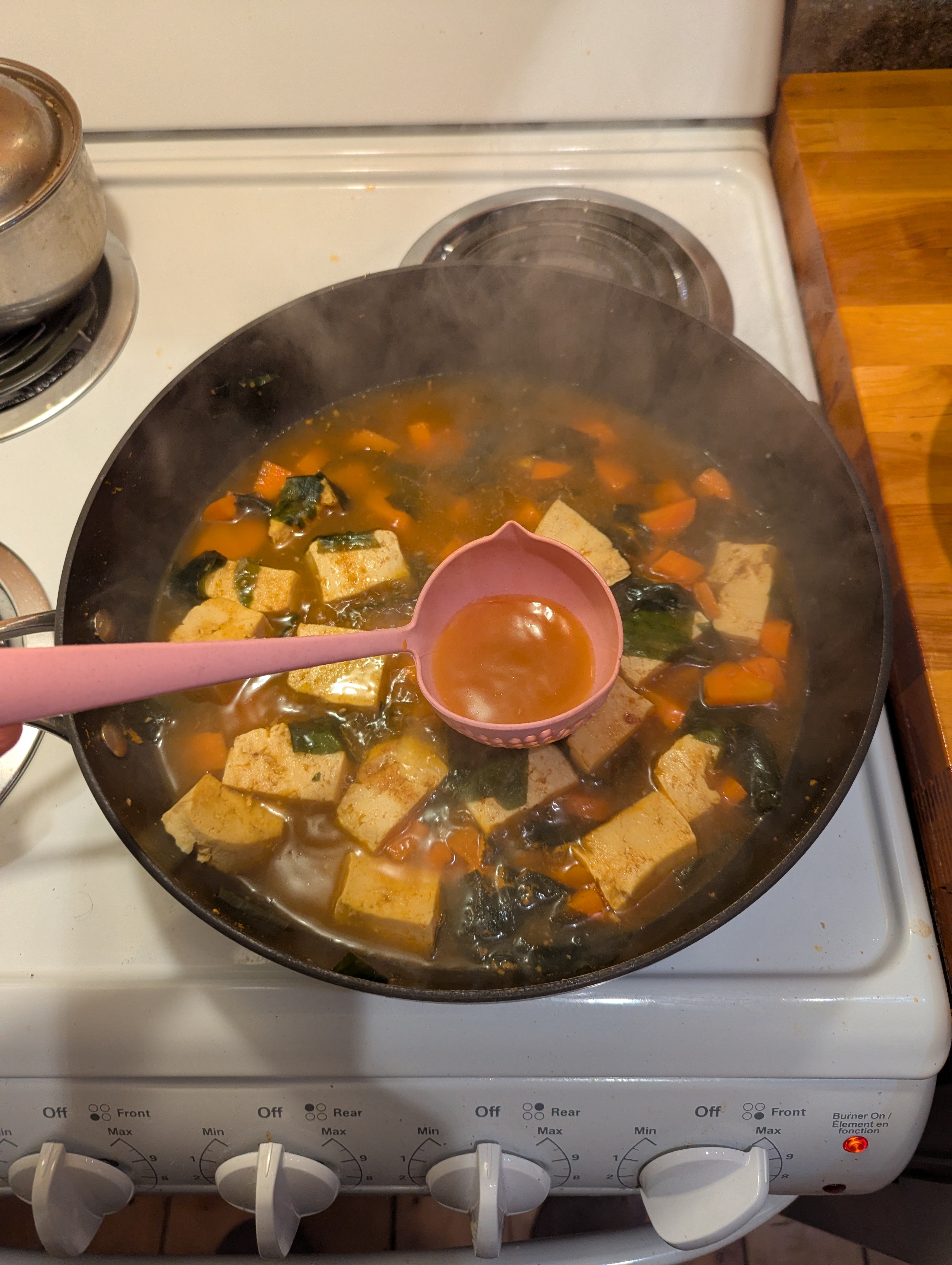
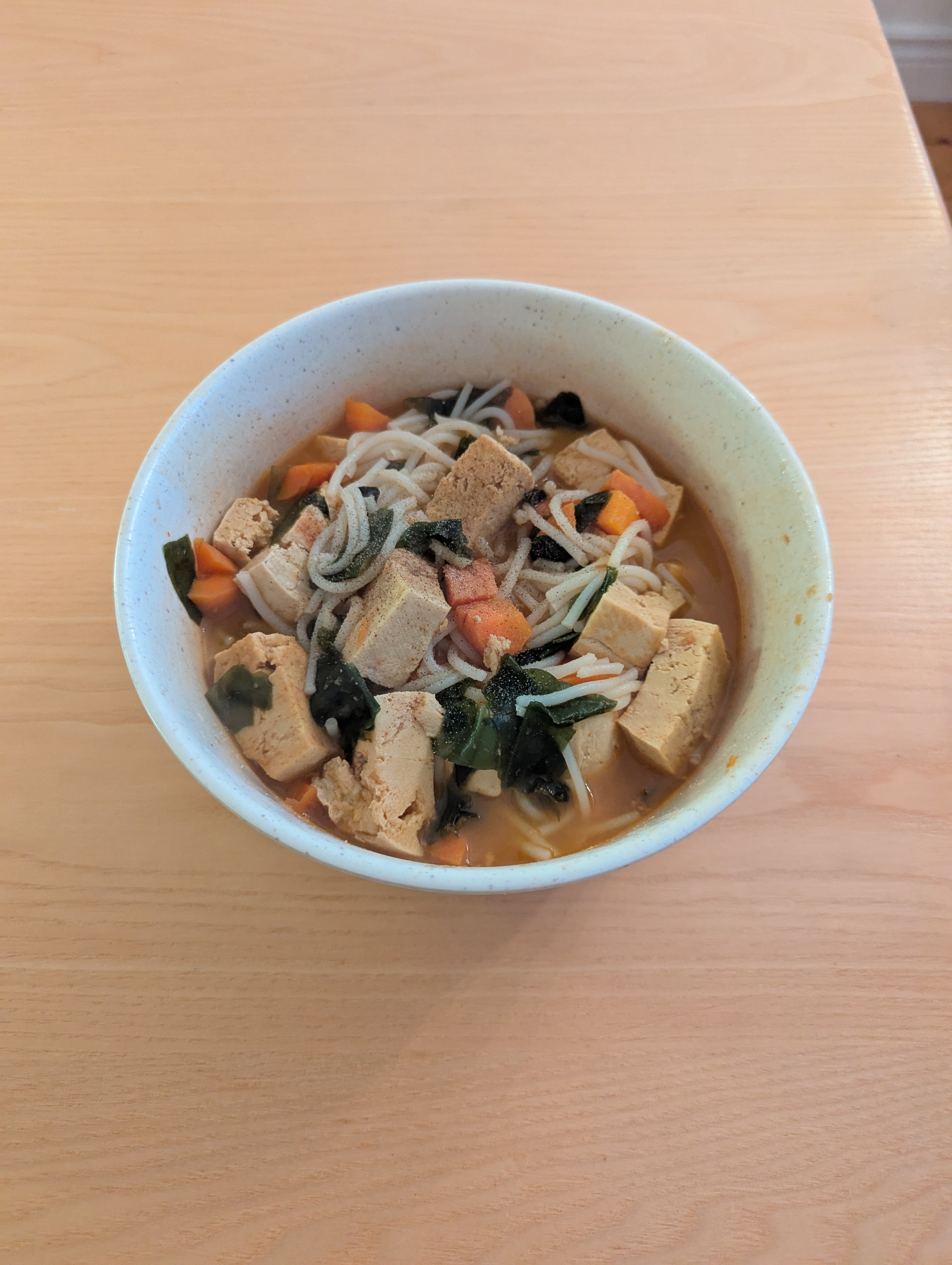
Snowy-Day Miso Red Curry Soup (Serves 2)
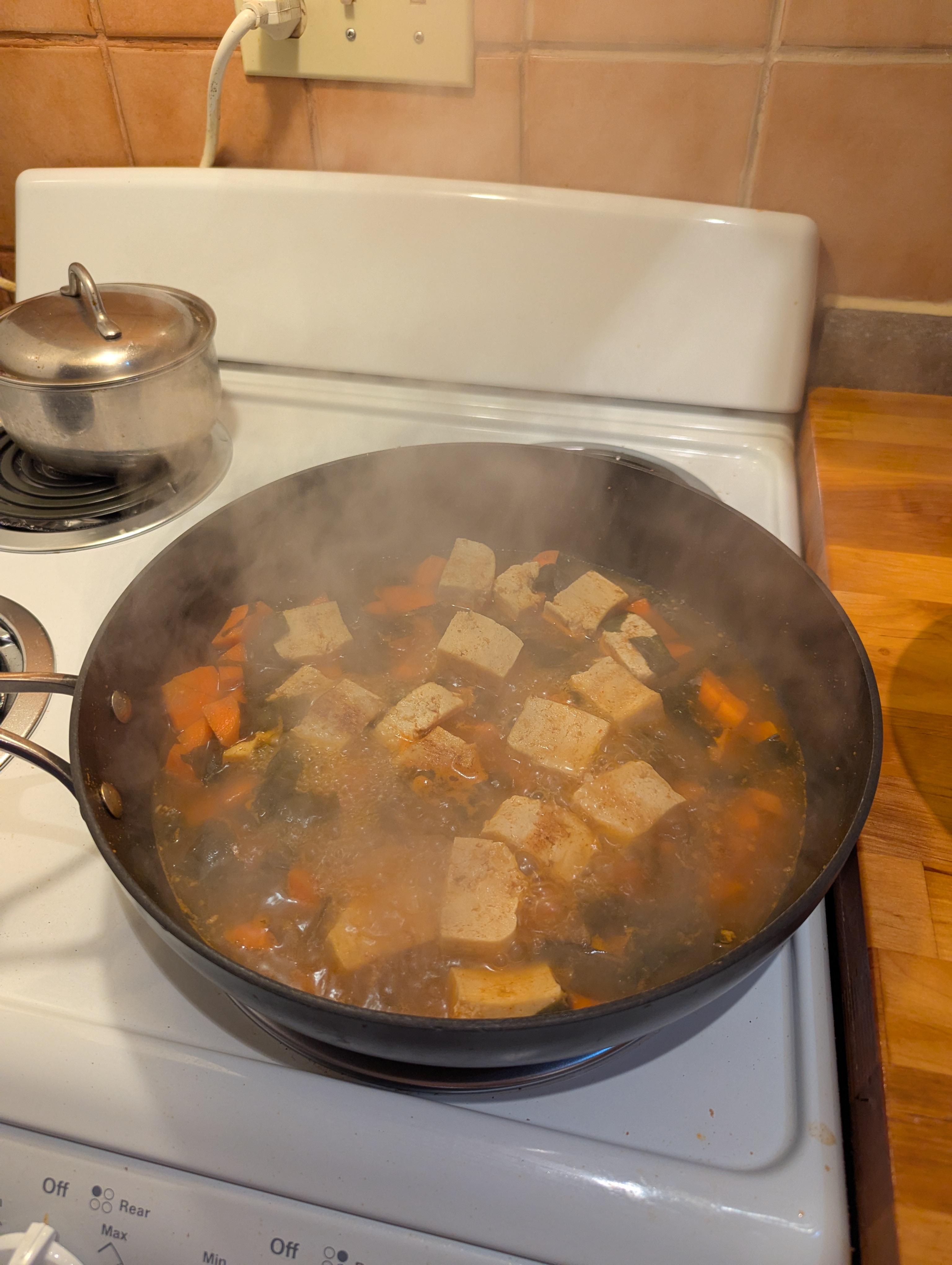
Some days just call for soup (most days actually lol). The kind of day when the snow keeps coming down, and you’re grateful to be inside with something warm bubbling on the stove. This miso red curry soup is my answer to a very snowy January day in Toronto: comforting, deeply savoury, and just spicy enough to thaw you out from the inside. It’s simple, flexible, and made with pantry staples: exactly the sort of bowl you want to wrap your hands around while the winter does its thing outside…and you don’t want to go outside!
A comforting bowl with chewy tofu, gentle heat, and deep umami…perfect when the sidewalks are buried under snow.
Ingredients
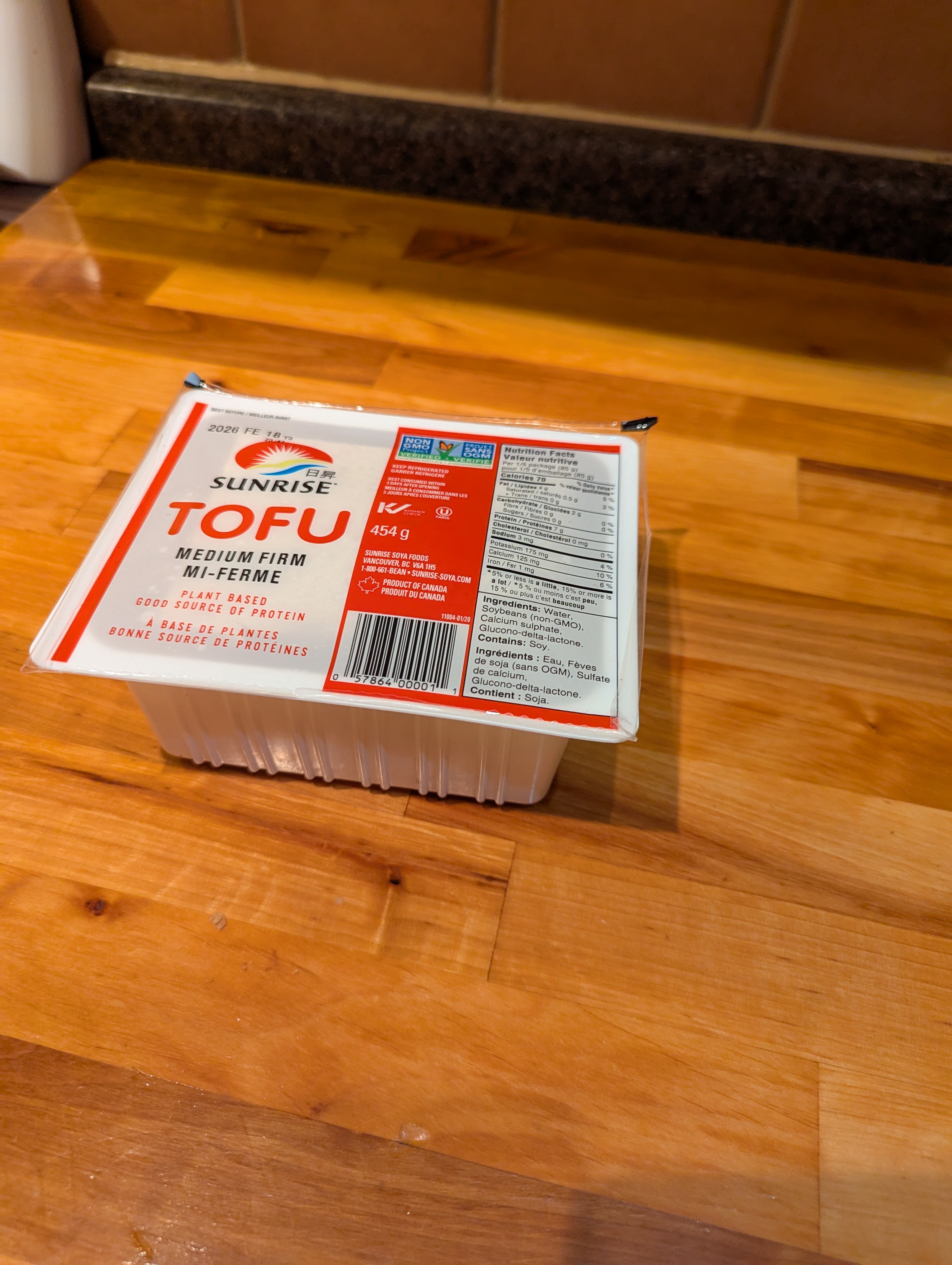
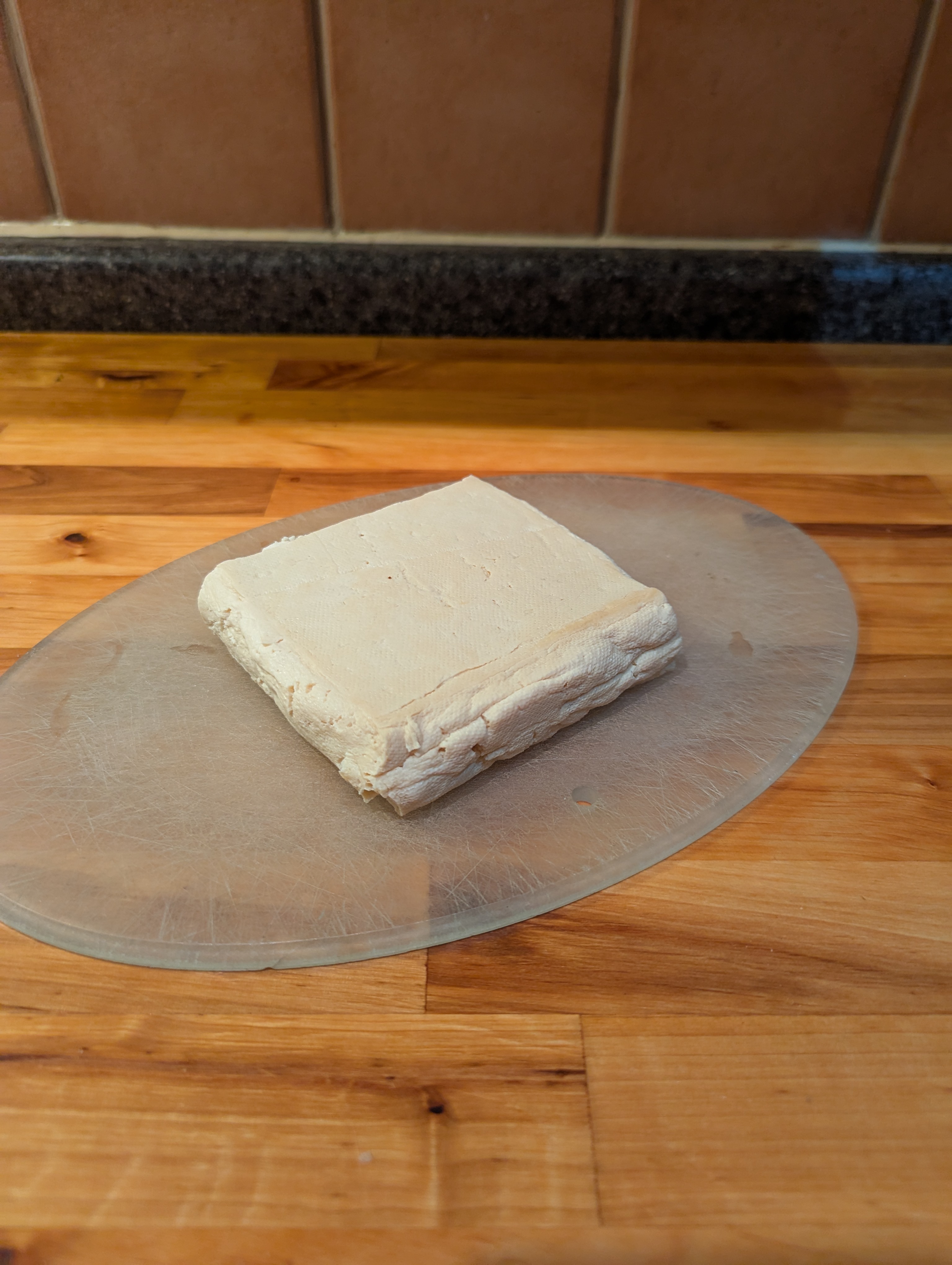
200–250 g extra-firm tofu, previously frozen and thawed
1–2 tbsp neutral oil (canola, grapeseed, etc.)
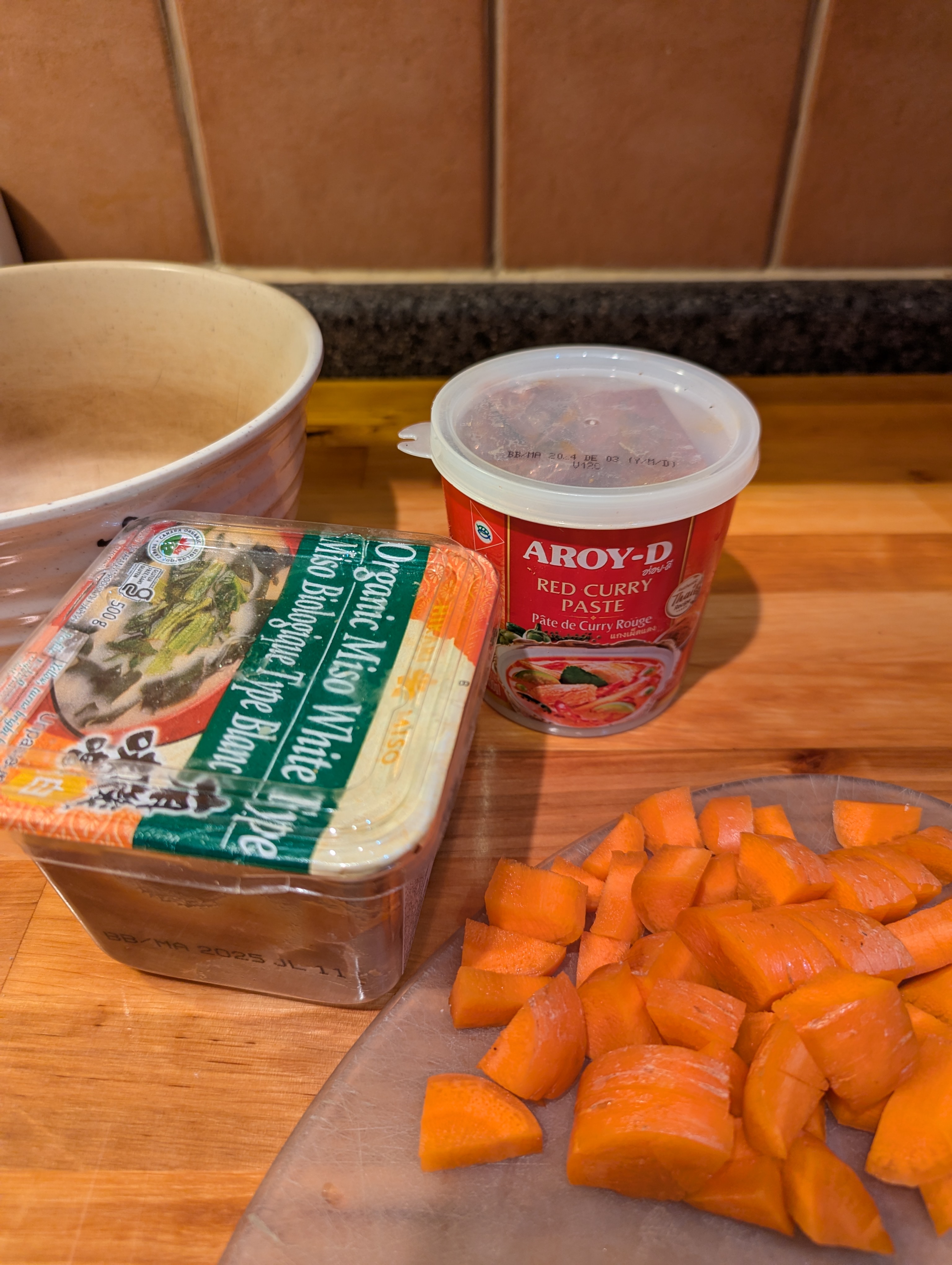
1 medium carrot, thinly sliced into coins or half-moons
3–4 cups vegetable stock (or water)
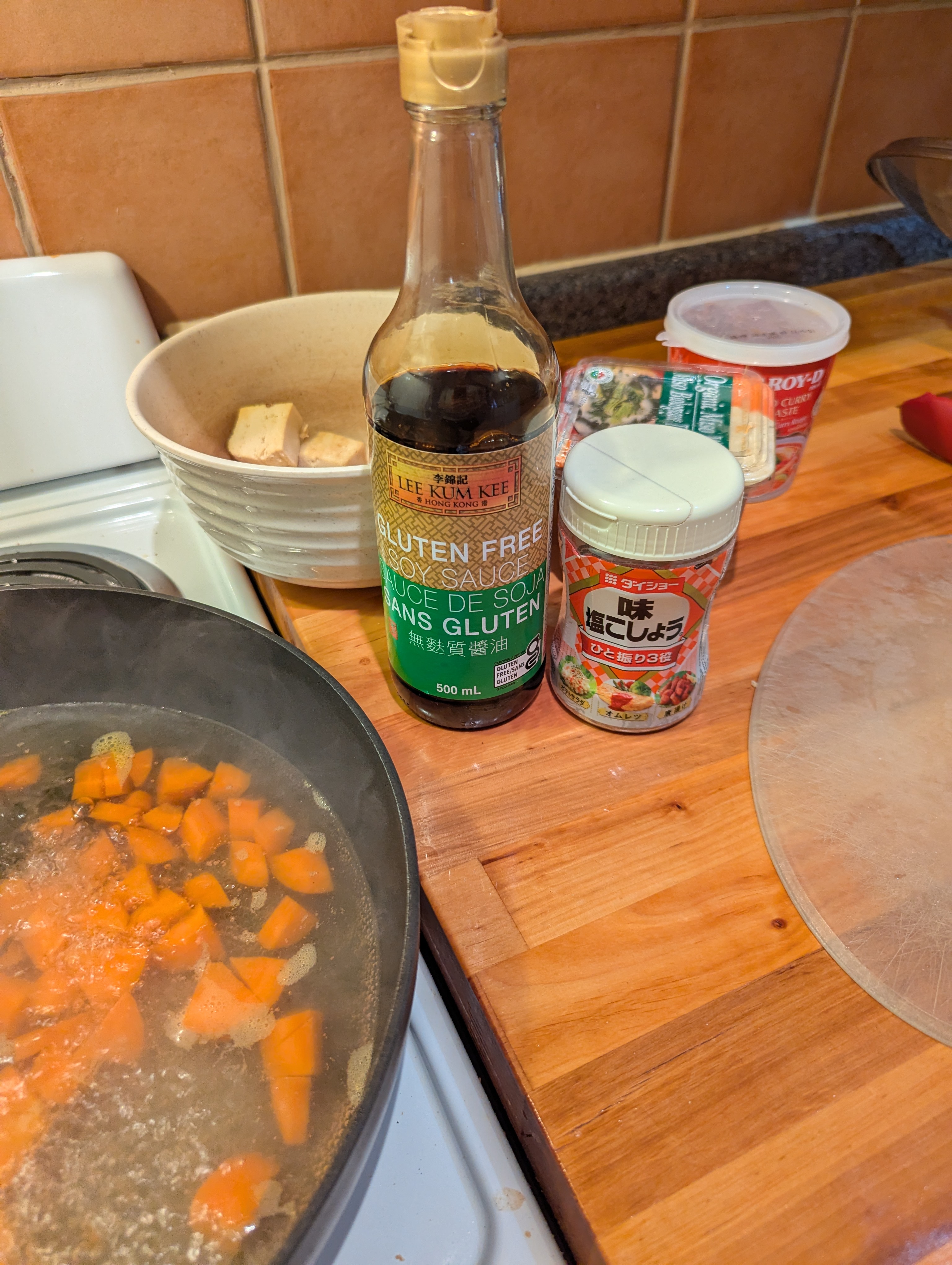
1–2 tsp soy sauce, to taste
1–2 tbsp red curry paste (adjust for heat)
1–2 tbsp white or yellow miso (or a mix)
1–2 tsp dried wakame (sea vegetable)
120–150 g noodles (rice noodles or ramen both work, I had cooked rice noodles on hand so I used those!)
Japanese pepper (sansho), for garnish
(black pepper or shichimi togarashi also fine)
Instructions
Prep the tofu
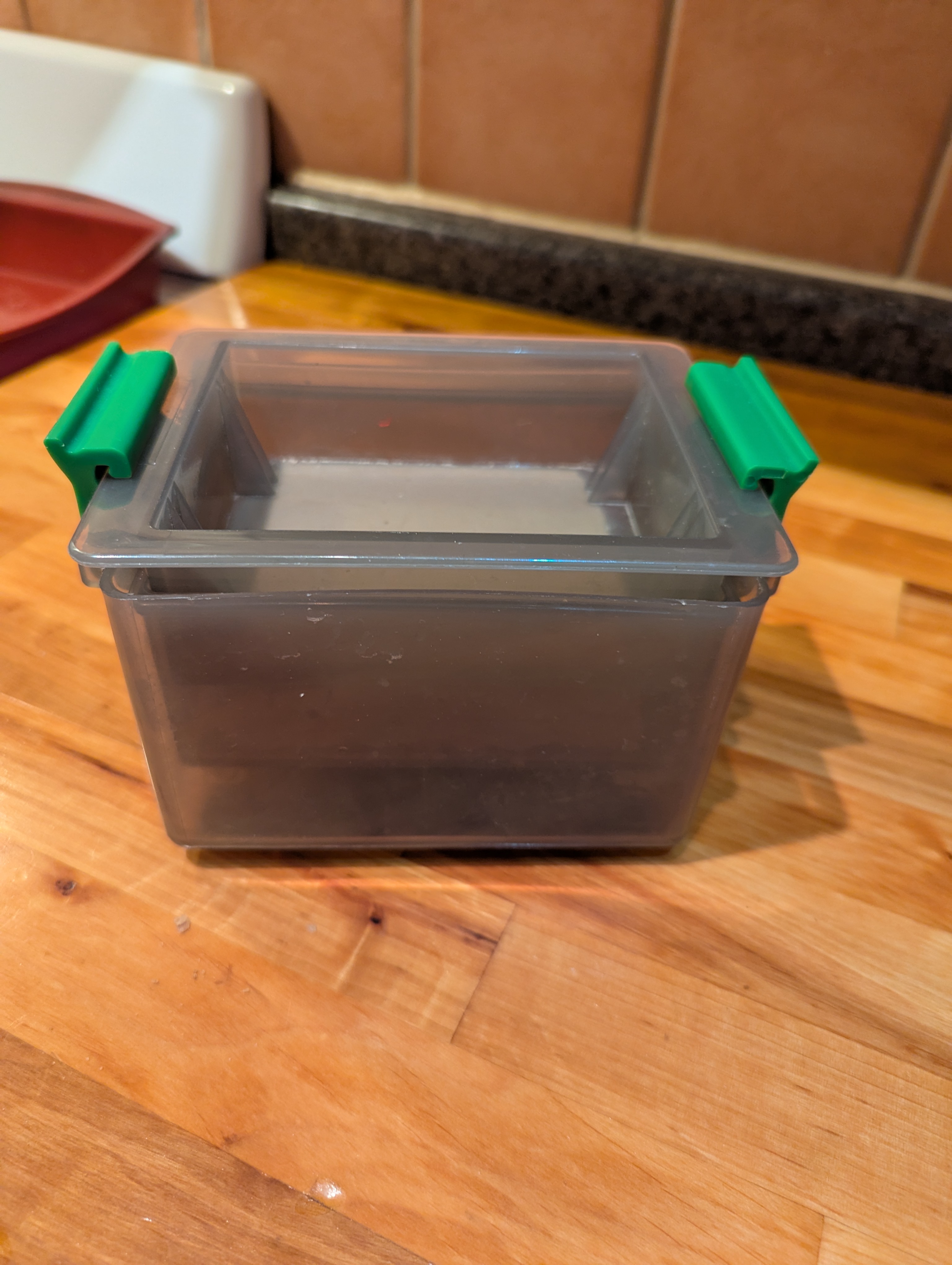
After thawing the frozen tofu, place it in a tofu press (or wrap in a clean towel and weight it) and press for 10–15 minutes to remove excess water.
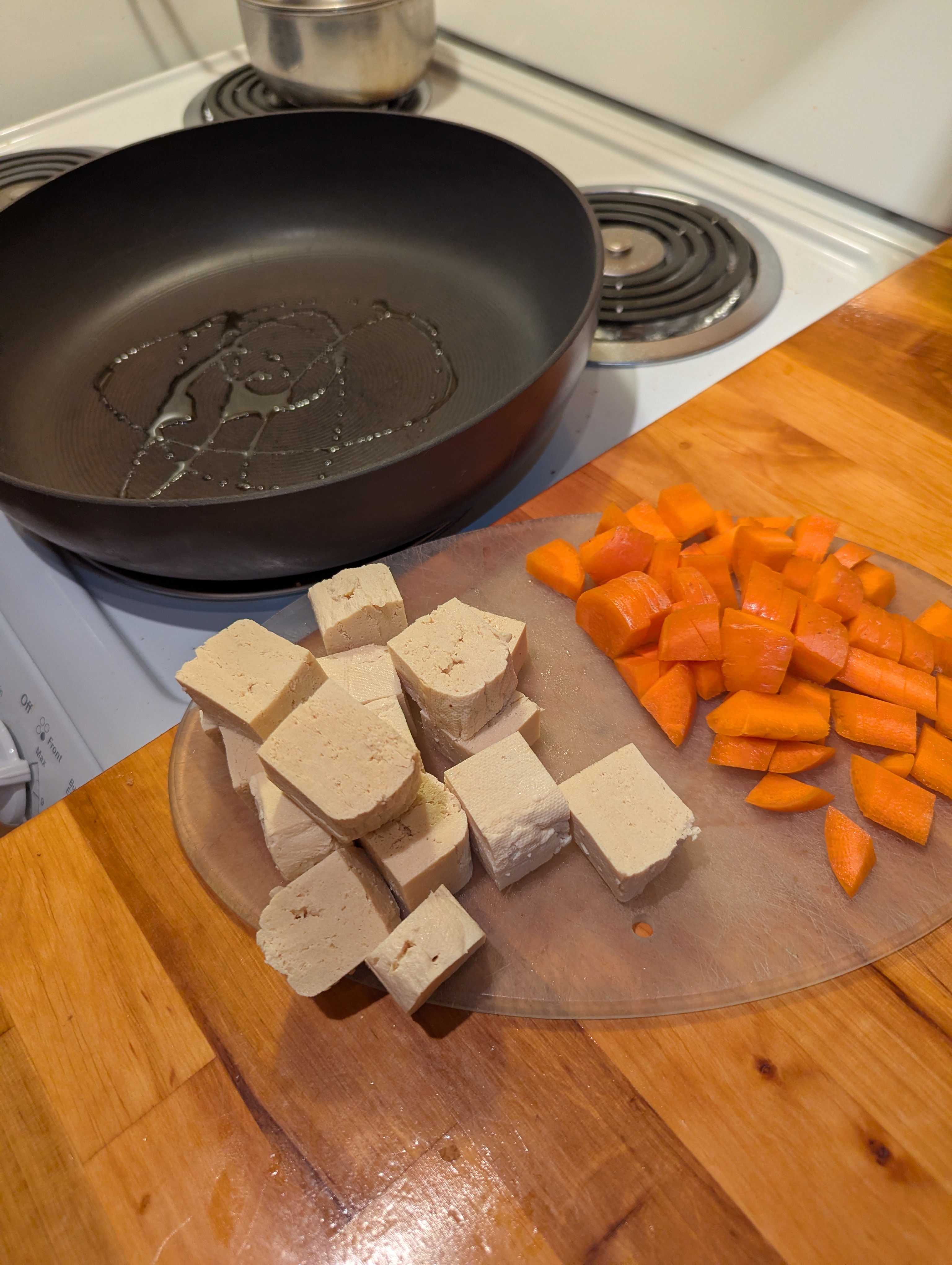
Cut into bite-sized cubes.
Sauté for flavor
Heat oil in a saucepan or soup pot over medium heat.
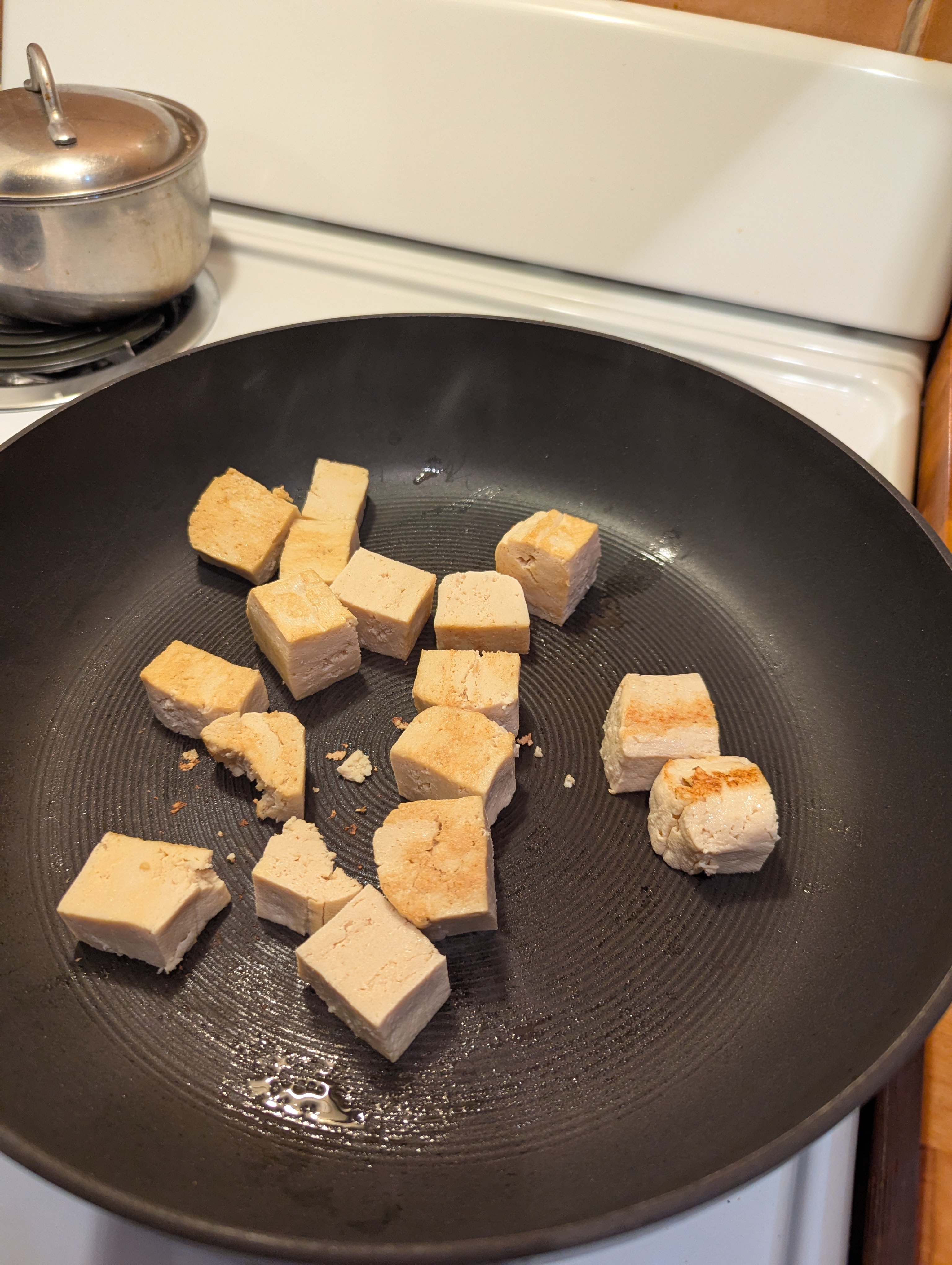
Add tofu cubes and sauté until lightly golden on several sides. This adds depth and a pleasantly chewy texture.
Remove tofu from the pot and set aside.
Build the soup base
In the same pot, add the carrots and sauté for 1–2 minutes.
Add vegetable stock (or water), soy sauce, red curry paste, and dried wakame.
Bring to a gentle simmer and cook until carrots are just tender, about 5–7 minutes.
Cook the noodles
Add noodles directly to the simmering soup and cook according to package instructions.
Add tofu back to soup.
Keep the heat moderate, no hard boiling.
Protect the miso (important!)
In a side bowl, ladle some hot (but not boiling) broth from the soup.
Whisk the miso into this broth until fully dissolved.
Gently mix the soup into this miso broth bowl, this keeps the miso from boiling and helps preserve miso’s fermented goodness.
Finish the soup
Turn the heat off or to very low.
Stir the miso-tofu mixture back into the pot. Taste and adjust seasoning if needed.
Serve
Ladle into bowls and garnish with a light sprinkle of Japanese pepper (sansho) for a citrusy, tingly finish.
Mark’s Cozy Extras
Extra snowy day? Add a drizzle of sesame oil at the end.
Want it heartier? Toss in mushrooms or napa cabbage with the carrots.
This soup is best eaten fresh, and miso always appreciates a gentle touch.
Add-in option 1: Mushrooms & Ginger (extra winter warmth)
Thinly slice a handful of shiitake or cremini mushrooms and add them to the pot right after sautéing the carrots. Let them soften and release their savoury goodness before adding the stock.
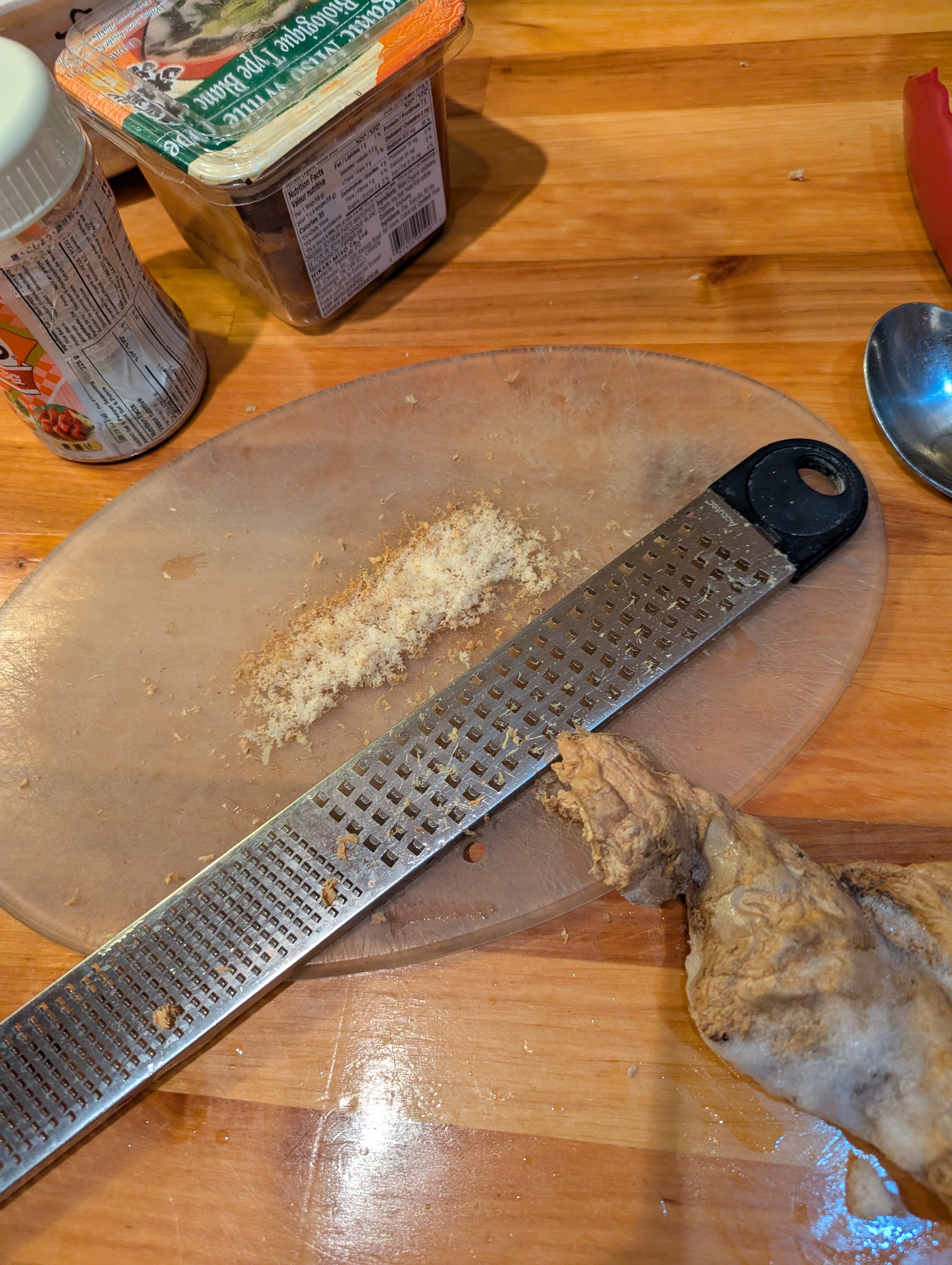
If you’ve got it, add ½–1 tsp freshly grated ginger with the mushrooms for a gentle, warming heat that plays beautifully with the red curry and miso.
Why it works: earthy, comforting, and perfect for achy-breaky cold-stiff bones.
Add-in option 2: Napa Cabbage or Baby Bok Choy (light but hearty)
Slice napa cabbage or baby bok choy and stir it in during the last 2–3 minutes of cooking, just before adding the noodles. It wilts quickly and soaks up the broth without turning mushy.
Why it works: adds freshness and balance, especially nice when the soup feels rich and you want a little green in the bowl.


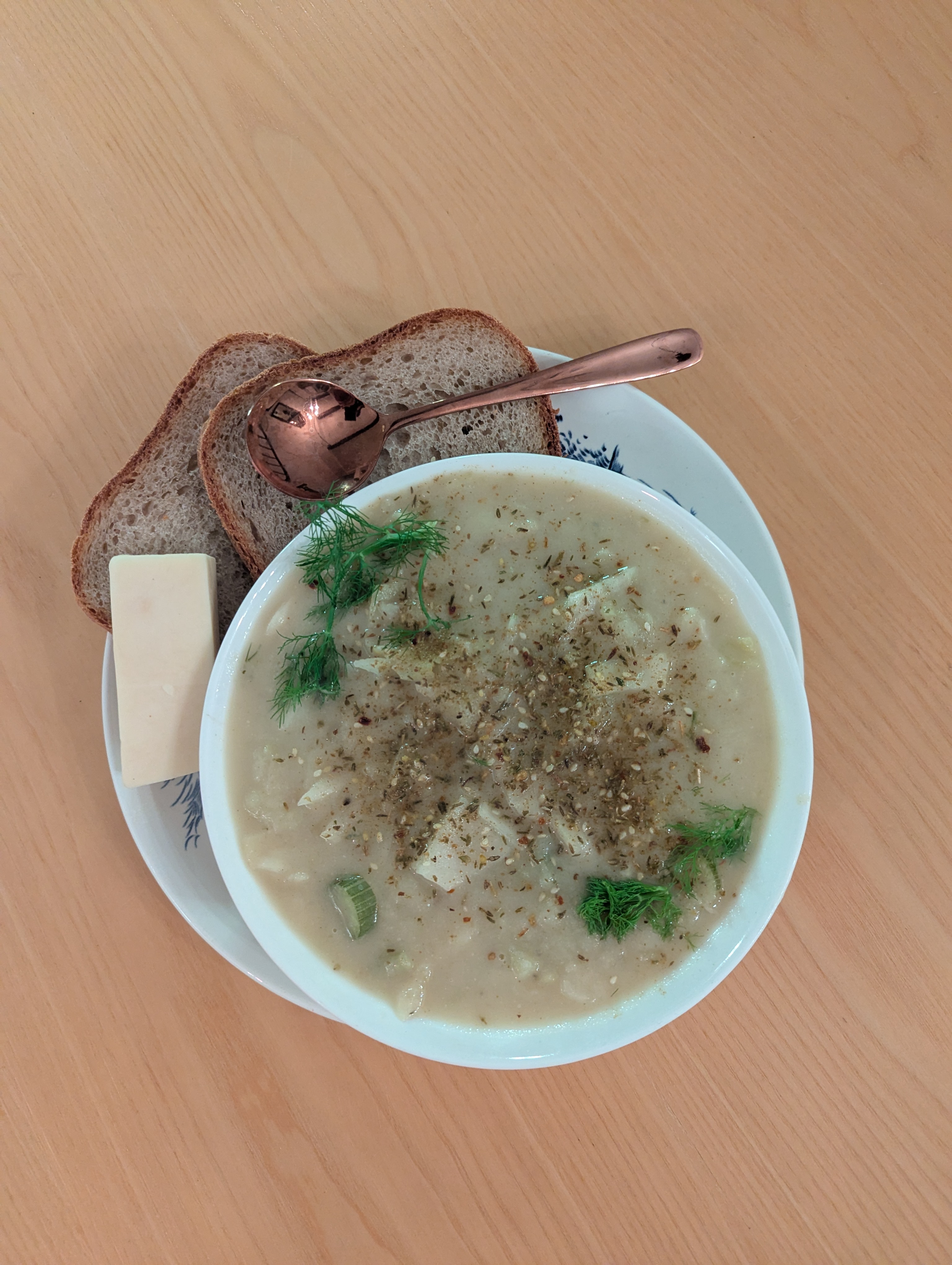
A Nourishing Midwinter Bowl: Mark’s Cabbage & Fennel Soup
Fennel is one of those ancient plants that wandered calmly through human history, quietly improving things as it went. Native to the Mediterranean, it was treasured by the ancient Greeks and Romans not just as food, but as medicine, symbol, and superstition. The Greeks associated fennel with victory and knowledge; Roman soldiers ate it for strength, while Roman cooks used every part of the plant: bulb, stalk, leaf, and seed, to bring brightness to otherwise heavy meals.
In medieval Europe, fennel hung in doorways to ward off evil spirits and was chewed after meals to aid digestion (a habit monks embraced enthusiastically during fasting days). Its mild licorice perfume made it especially welcome in colder months, when fresh flavours were scarce and soups were the backbone of daily life.
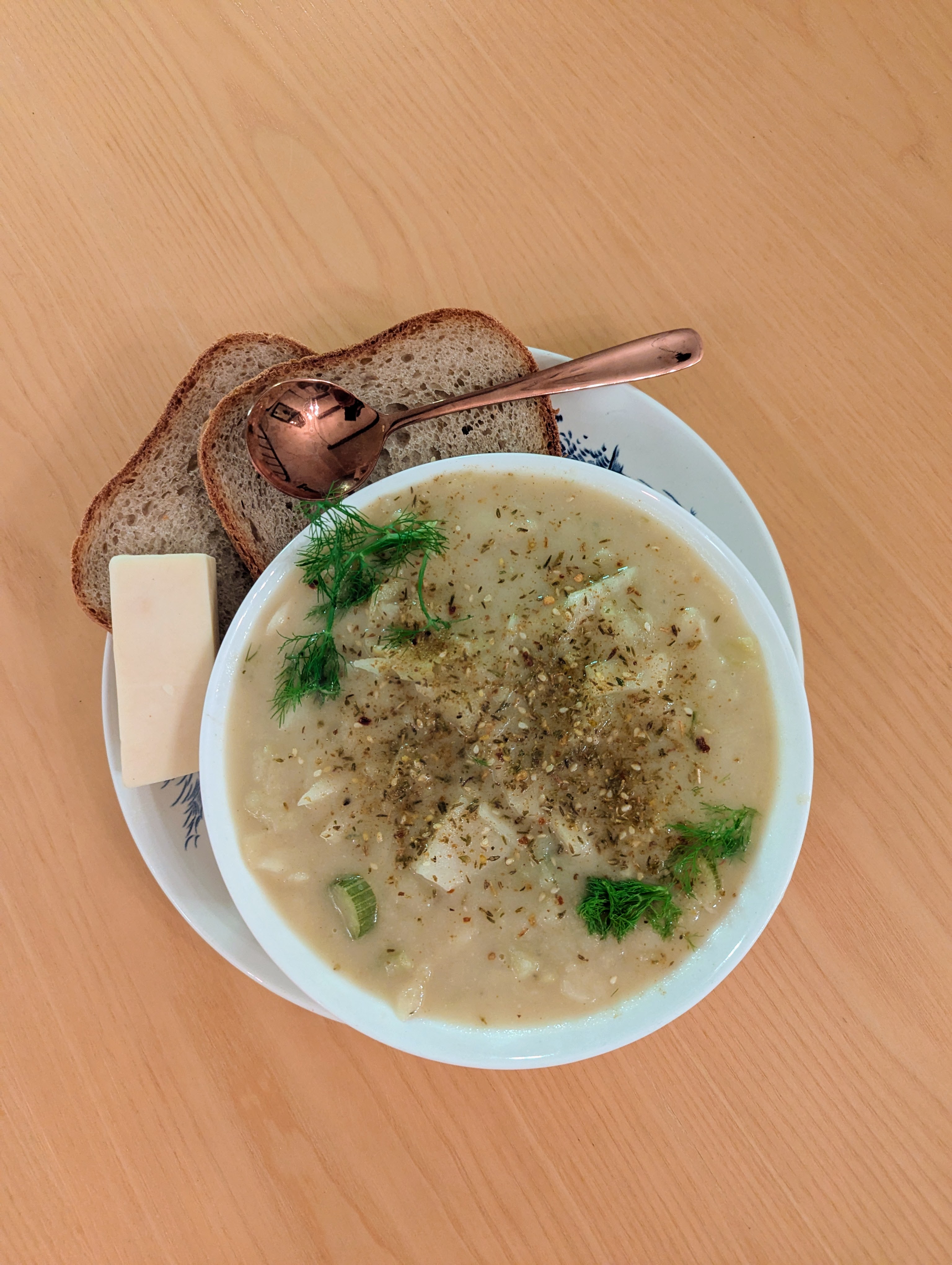
When winter is at its peak, my body craves warmth, grounding flavours, and easy-to-digest meals. This Cabbage & Fennel Soup is exactly that kind of comfort: nourishing, gently spiced, and packed with seasonal vegetables that support digestion and immunity
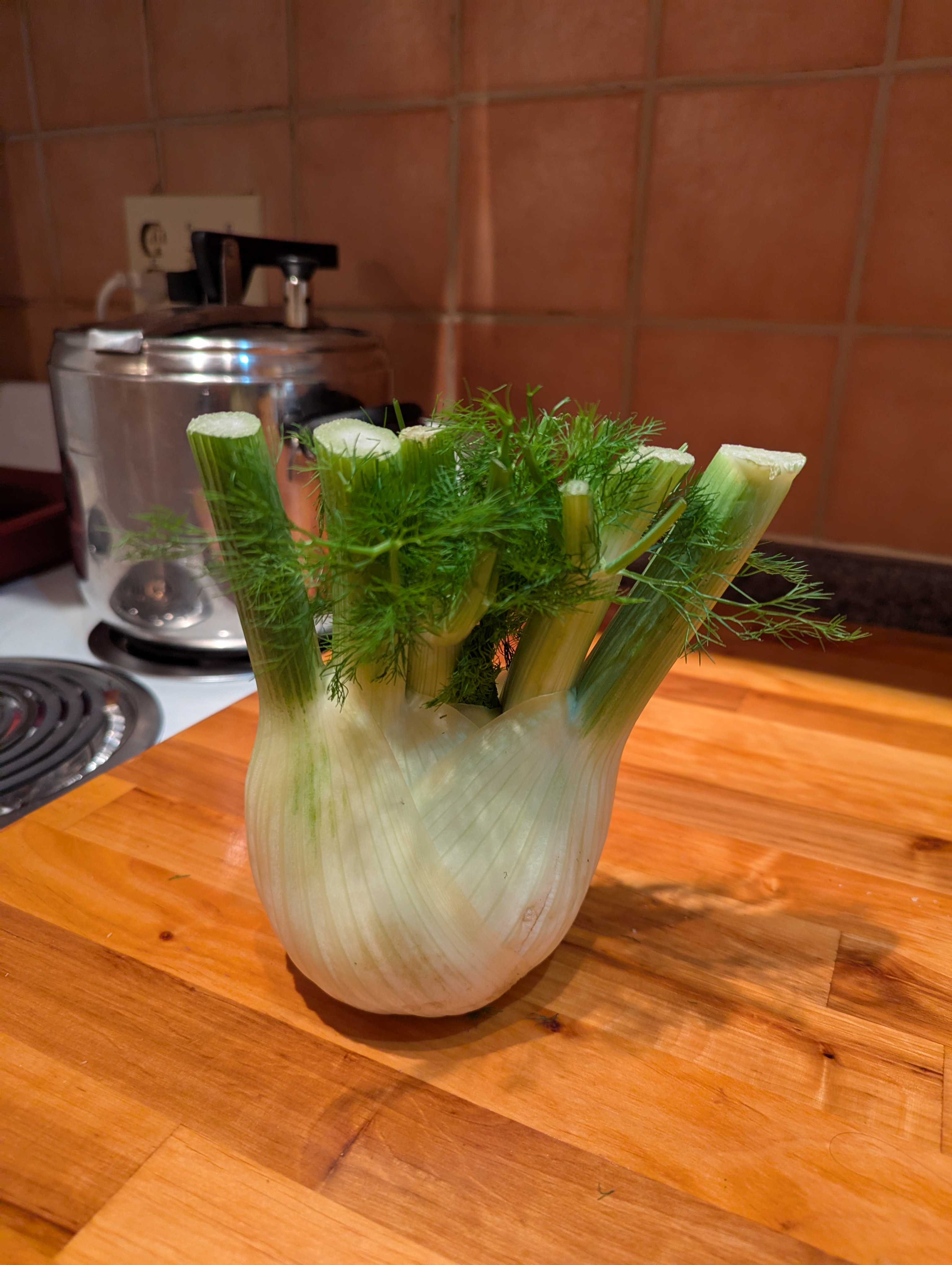
Cabbage provides fibre and gut-friendly compounds, and fennel brings a subtle sweetness that balances the spices beautifully. Ginger, cumin, coriander, and turmeric work together to warm the body from within, making this soup ideal for midwinter days.
Below are two versions of the same recipe: one made with chicken stock for extra richness, and one vegetarian using vegetable stock or water.

Ingredients
(Serves 3–4)
Sliced green cabbage – 2 cup s
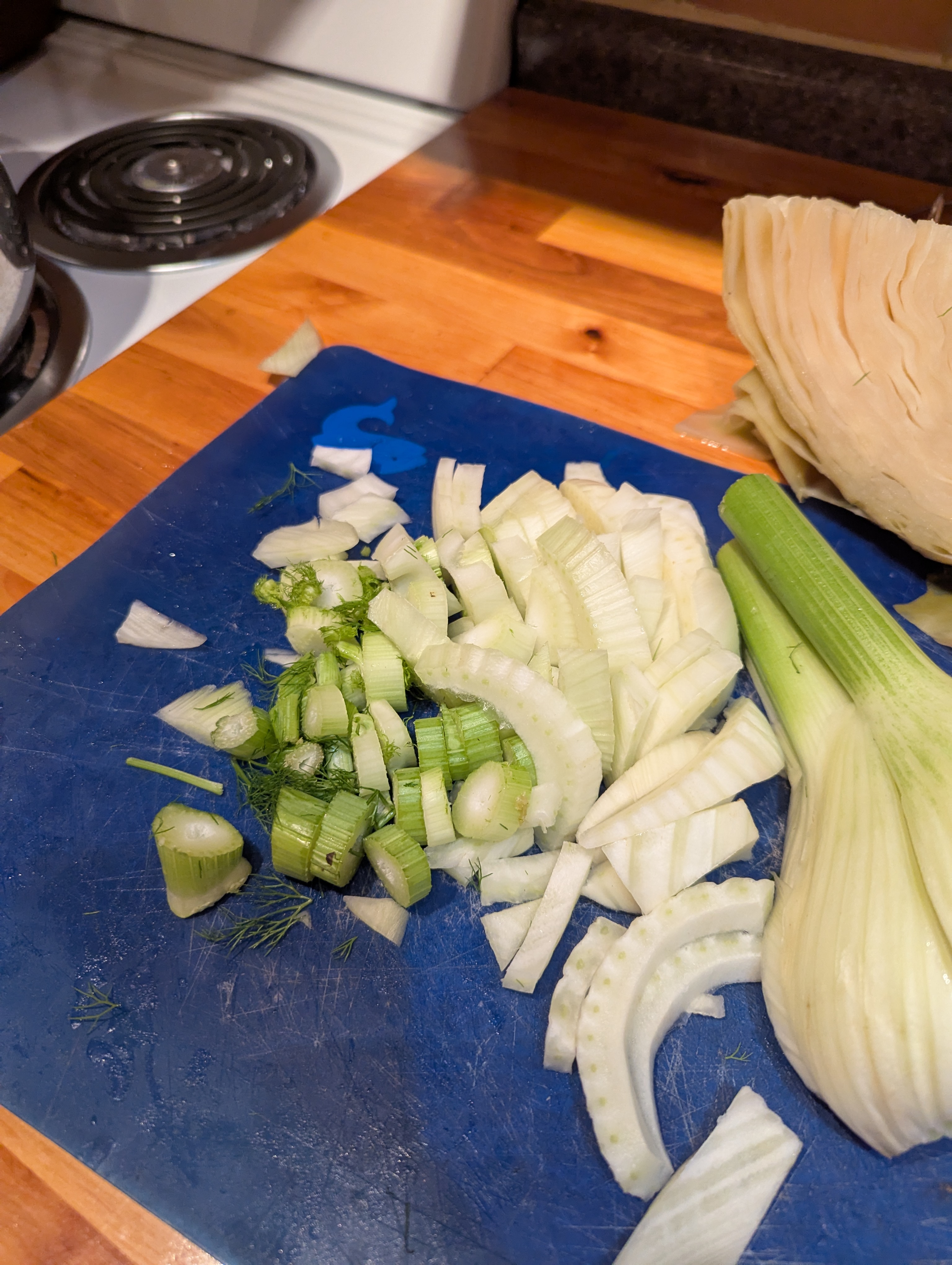
Sliced fennel (including stems & fronds) – 1 cup
Bay leaf – 1
Cumin seeds – 2 tsp
Ginger – 1 inch, crushed
Ground coriander – 2 tsp
Turmeric – 1 tsp
Zatar Seasoning
Green chili or jalapeño – 1, chopped (optional)
Oil – 2 tbsp
Salt – to taste
Version 1: Chicken Stock Cabbage & Fennel Soup
You’ll Need
Chicken stock – 2 cups (replace water)
Method
Heat oil in a heavy-bottomed pot over medium heat.
Add cumin seeds and let them crackle.
Stir in ginger and green chili; sauté for 30 seconds until fragrant.
Add , ground coriander, and turmeric.
Add cabbage and fennel. Sauté for 2–3 minutes to lightly soften the vegetables.
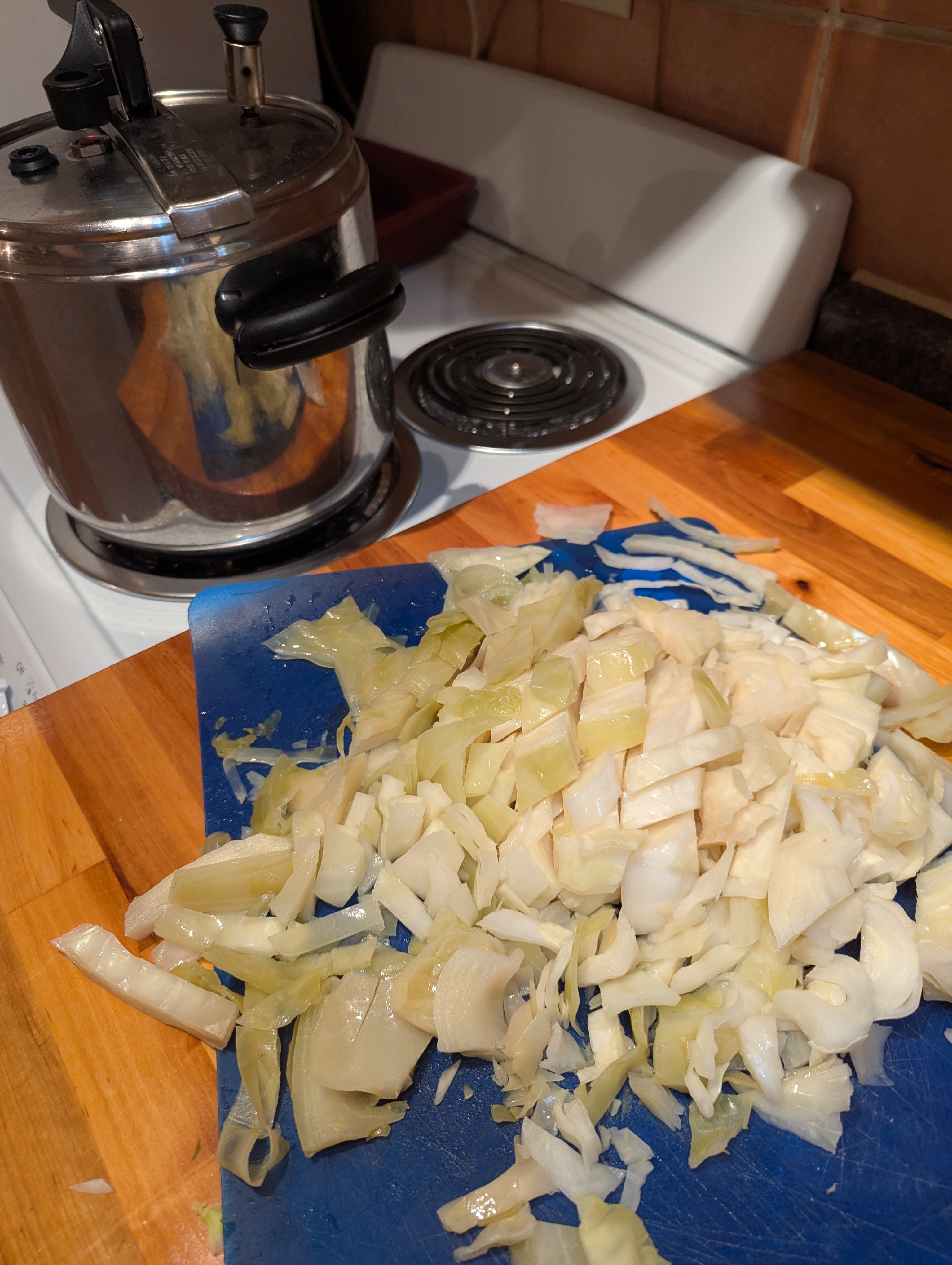
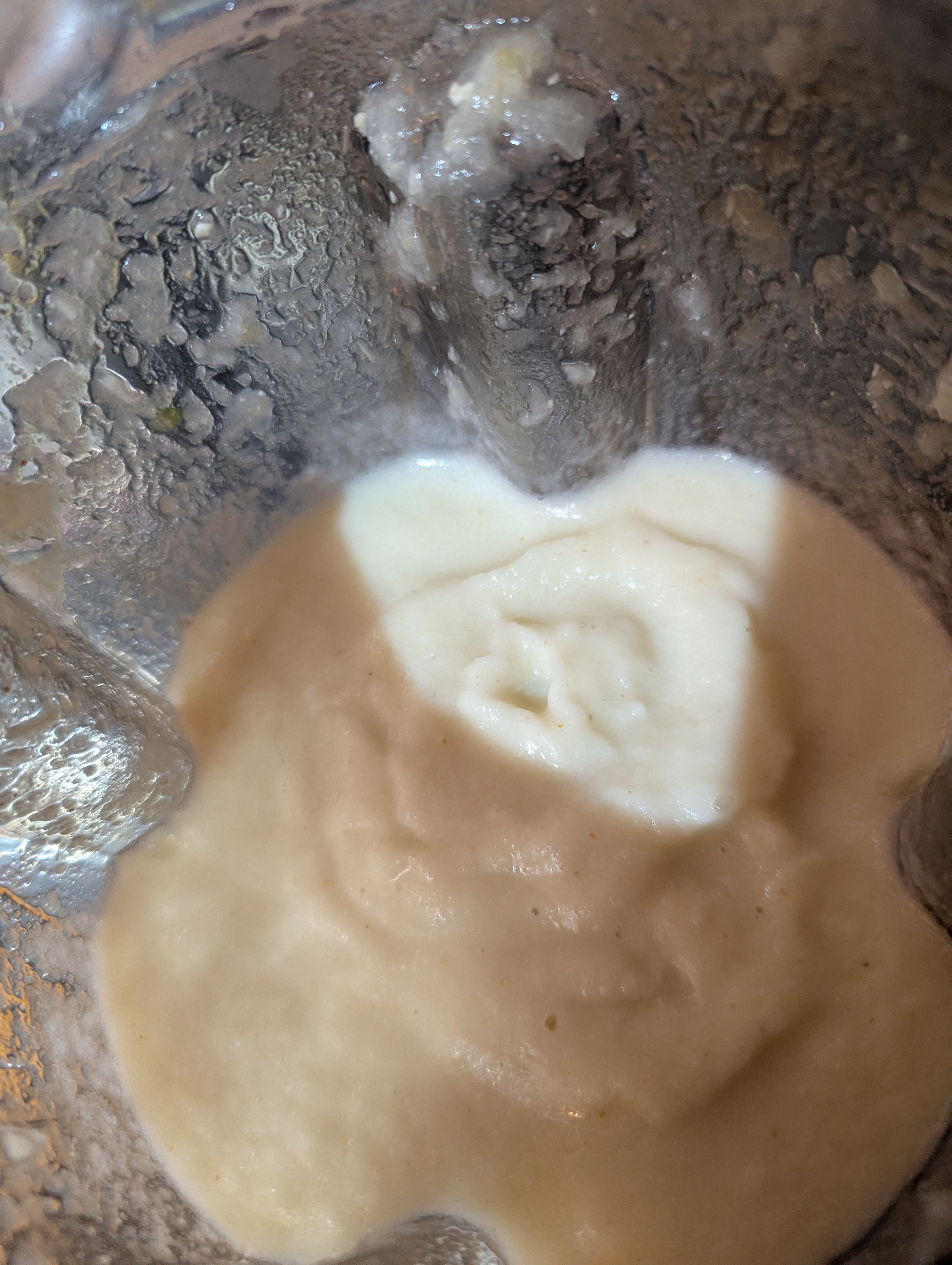
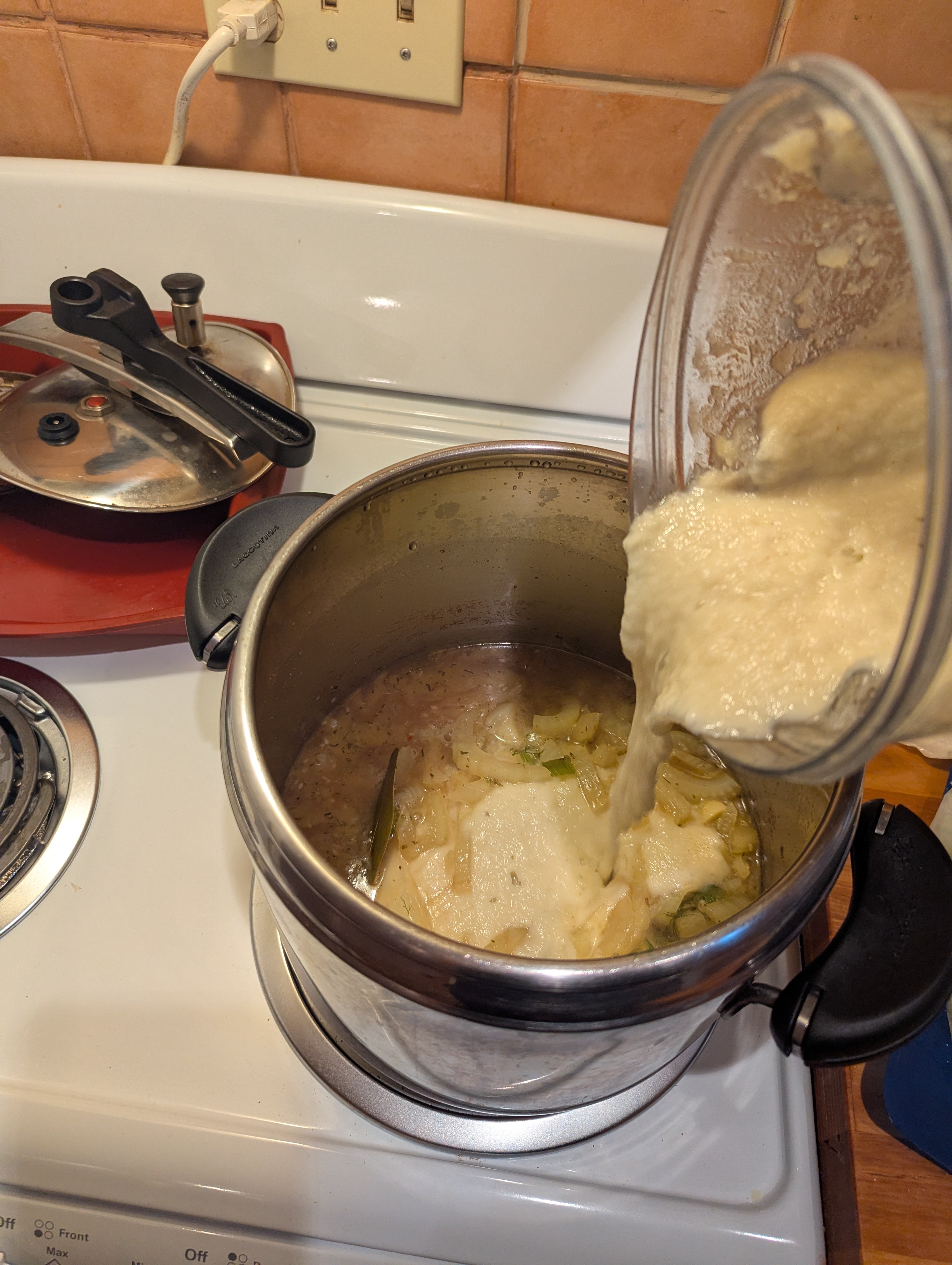
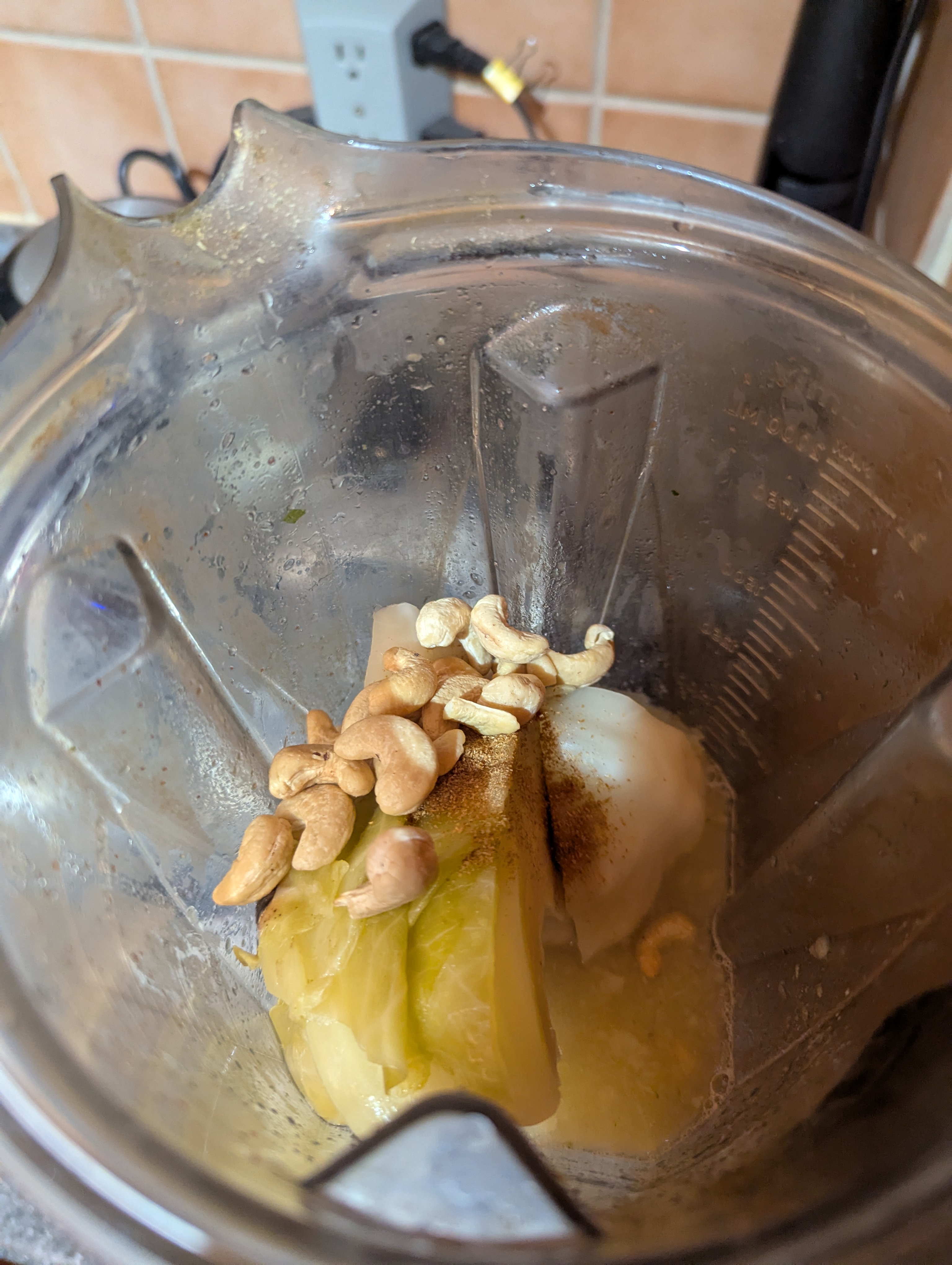
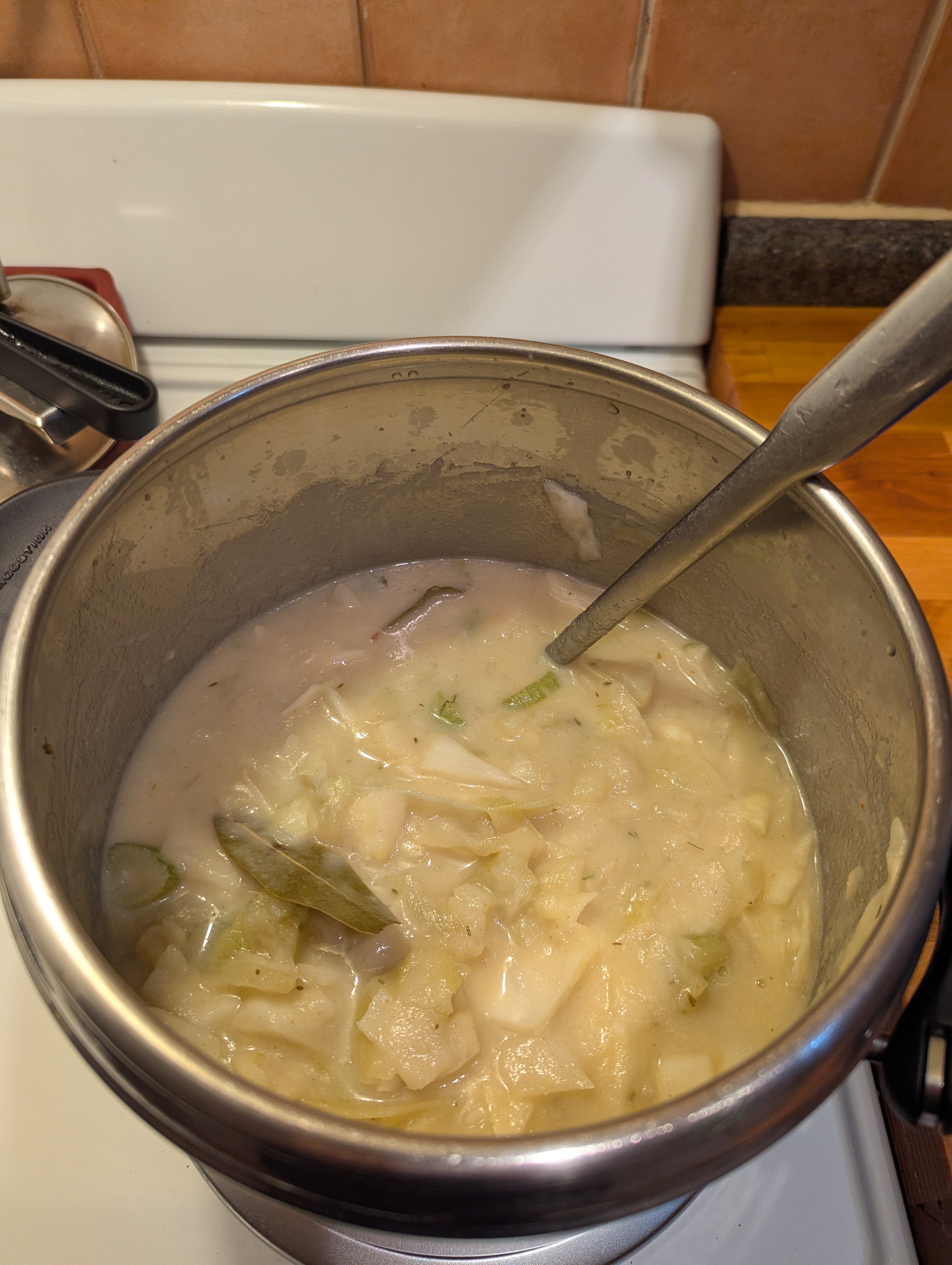
I pressure cook my cabbage first because I like it really soft and then add coarsely chopped Fennel because I like it crunchy. Also puree half the cabbage with a handful of cashews to make the soup thicker.
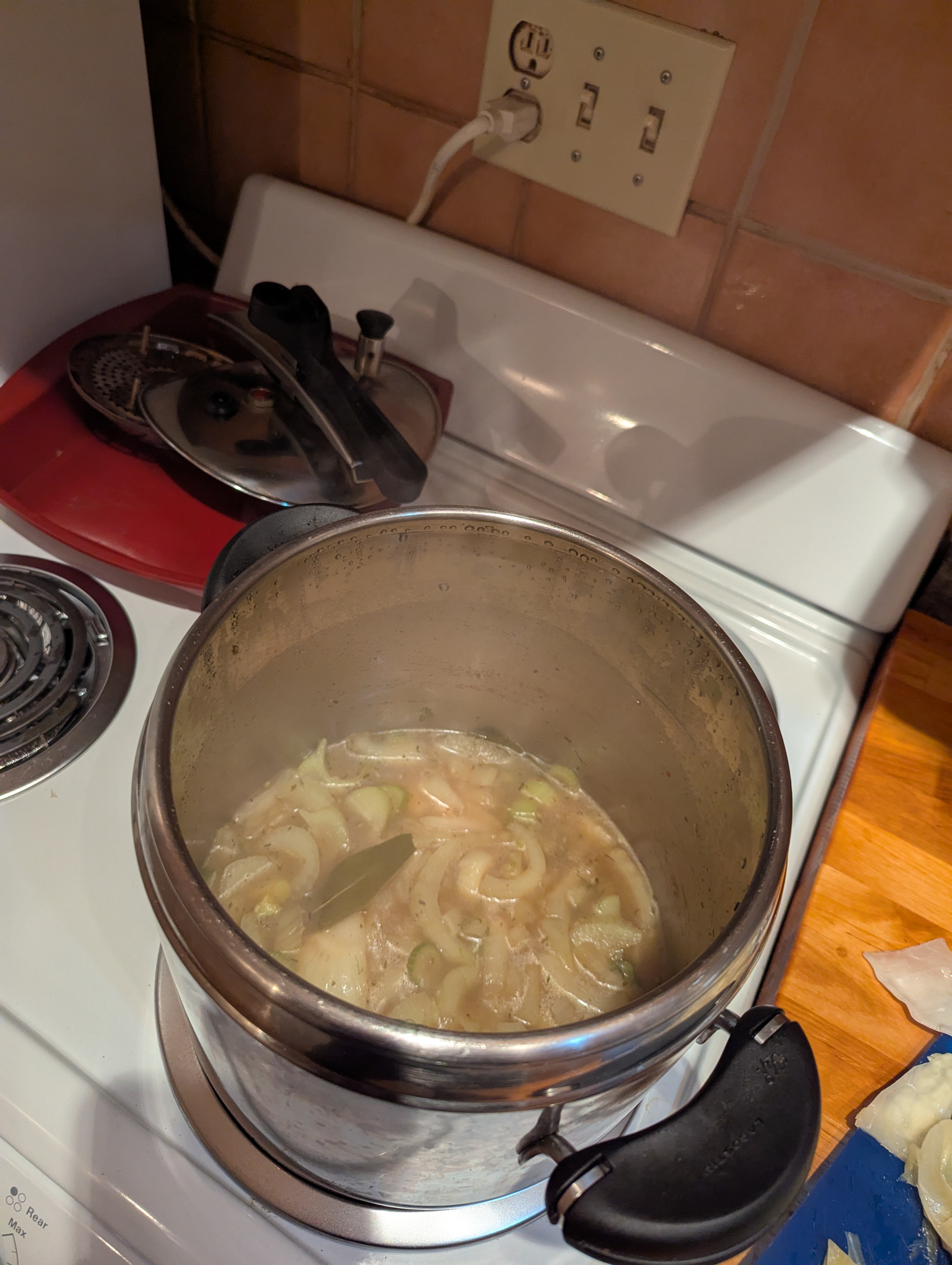
Add bay leaf, celery salt, and chicken stock.
Bring to a boil stirring constantly, then reduce heat and simmer uncovered for 20–25 minutes, until the soup thickens naturally.
Adjust salt and consistency (add a little hot water if needed). Remove bay leaf before serving.
Serving tip: Finish with cracked black pepper Zatar and a drizzle of olive oil.
Garnish with fresh fennel fronds.
Pairs beautifully with crusty home made bread.
Version 2: Vegetarian Cabbage, Lentil & Fennel Soup
You’ll Need
Water or vegetable stock – 2 cups
Method
Follow the same steps as above, replacing chicken stock with water or vegetable stock.
Za’atar’s history stretches back to ancient civilizations, where it was prized for both culinary and medicinal uses. Botanical remains of related plants have been discovered in the tomb of King Tutankhamun (14th century BCE), and some scholars believe the ezov mentioned in the Hebrew Bible and was used in ritual cleansing ceremonies, refers to za’atar or a closely related plant. In ancient Greece, physicians such as Hippocrates and Dioscorides prescribed za’atar for respiratory and digestive ailments, while medieval Arabic and Jewish medical texts, including those by Maimonides, further documented its healing properties. Across the ancient Middle East, za’atar was believed to enhance mental clarity and memory, leading to the tradition of children eating it before exams; it was also used in early perfumes and symbolized courage. Over time, za’atar evolved into the spice blend we know today, typically made from dried herbs such as thyme, oregano, or marjoram, combined with sumac, toasted sesame seeds, and salt.
https://en.wikipedia.org/wiki/Za%27atar
MARKOCONNELLSTUDIO Roasted Carrot Coconut Soup with Saffron & Spices
MARKOCONNELLSTUDIO Roasted Carrot Coconut Soup with Saffron & Spices
During the holiday season, when my calendar fills with late nights and tables overflowing with rich, lavish meals shared with amazing people, this soup becomes my reset. It’s the bowl I reach for when I want something grounding and nourishing without giving up comfort. Roasting the carrots draws out their natural sweetness, while coconut milk wraps everything in a soft, soothing richness. What really makes it feel like a tonic, though, are the aromatics: garlic and ginger warmth, golden turmeric from the curry, and the sensory luxury of saffron blooming in warm water. As the pot simmers, the kitchen fills with scents that feel restorative, almost medicinal, reminding me to slow down, breathe, and come back into balance…until the next feast!
Serves: 4–6
Time: (approx.) 45 minutes
Ingredients
2 lb (900 g) carrots, peeled and chopped into chunks
1 tbsp olive oil
2 tbsp coconut oil
1 large onion, finely chopped
4 cloves of garlic (smashed & diced fine)
2 tbsp ginger (minced)
2 bay leaves
1 tsp curry powder
1 tsp garam masala
½ tsp nigella seeds
Pinch of saffron threads
2 tbsp warm water (for blooming saffron)
4 cups (1 box) chicken stock
1 can/box (about 13–14 oz / 400 ml) coconut milk
Celery Salt, to taste
Freshly ground black pepper, to taste
Instructions
Bloom the saffron
Place the saffron threads in a small bowl with the warm water and set aside while you prep everything else.
Roast the carrots
Preheat oven to 400°F (200°C).
Toss the carrot chunks with 1 tablespoon of olive oil and a pinch of salt.
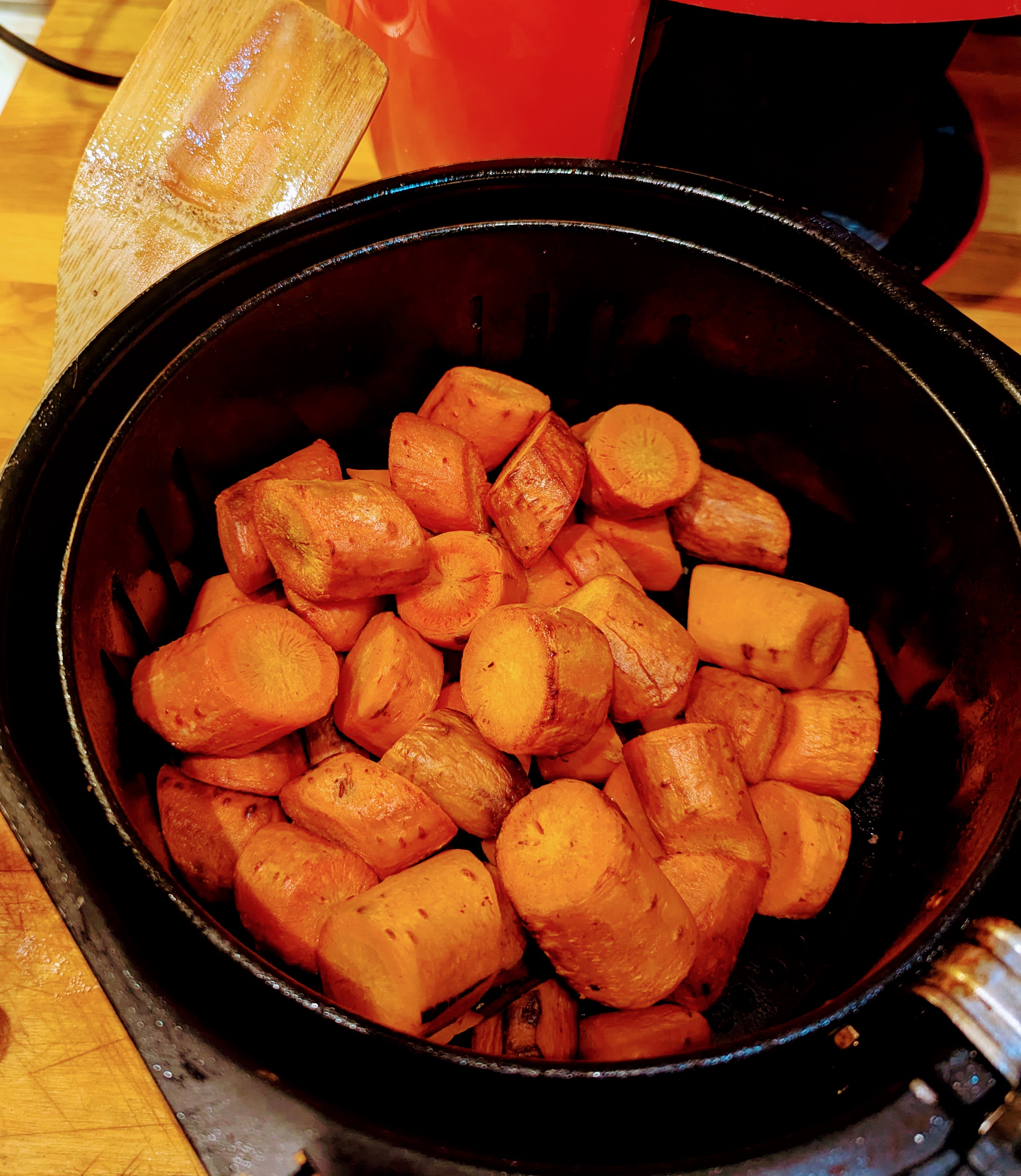
Spread on a baking sheet and roast for 25–30 minutes, turning once, until tender and lightly caramelized.
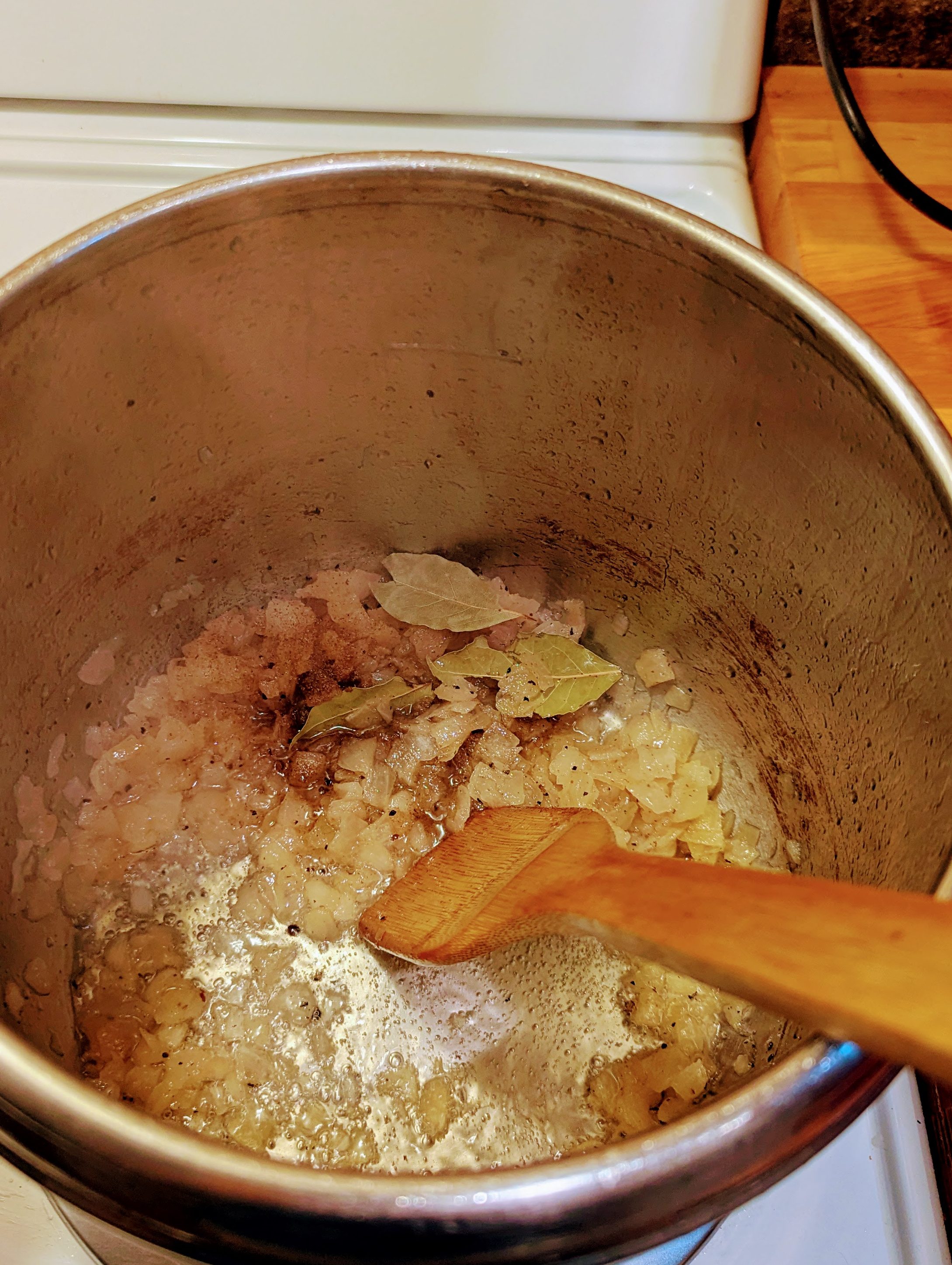
While you are roasting the carrots, sauté the onions, garlic, & ginger & spices.
In a large pot (I use my pressure cooker), heat coconut oil over medium heat.
Add the chopped onion and sauté for 6–8 minutes until soft and translucent.
Stir in curry powder, garam masala, nigella seeds, and bay leaves. Cook for 1–2 minutes until fragrant.
Blend the carrots
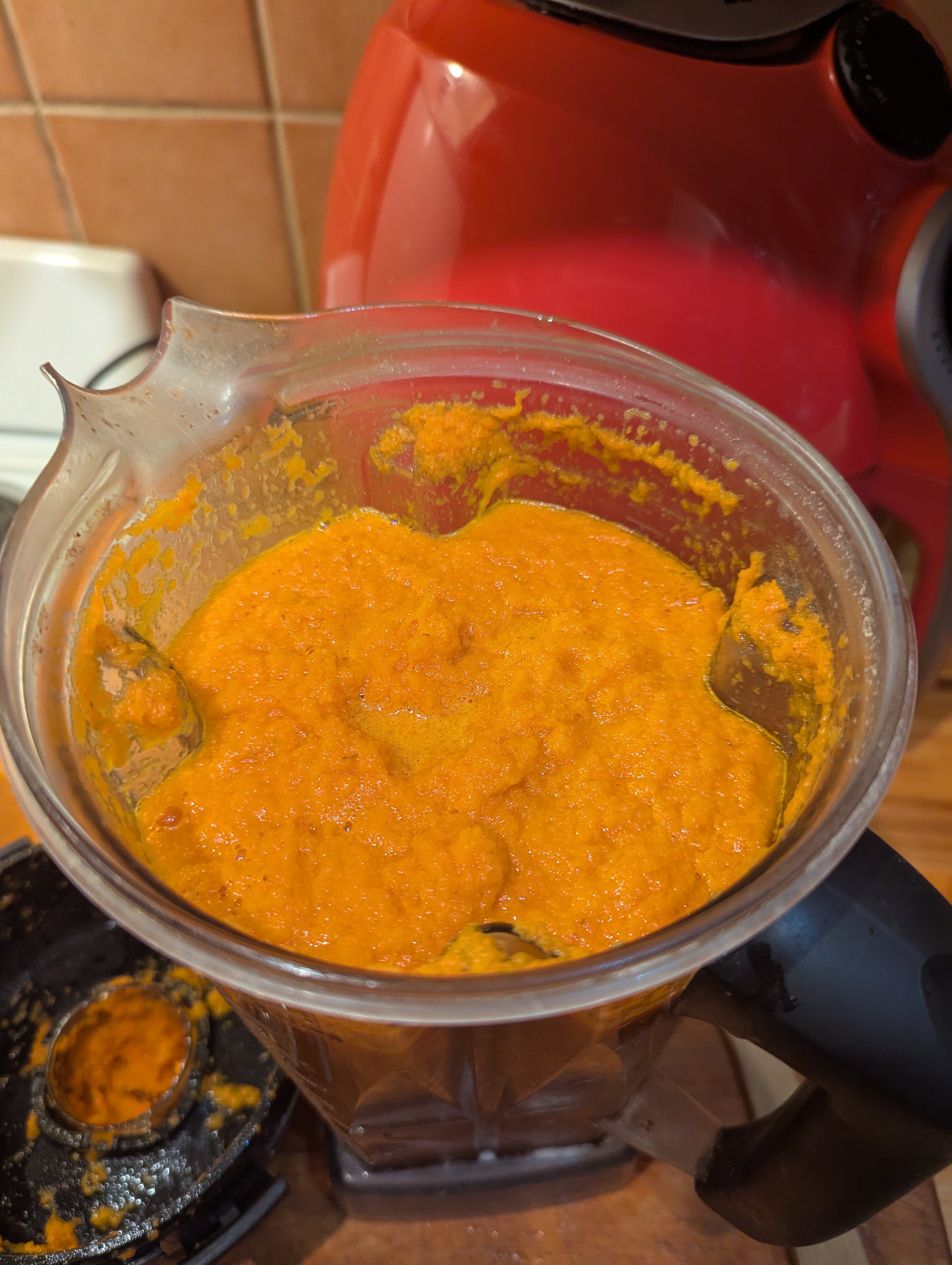
Transfer the roasted carrots to a blender.
Add a ladle or two of chicken stock to help blending, then purée until smooth.
Build the soup
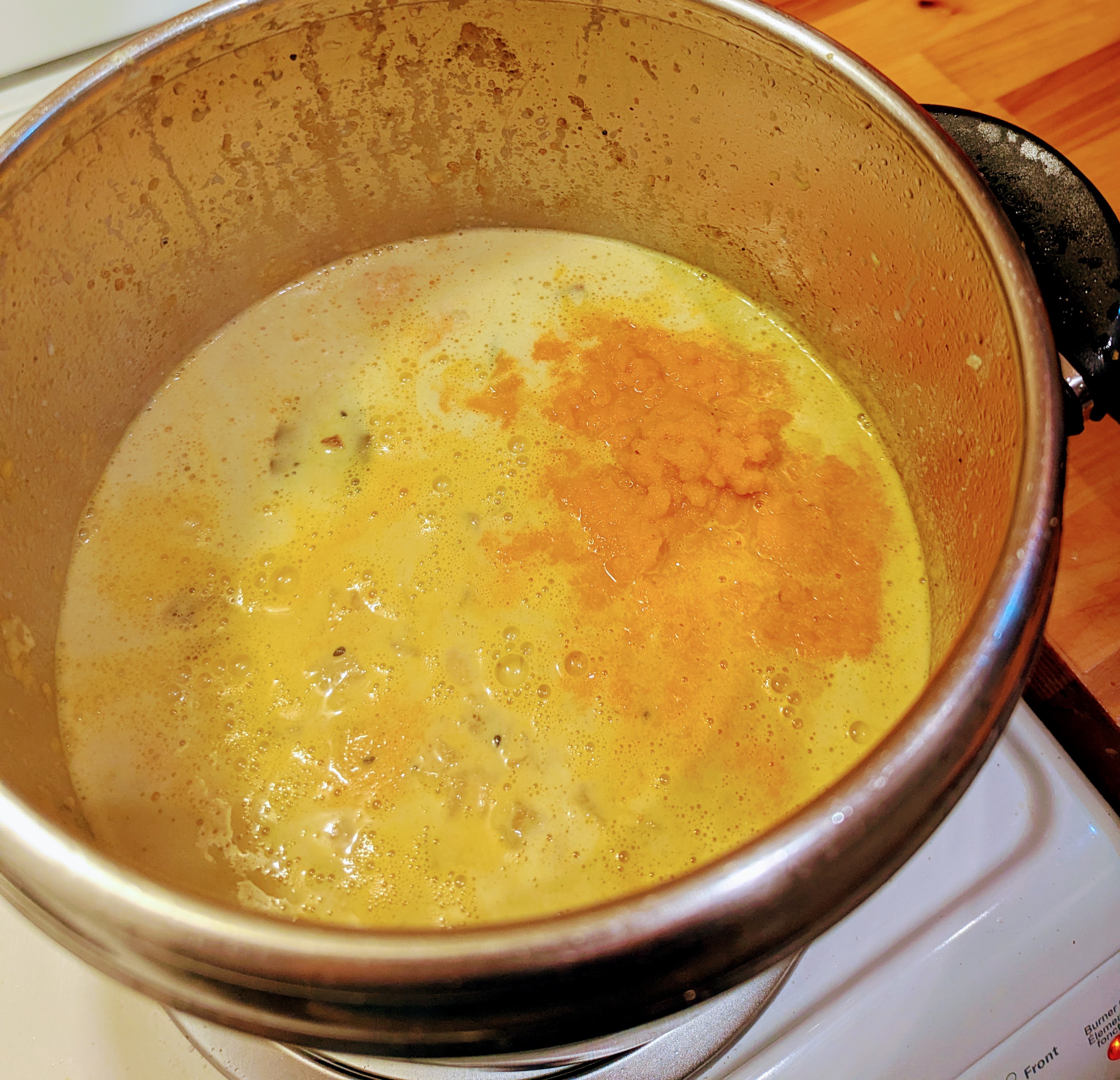
Pour the carrot purée into the pot with the onions and spices.
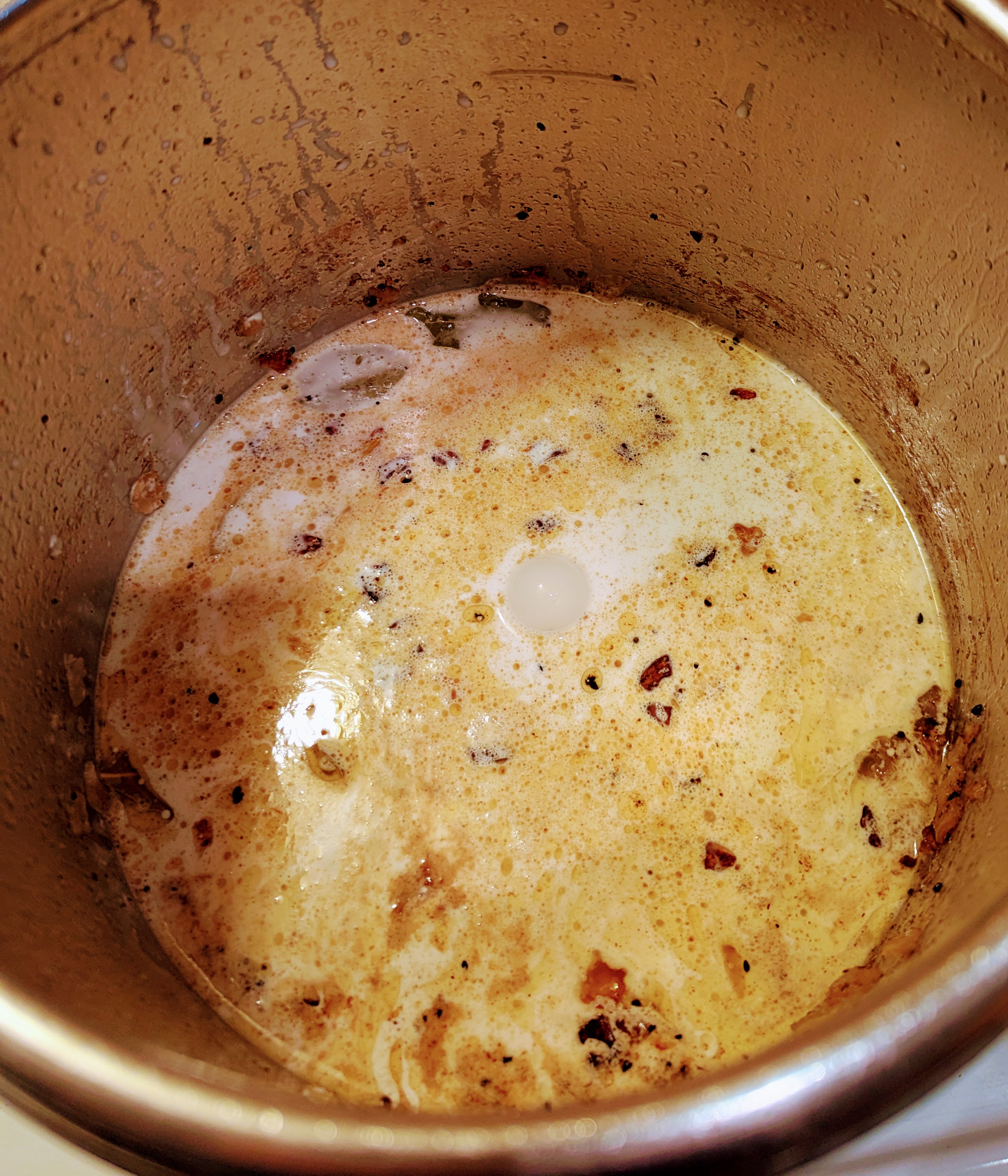
Add the remaining chicken stock, coconut milk, and the bloomed saffron with its soaking water. Stir well.
Simmer
Bring to a gentle simmer and cook uncovered for 10–15 minutes, letting the flavours meld.
Remove bay leaves.
Season & finish
Taste and season with celery salt and black pepper.
If needed, blend again (immersion blender works well) for extra smoothness.
To Serve
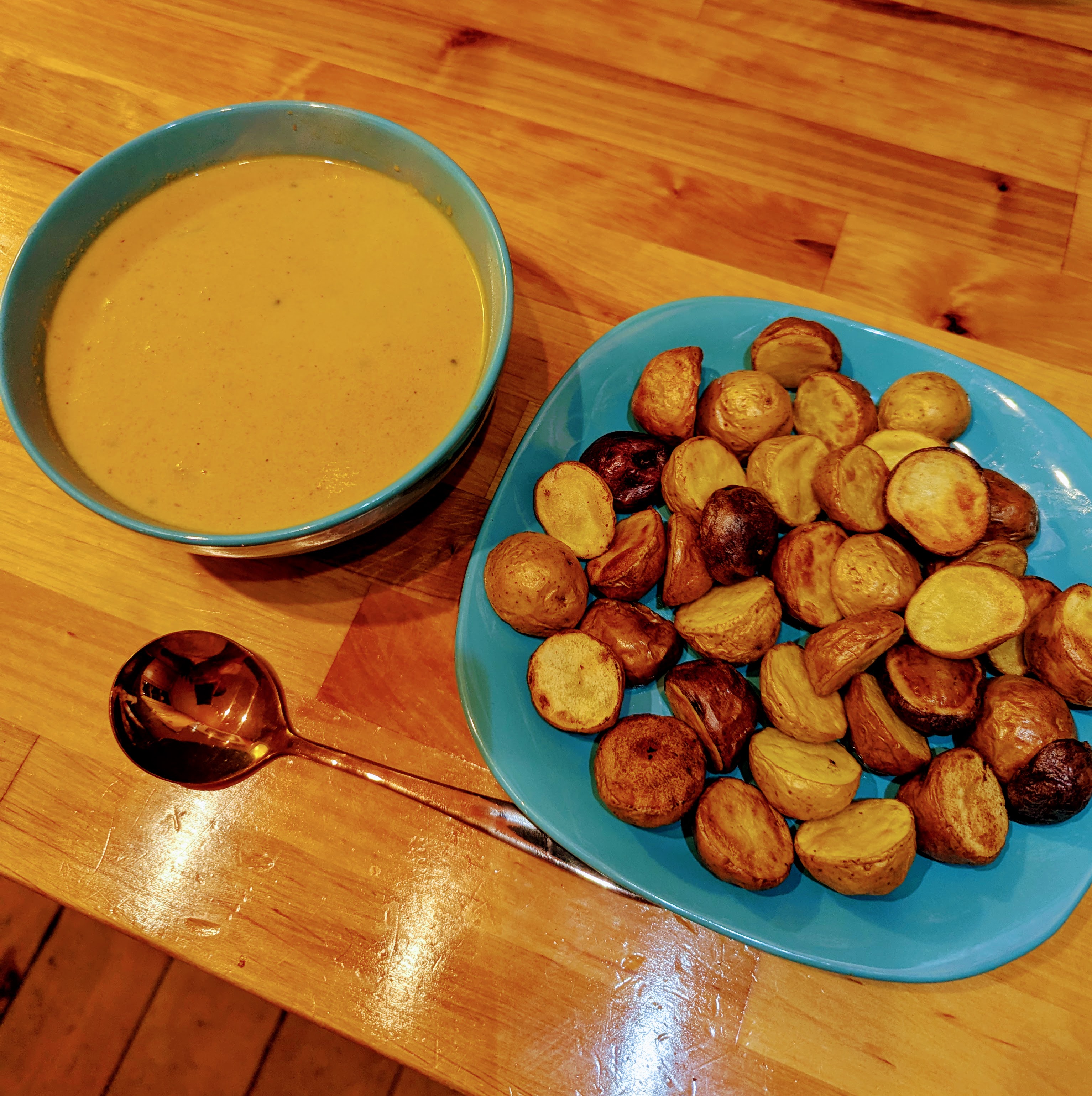
Ladle into bowls and, if you like, finish with:
A drizzle of coconut milk
A pinch of garam masala or nigella on top
Ad libs:
For Heat (Chili)
Choose one (or combine gently):
Fresh chili: Finely chop ½–1 red chili and sauté it with the onions for a clean, bright heat.
Dried chili flakes: Add ¼–½ tsp with the spices for a quick kick.
Chili oil: Drizzle a few drops on each bowl just before serving for aroma and controlled heat.
Cayenne powder: A pinch stirred in during simmering if you want subtle, even warmth.
Tip: Start small — coconut milk softens heat, so you can always add more at the end.
For Brightness (Lime)
Lime lifts the sweetness of the roasted carrots and richness of coconut:
Lime juice: Stir in 1–2 tsp fresh lime juice per serving right before serving so it stays vibrant.
Lime zest: Add a little pinch to the pot at the end for fragrance without extra acidity.
Lime wedges: Serve on the side so everyone can adjust to taste.
Tip: Add lime off the heat as too much simmering dulls its flavour.
ENJOY!!!

 markoconnellstudio