
Raymundo Fraga Valle, based in Puebla, occupies a distinctive position within the field of Mexican dress studies as a collector, curator, and cultural interlocutor whose work bridges material culture, ethnography, and fashion history. His collection which has been assembled through sustained engagement with artisans, regional traditions, and systems of making, constitutes not merely an archive of garments, but a dynamic repository of cultural knowledge. It is particularly rich in examples of Indigenous and vernacular dress from across central and southern Mexico, including Puebla, Hidalgo, Guerrero, Chiapas, and Michoacán. Within it, garments such as huipiles, rebozos, enredos, and embroidered domestic textiles are preserved not as static artifacts, but as living embodiments of identity, labor, and historical continuity. Fraga Valle’s collection is distinguished by both its geographic breadth and its conceptual coherence, constituting a richly layered assemblage of traditional indumentaria drawn from multiple regions of Mexico. While deeply rooted in Puebla (particularly the Huasteca poblana) it extends outward to encompass the textile cultures of Hidalgo (notably Otomí communities such as Tenango), as well as Guerrero, Chiapas, Michoacán, and other regions renowned for their textile production.
This cross-regional scope does not dissolve into generality; rather, it is anchored through Puebla as a cultural and interpretive node, a site through which diverse traditions are gathered, reframed, and set into dialogue. Within this assemblage, key object types recur with both formal and symbolic resonance: rebozos of varying weave and finish; huipiles and embroidered blouses that articulate regional identity through cut, motif, and technique; skirts and enredos whose structure and ornament index both everyday practice and ceremonial life; and embroidered domestic textiles, most notably tenangos, whose dense surfaces operate as narrative fields. Together, these beautiful pieces of wearable art articulate a taxonomy of dress that is at once material and epistemological, mapping relationships between body, community, and environment.
A defining characteristic of Fraga Valle’s work is his sustained attention to technique and to the conditions of making. The collection foregrounds processes such as backstrap loom weaving (telar de cintura), natural dyeing traditions, and intricate hand embroidery, often executed in densely worked, rhythmically structured compositions. In the case of tenangos, for instance, attention is drawn not only to their iconographic richness but also to the social organization of their production: the division of labour between designers and embroiderers, the calibrated symmetry and density of their motifs, and the regional networks through which they circulate. Such an emphasis situates the collection firmly within object-based and process-driven methodologies, wherein meaning is understood to emerge through material practice as much as through form.
Equally central is Fraga Valle’s interpretive framing of dress as a language, an expressive system through which identity, worldview, and historical experience are articulated. His readings attend closely to symbolic motifs: zoomorphic, vegetal, and cosmological, as well as to the ways in which garments function as markers of regional belonging. At the same time, he underscores the dynamic nature of these traditions, tracing continuities alongside processes of transformation and adaptation. In this regard, the collection offers a particularly fertile ground for cultural semiotics and for postcolonial analyses of dress as a site of negotiation between continuity and change. Fraga Valle’s engagement with his collection extends beyond acquisition into an active curatorial practice. He participates in exhibitions and performances as a collector-lender, collaborator, and interpreter, contributing not only objects but also the contextual knowledge that renders them legible. Notable among these are collaborations with academic and cultural institutions such as the Universidad de las Américas Puebla (UDLAP), where garments from his collection have been featured in exhibitions like Colores de nuestros pueblos, accompanied by detailed interpretive frameworks. Similarly, his involvement with the Museo Nacional de Culturas Populares in Mexico City has foregrounded regional traditions (such as those of the Huasteca poblana,) through exhibitions that emphasize technique, meaning, and lived context.
In addition to these collaborative endeavors, Fraga Valle has assumed a curatorial authorship in both physical and digital formats, communicating narratives around textiles that situate them within everyday life. His curatorial voice consistently resists the isolation of objects within purely aesthetic or museological frameworks, instead emphasizing their domestic use, their embeddedness in daily practice, and their interrelation with other cultural domains, including foodways and ritual life. This approach repositions textiles not as static artifacts but as active participants in social and cultural processes. Underlying this body of work is a conceptual orientation that understands dress as a form of intangible cultural heritage: a repository of memory, identity, and collective knowledge that remains in continual formation. Fraga Valle’s approach to collecting is notably anti-extractive; he positions himself less as an owner of objects than as a guide and mediator, foregrounding the artisans and communities from which the garments emerge. In doing so, he advocates for visibility, recognition, and ethical engagement, challenging extractive models that have historically shaped the circulation of Indigenous material culture. His work resonates strongly with current directions in fashion and textile scholarship, particularly in its alignment with material culture methodologies, its engagement with Indigenous knowledge systems, and its attention to postcolonial identity and hybridity. It also underscores the role of dress as a medium of political and social expression; an insight that finds clear parallels in studies of garments such as the rebozo, the china poblana ensemble, and the charro suit as articulations of identity and nationhood.
In Puebla, the collection does not reside within a single, fixed institutional framework; rather, it circulates through universities, cultural institutions, and temporary exhibitions, functioning as a mobile, research-active archive. This mobility is integral to its character, enabling the collection to remain responsive, dialogic, and pedagogically engaged.
What distinguishes Fraga Valle’s practice is his attentiveness to process and to the social worlds embedded in textile production. His collection foregrounds techniques such as backstrap loom weaving (telar de cintura), natural dyeing, and dense narrative embroidery, situating each object within the networks of knowledge, gendered labor, and community exchange that sustain it. In this sense, the garments operate as semiotic fields: surfaces upon which cosmologies, local ecologies, and histories of adaptation and resistance are inscribed. Fraga Valle’s interpretive approach consistently resists reductive folklorization, instead emphasizing the ongoing vitality and transformation of these traditions within contemporary life. His role as a collector is thus inseparable from his work as a mediator and advocate. Through collaborations with universities, museums, and cultural initiatives, he activates the collection as a pedagogical and curatorial resource, lending objects, contextualizing their meanings, and foregrounding the voices and practices of the artisans themselves. The collection’s mobility: circulating through exhibitions and educational settings rather than being fixed within a single institutional archive, further underscores its function as a living, research-oriented assemblage. It aligns closely with current scholarly emphases on object-based inquiry, Indigenous knowledge systems, and the decolonization of fashion and textile histories.
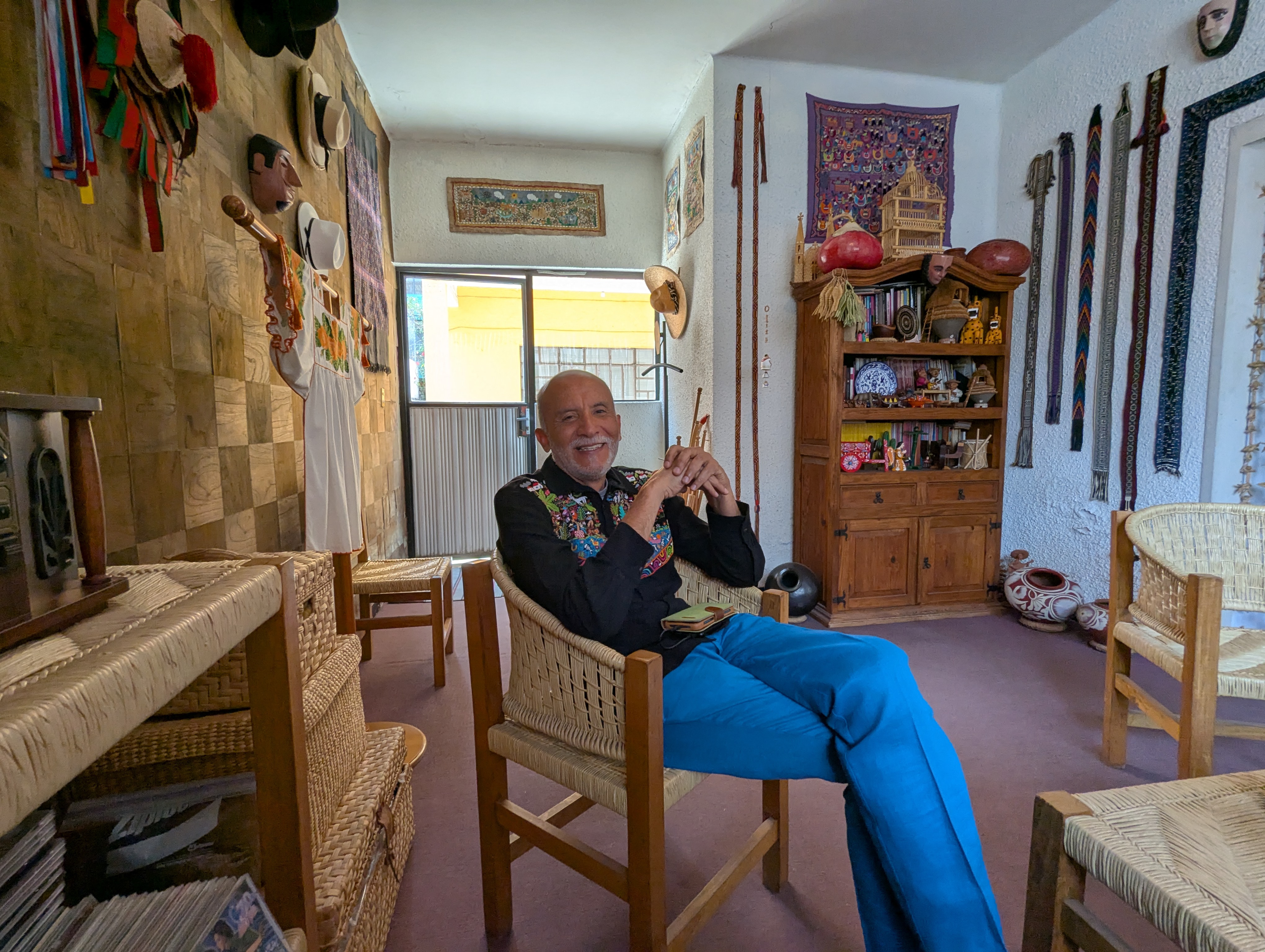
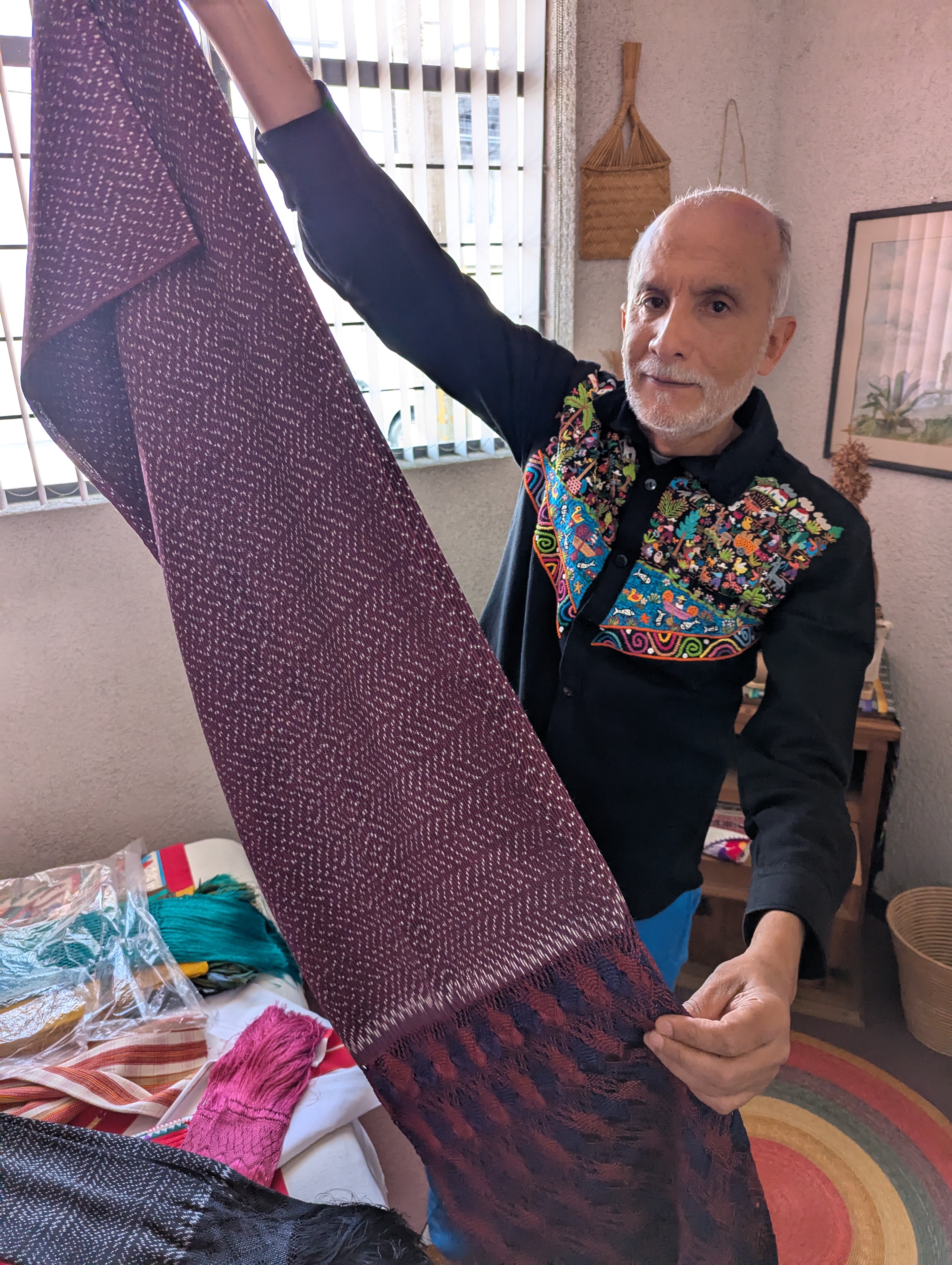
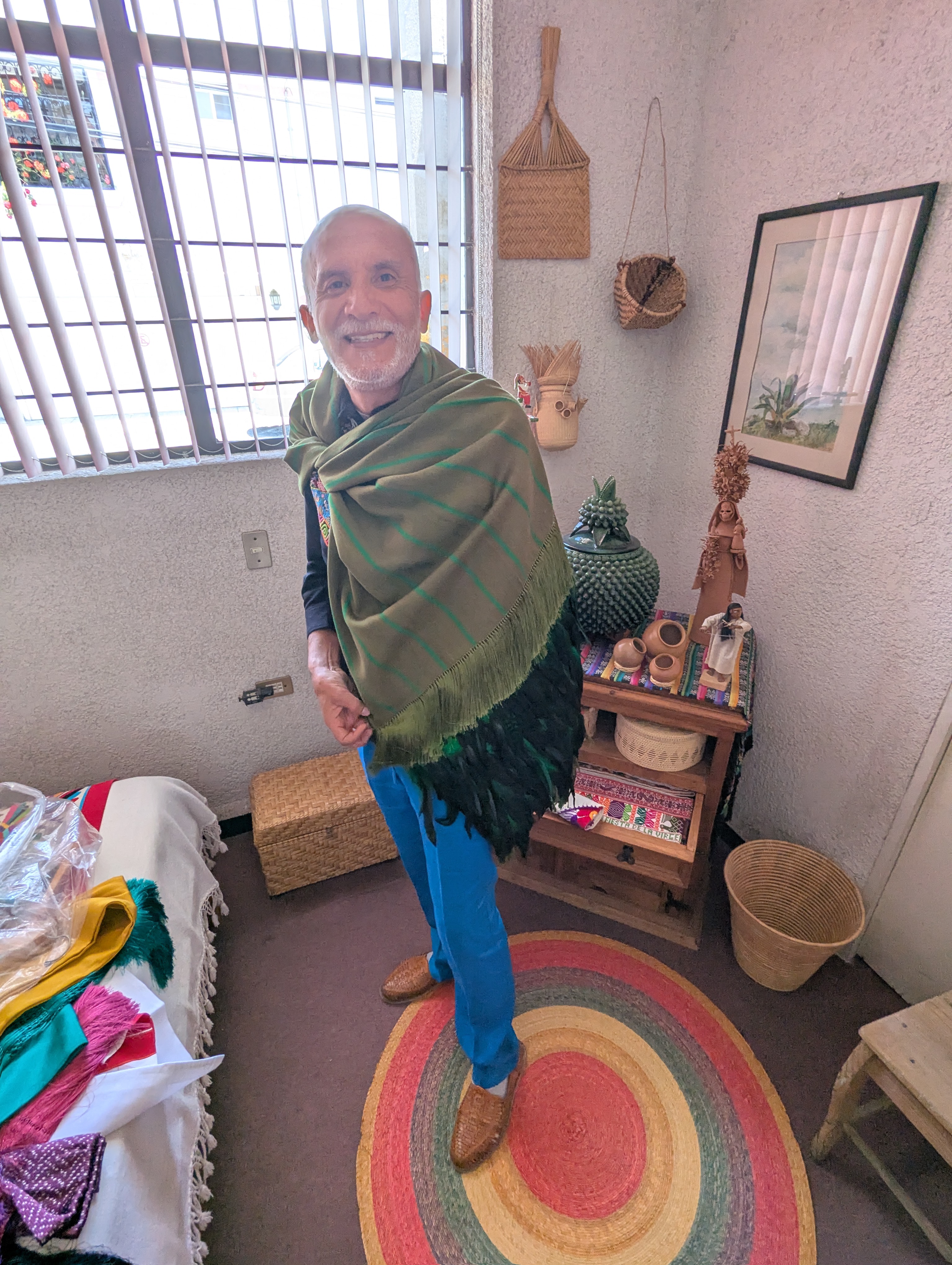
This orientation was vividly apparent during my visit to Fraga Valle’s atelier in Puebla City on April 6, 2026. The space itself functioned less as a conventional studio than as an intimate, layered environment of textiles, where garments were arranged in a manner that invited both close inspection and narrative unfolding. Over the course of the visit, Fraga Valle generously presented a selection of huipiles, rebozos, and other garments drawn from his collection, each accompanied by detailed accounts of its provenance, technique, and cultural significance.
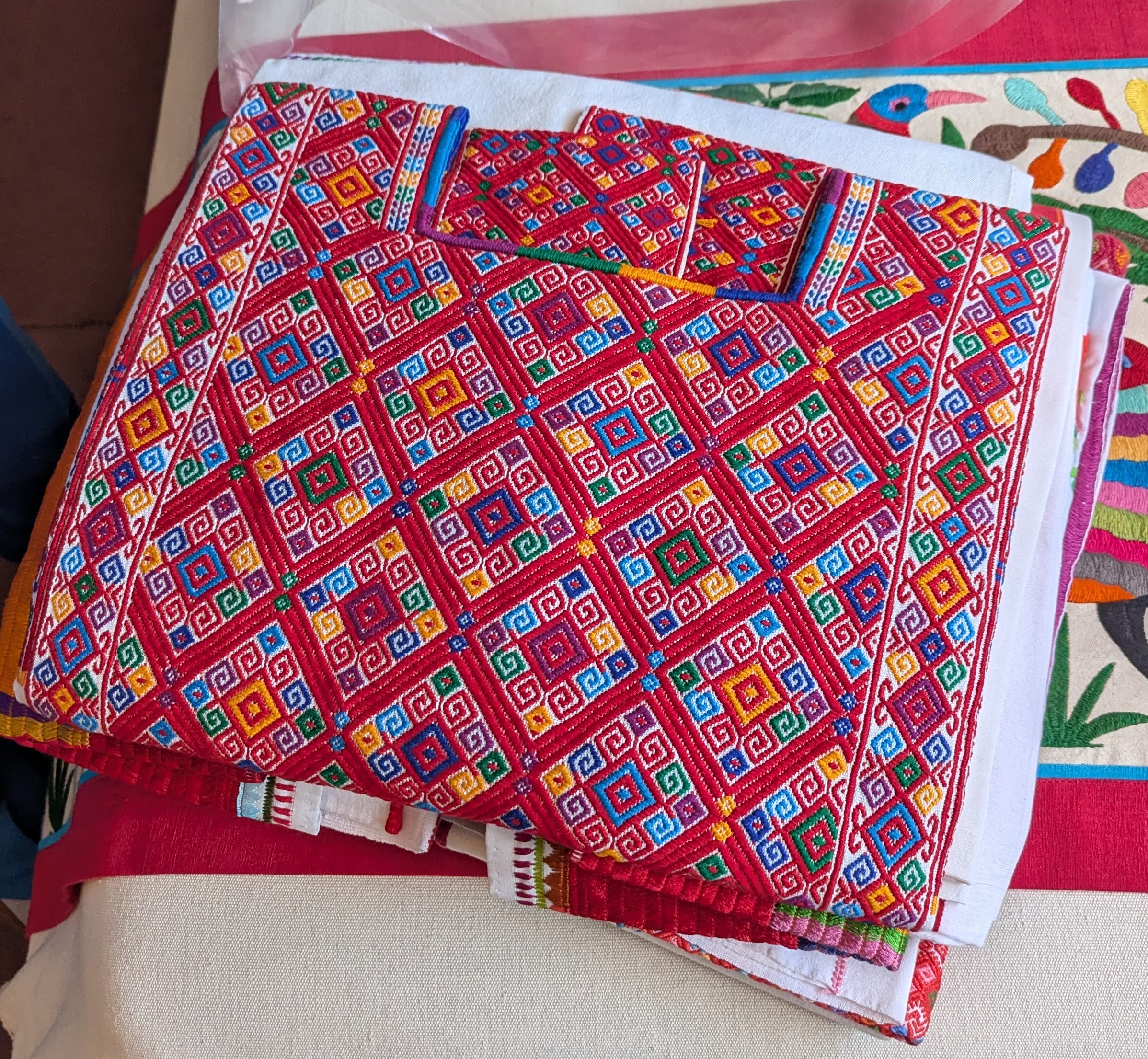
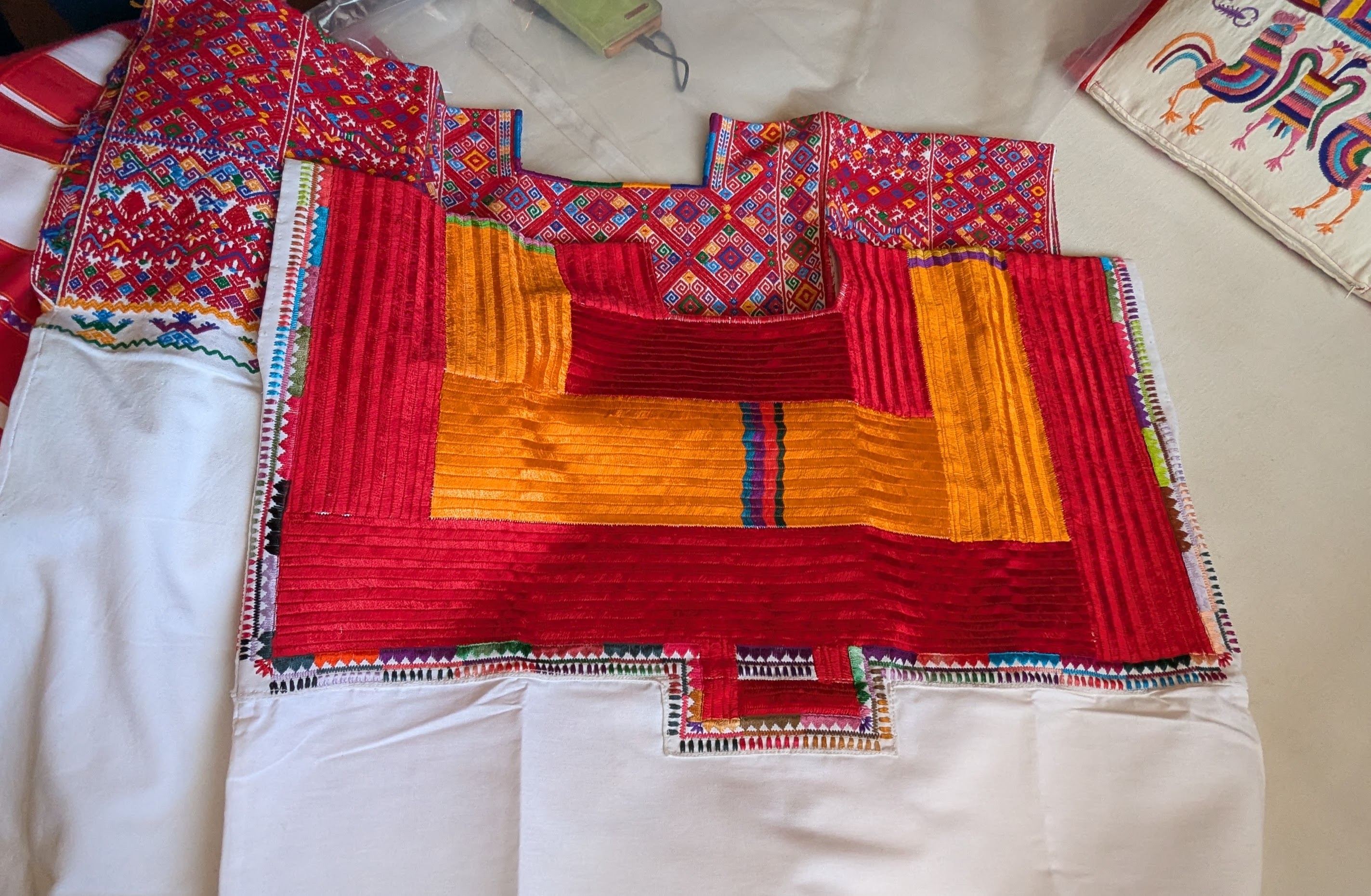
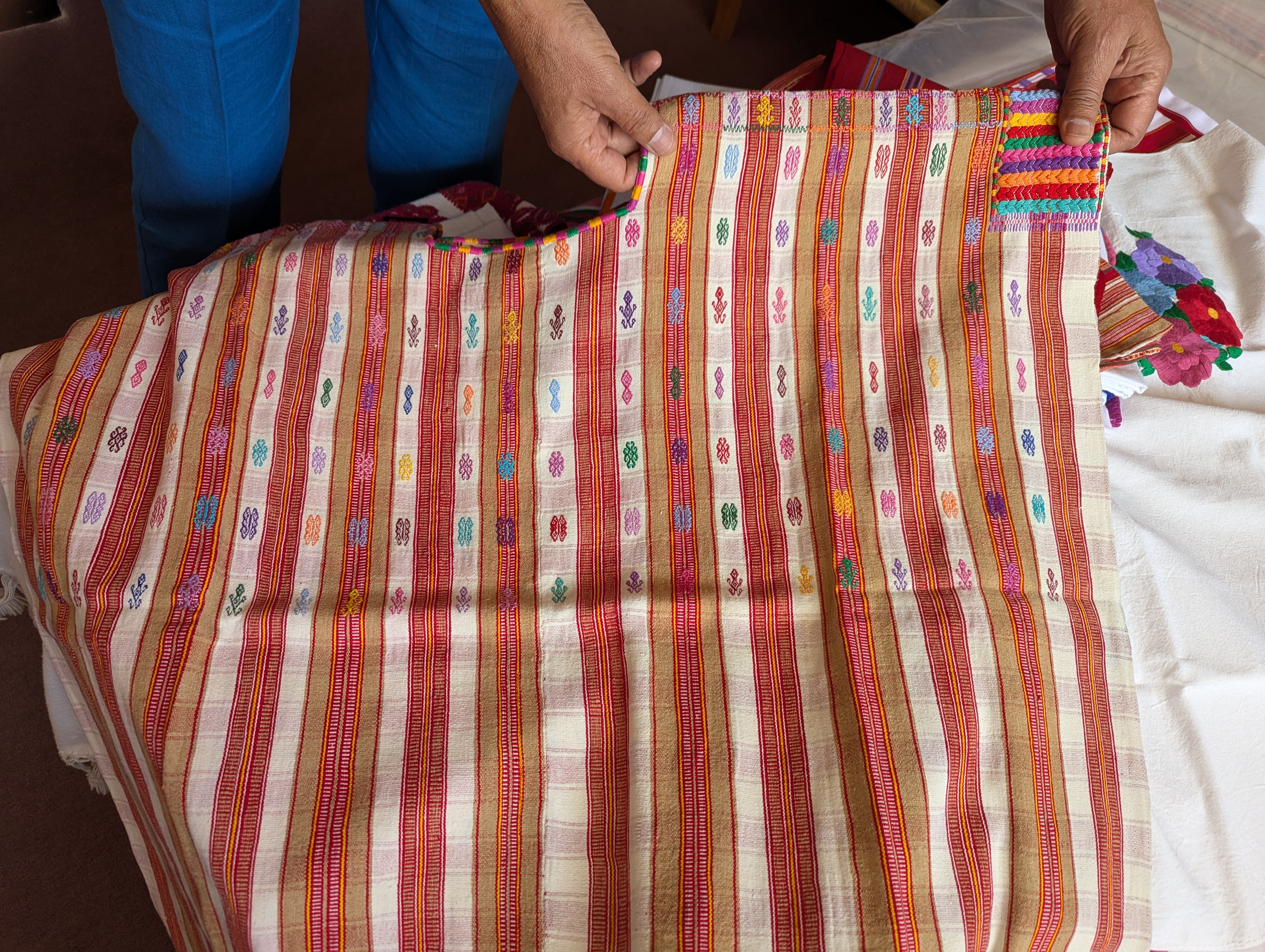
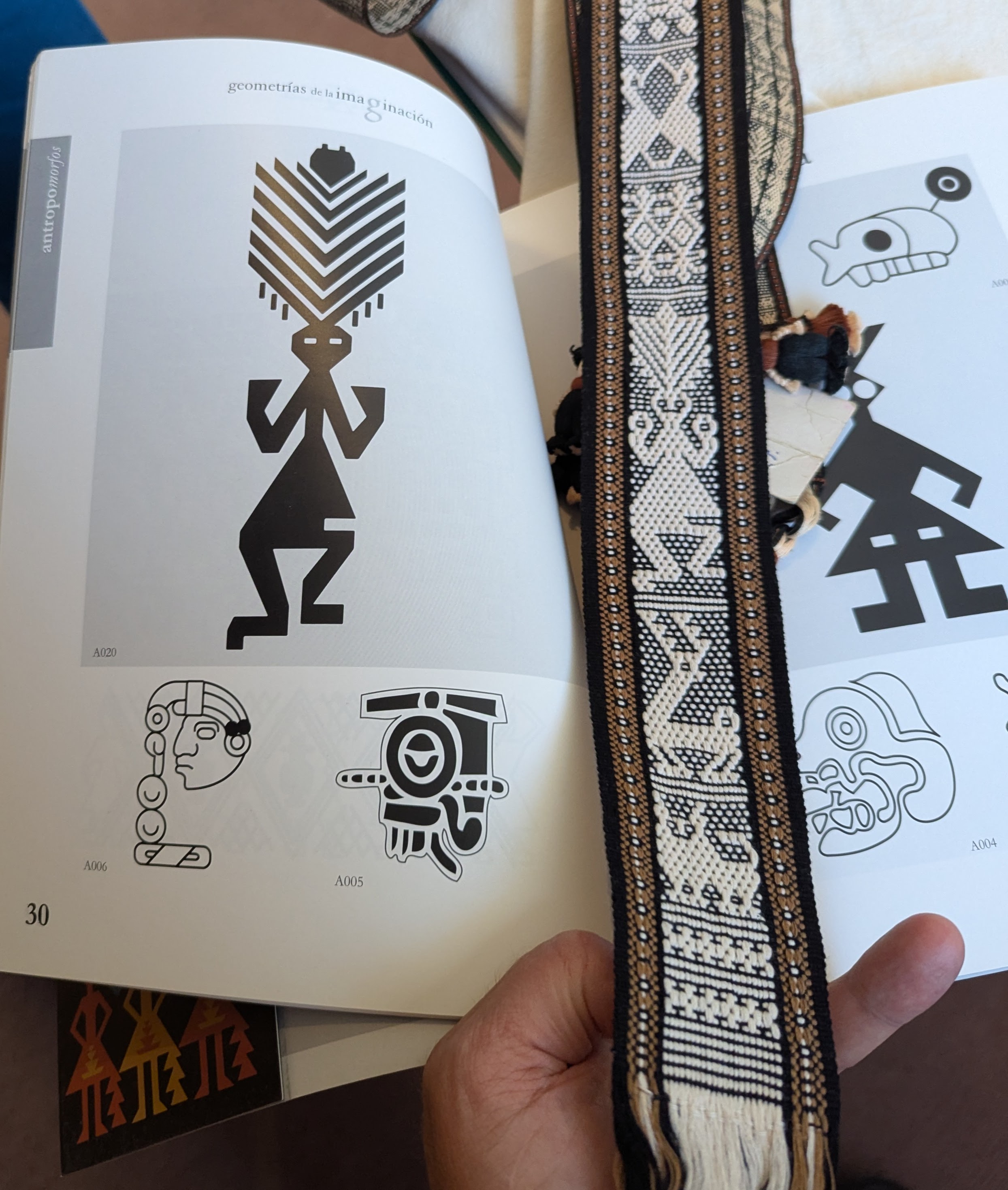
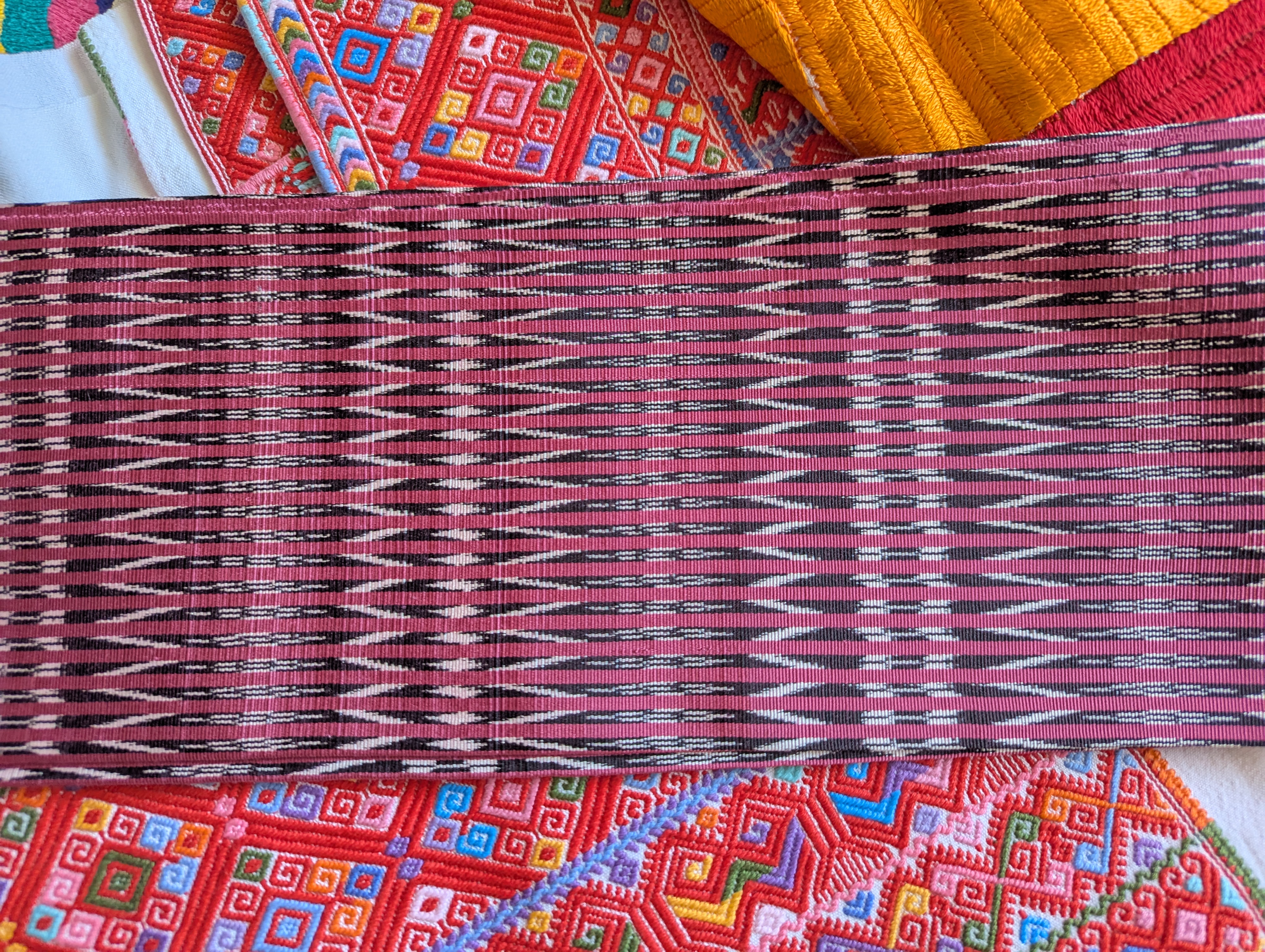
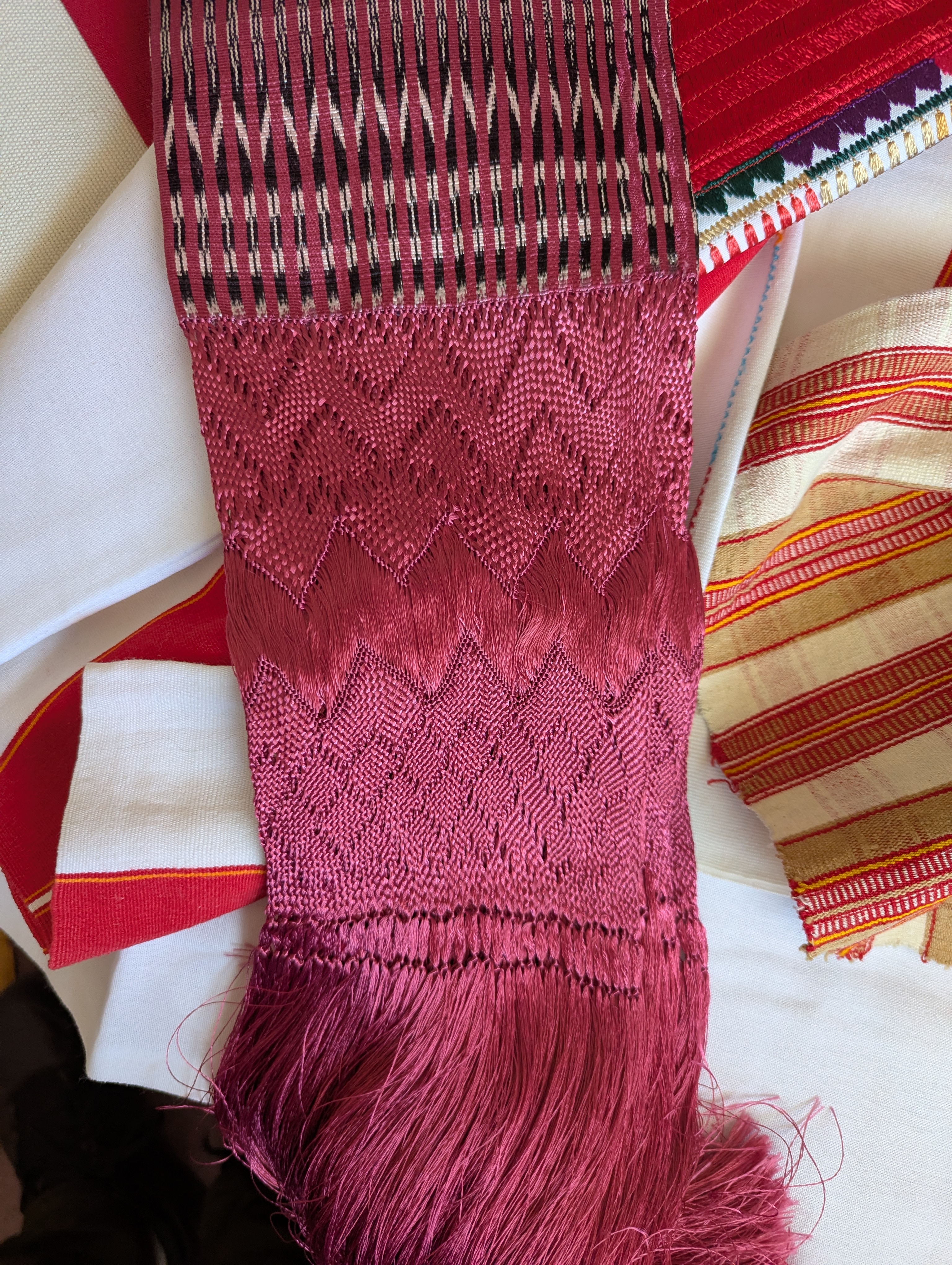
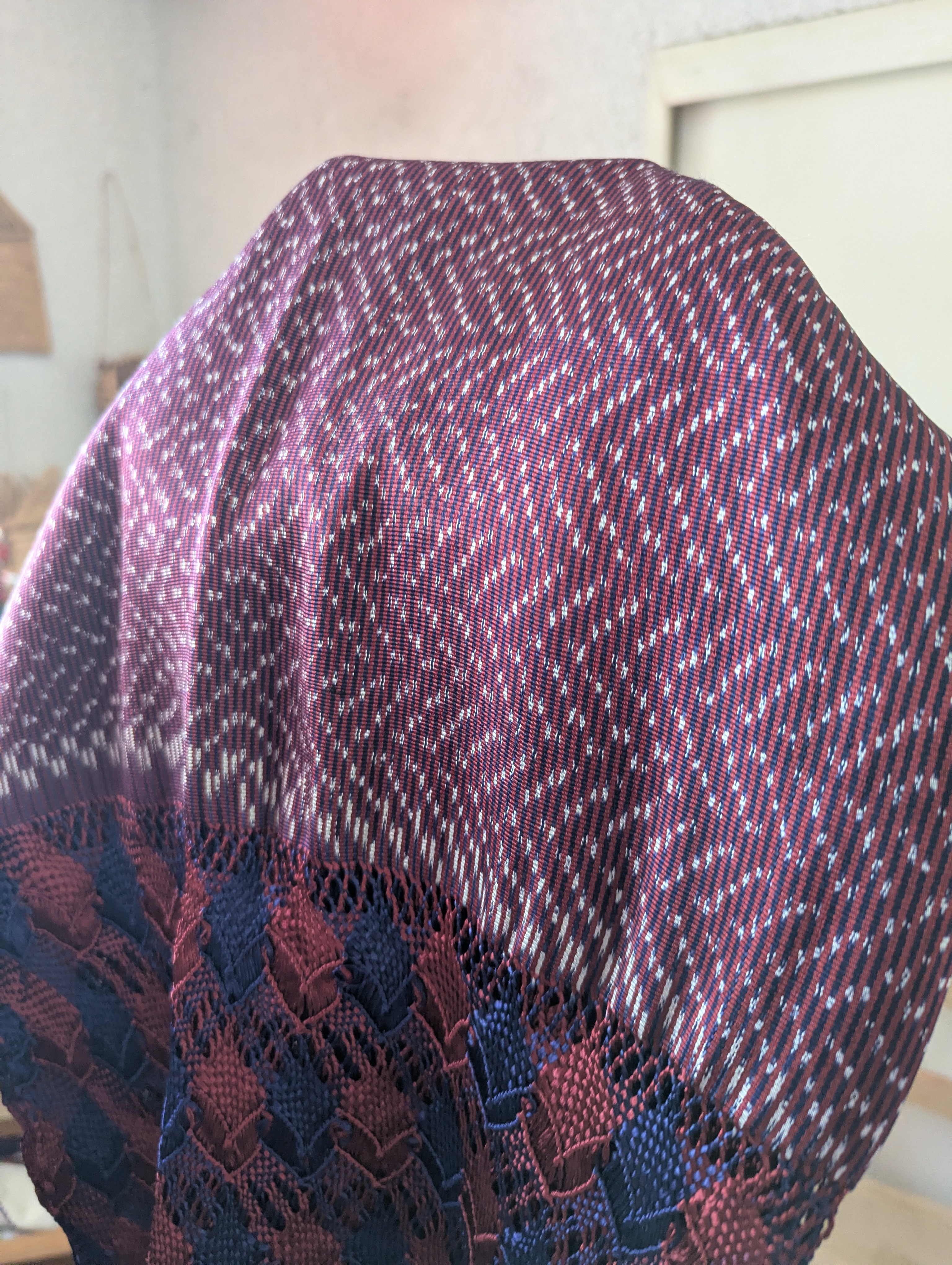
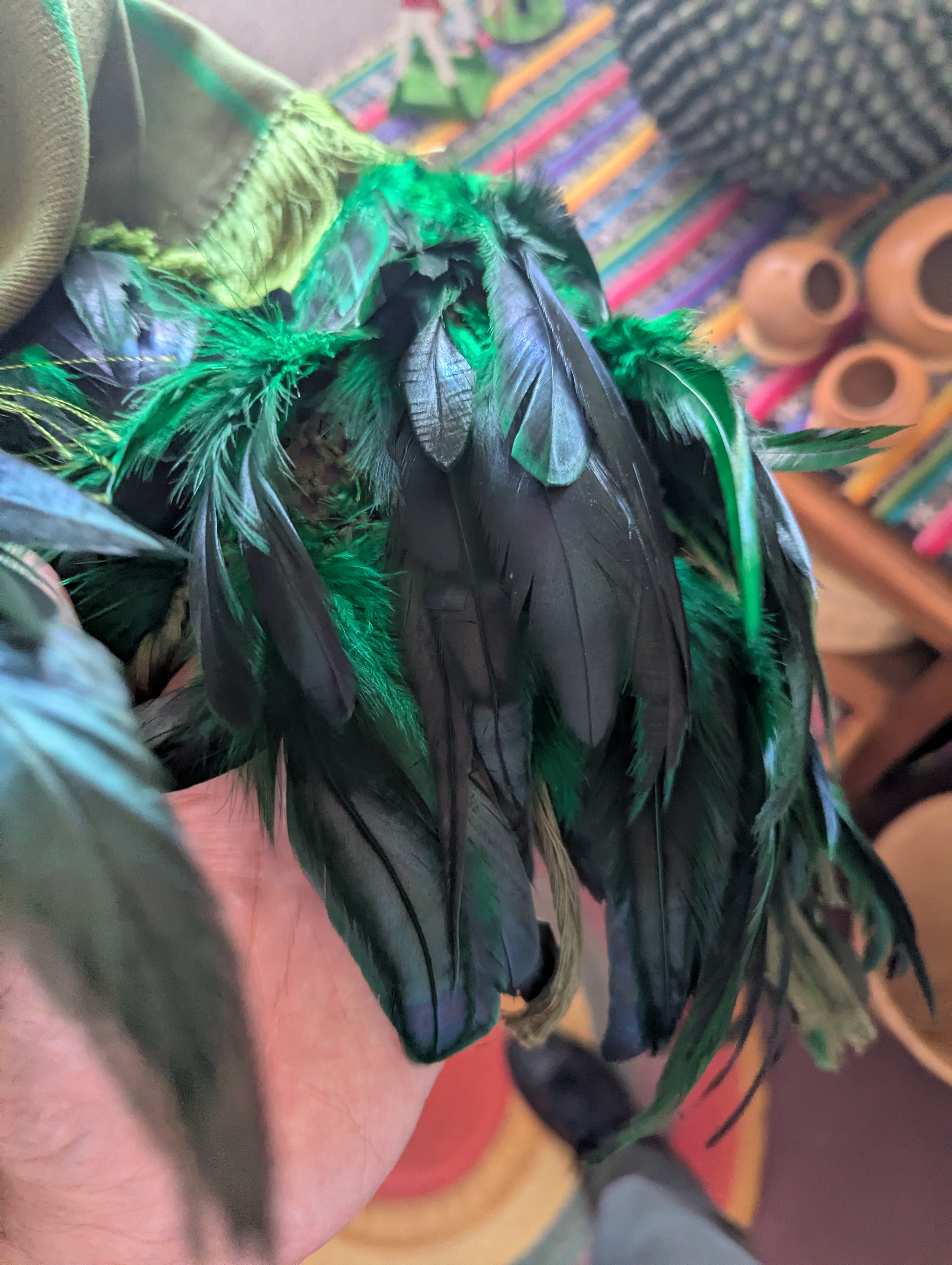
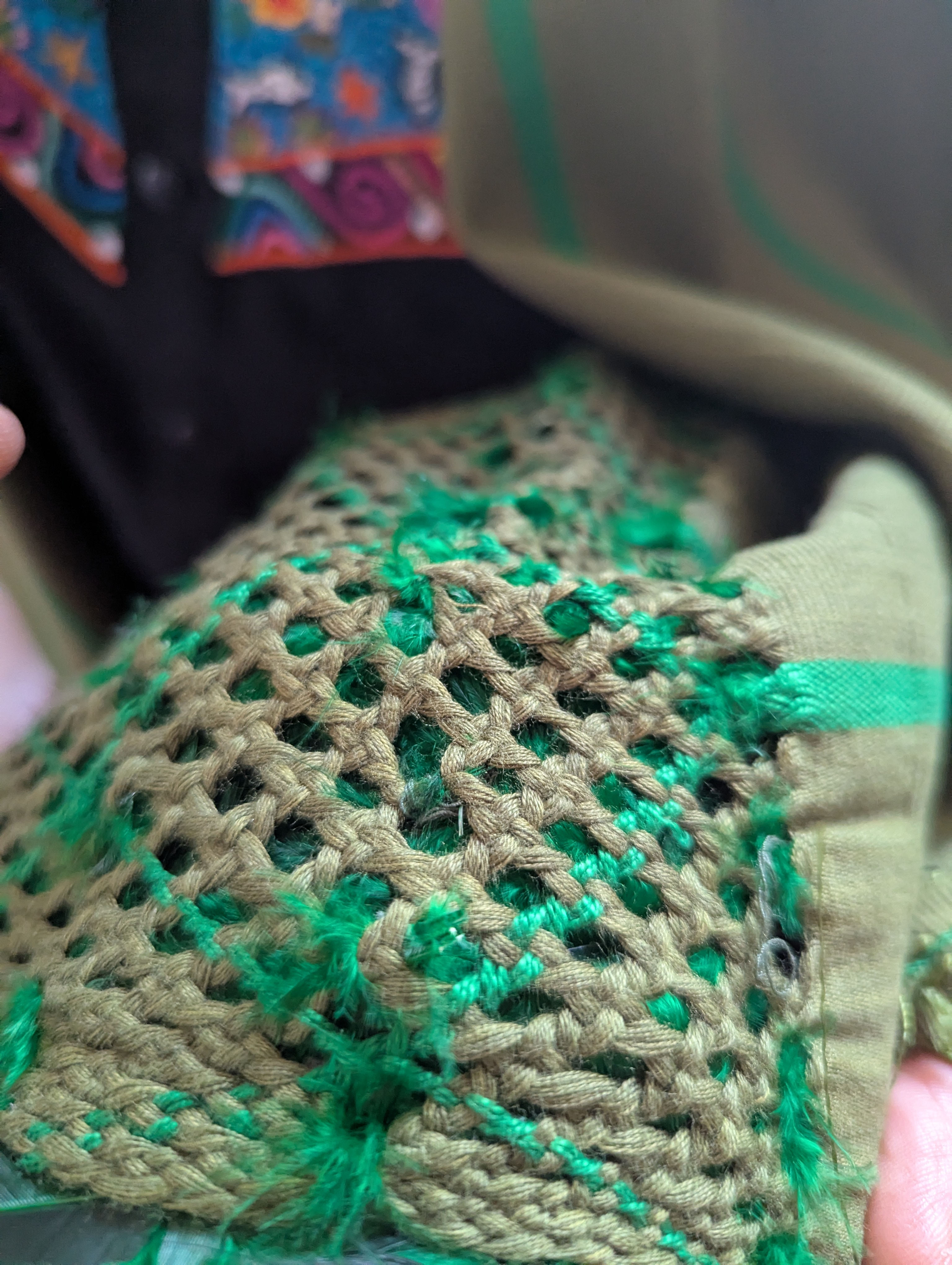
The huipiles, in particular, revealed a remarkable range of regional variation and technical sophistication: some densely embroidered with polychrome motifs: animals, vegetal forms, and geometric structures, rendered in rhythmic, almost cartographic compositions; others more restrained, their patterns emerging through the structure of the weave itself. Several pieces had been produced on the backstrap loom, their surfaces bearing the subtle irregularities and tensions characteristic of this embodied technique, in which the weaver’s own posture and movement are integral to the formation of the textile. The rebozos likewise demonstrated an extraordinary diversity of material and finish, from finely woven examples with intricate jaspe (ikat) patterning to heavier, more tactile pieces whose fringes and borders articulated both regional identity and individual craftsmanship.
Fraga Valle’s narration of each object did not isolate it as an aesthetic specimen, but situated it within a continuum of use, meaning, and exchange. In this way, the garments functioned as what might be understood as “living archives”: carriers of memory, technique, and cultural negotiation that continue to accrue significance through their circulation and interpretation.What emerged most powerfully from this encounter was the sense of the collection as a constellation of relationships. These may be between between maker and material, between region and form, as well as between past and present.
An essential dimension of Raymundo Fraga Valle’s practice lies in his production of fashion and dance events that activate garments as living, kinetic forms, extending their meanings beyond static display into the realm of embodied performance. In these contexts, indumentaria is not merely exhibited but enacted and set into motion through choreographed and vernacular dance traditions that reveal the full expressive capacity of textile, cut, and adornment. Such events function as dynamic sites of cultural communication, in which garments articulate identity not only through their material properties, but through gesture, rhythm, and bodily presence. This approach underscores a critical insight: that dress, particularly within Indigenous and regional Mexican traditions, is inseparable from movement. The sway of a skirt, the controlled drape of a rebozo, the structured fall of a huipil all acquire heightened significance when animated by the body in motion. Through dance, the garment’s relationship to space, gravity, and temporality becomes legible, revealing aspects of construction, weight, and proportion that remain latent in static display. Embroidery catches light differently; woven structures flex and respond; fringes and pleats articulate rhythm. In this sense, performance becomes an analytic tool, a means of understanding how garments function within lived practice. These events are often organized to align specific garments with corresponding regional choreographies, musical traditions, and performance contexts. The result is not a generalized folkloric spectacle, but a more nuanced staging in which textile, music, and movement operate as an integrated system. By situating garments within their performative ecologies, Fraga Valle resists the decontextualization that frequently accompanies museum display, instead foregrounding the interdependence of material culture and embodied knowledge. Moreover, these performances expand the communicative capacity of dress by engaging audiences through sensory and affective registers. The visual impact of color and pattern is amplified by motion; the tactile qualities of fabric are suggested through movement; the temporal unfolding of dance allows for a layered apprehension of detail and form. In this way, garments become active participants in a multisensory dialogue, communicating histories, identities, and social meanings through the choreography of the body.
Fraga Valle’s production of such events also reflects a broader methodological commitment to collaborative and community-based practices. Dancers, musicians, and artisans are not ancillary to the presentation of the collection but integral to its interpretation. Their participation reanimates the social contexts from which the garments emerge, ensuring that the knowledge embedded in technique and use is conveyed alongside the objects themselves. This collaborative framework further reinforces his position as a cultural mediator, facilitating encounters between audiences and the living traditions that sustain these forms of dress.
During our meeting Fraga Valle also explained to me how Spanish dress traditions had been imported into Mexico and hybridized with Mexican Indigenous traditions to create new sartorial forms and languages. For scholars of nineteenth-century Mexican dress and its afterlives, Fraga Valle’s work offers a vital point of contact between historical inquiry and contemporary practice. His collection not only preserves forms and techniques that resonate with earlier sartorial traditions, but also illuminates the ongoing processes through which identity, hybridity, and cultural expression are materially articulated. It is also important to recognize that not all significant cultural research unfolds within the formal structures of higher education. Encounters such as my visit with Raymundo Fraga Valle offer a compelling reminder that critical knowledge production often takes place beyond institutional frameworks, in spaces shaped by lived experience, sustained relationships, and deep engagement with material culture. As an independent collector and cultural producer, Fraga Valle occupies a position that is at once outside and adjacent to the academy, yet no less rigorous in its intellectual and methodological commitments.
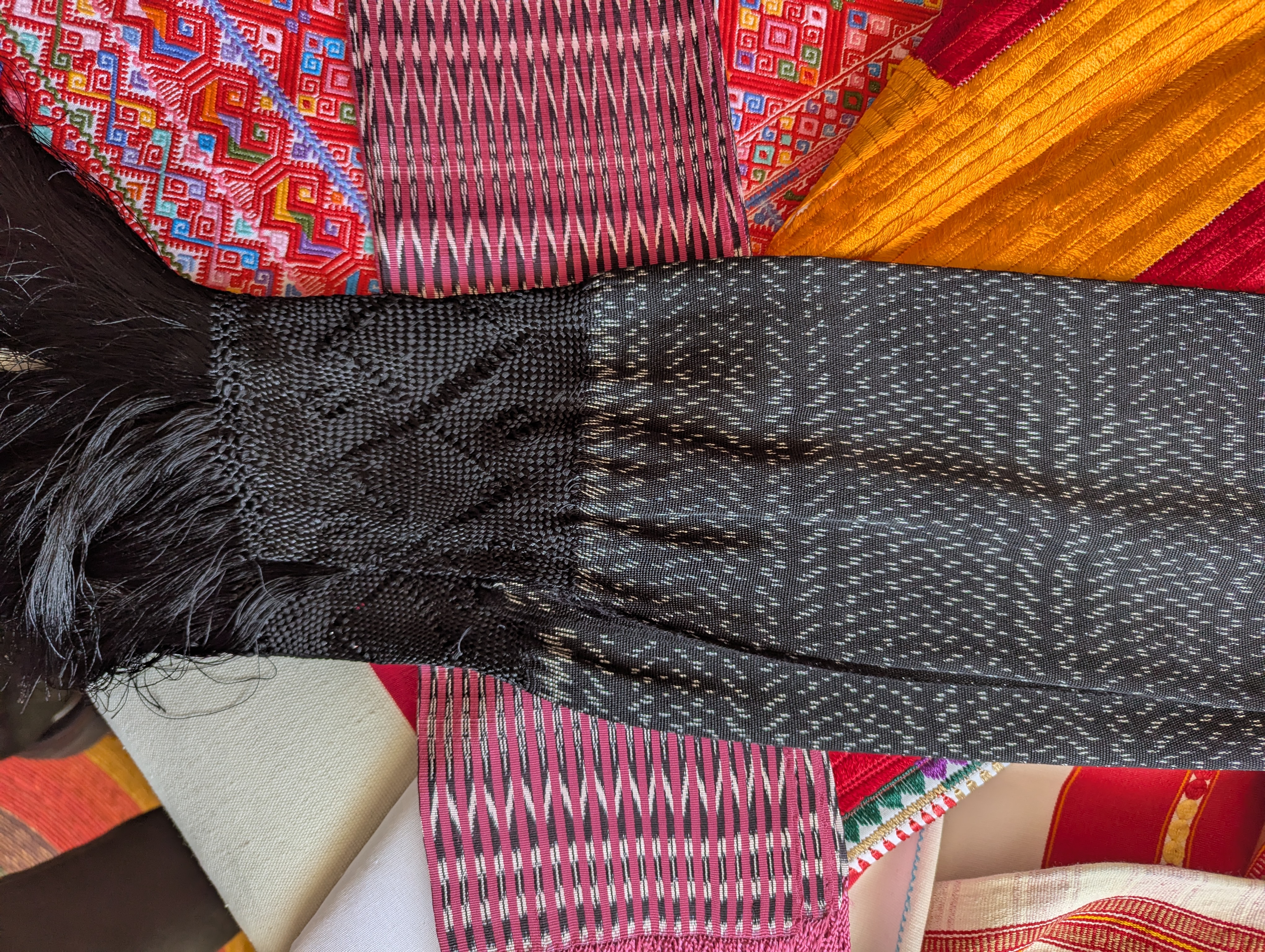
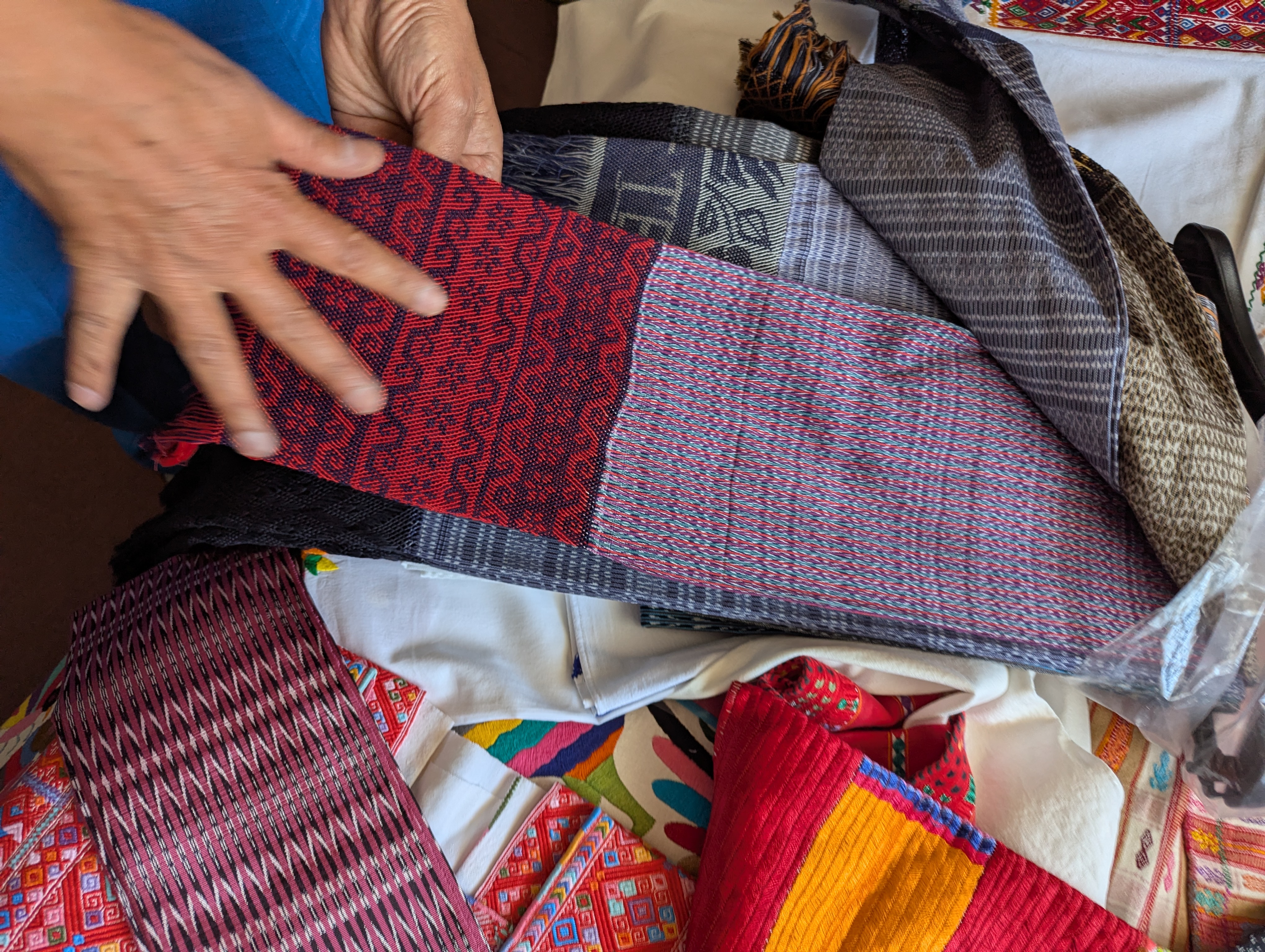
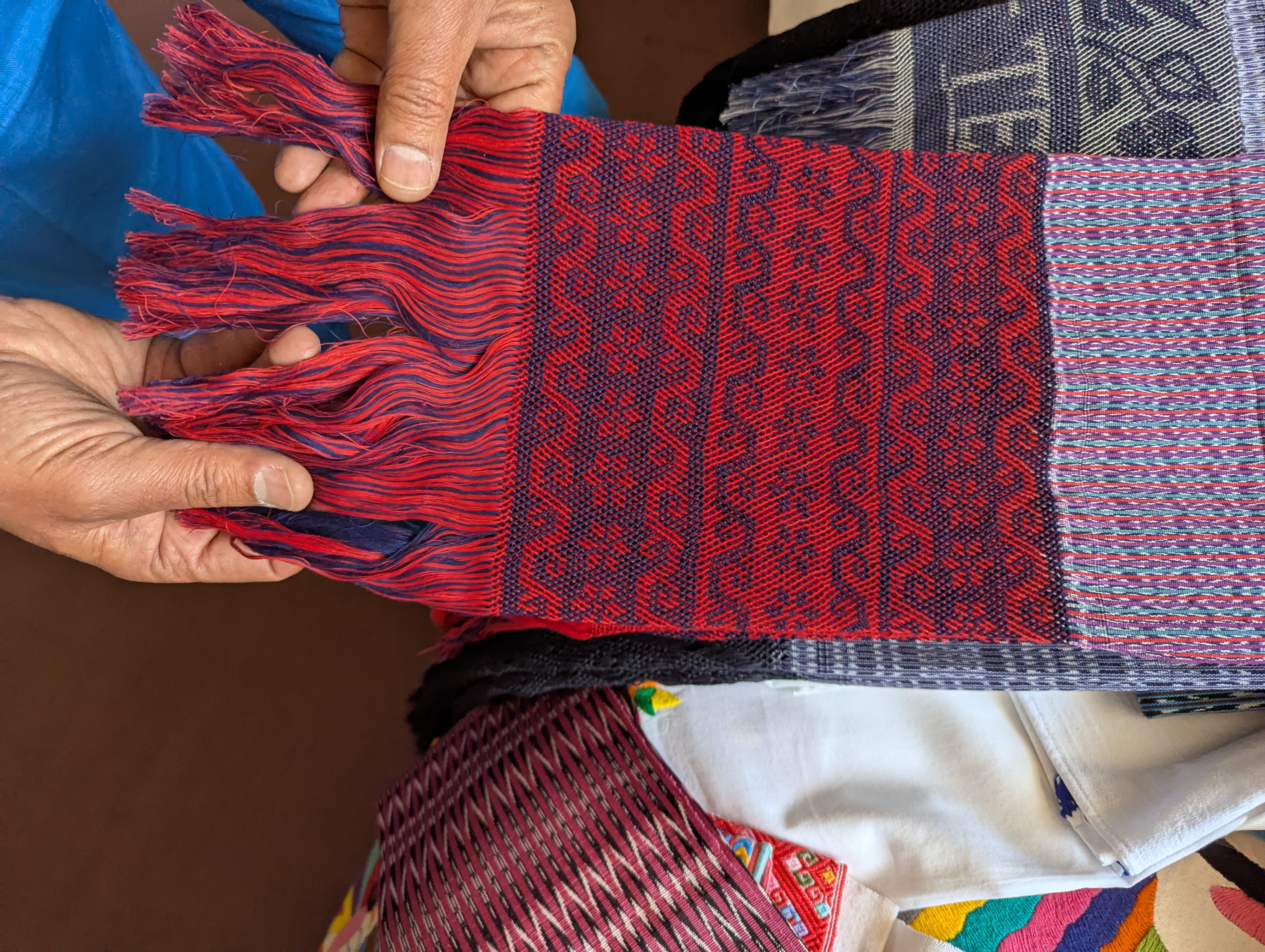
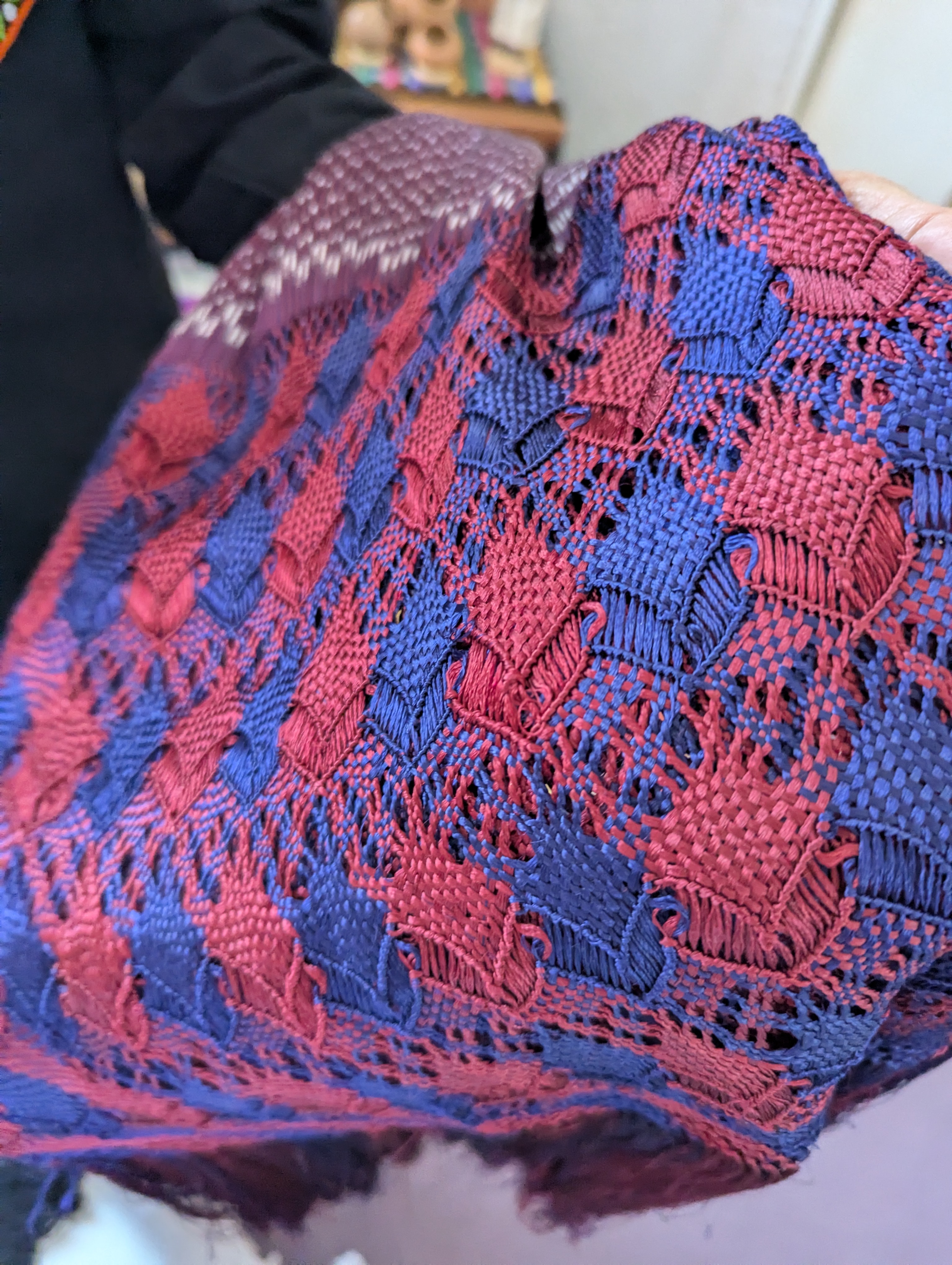
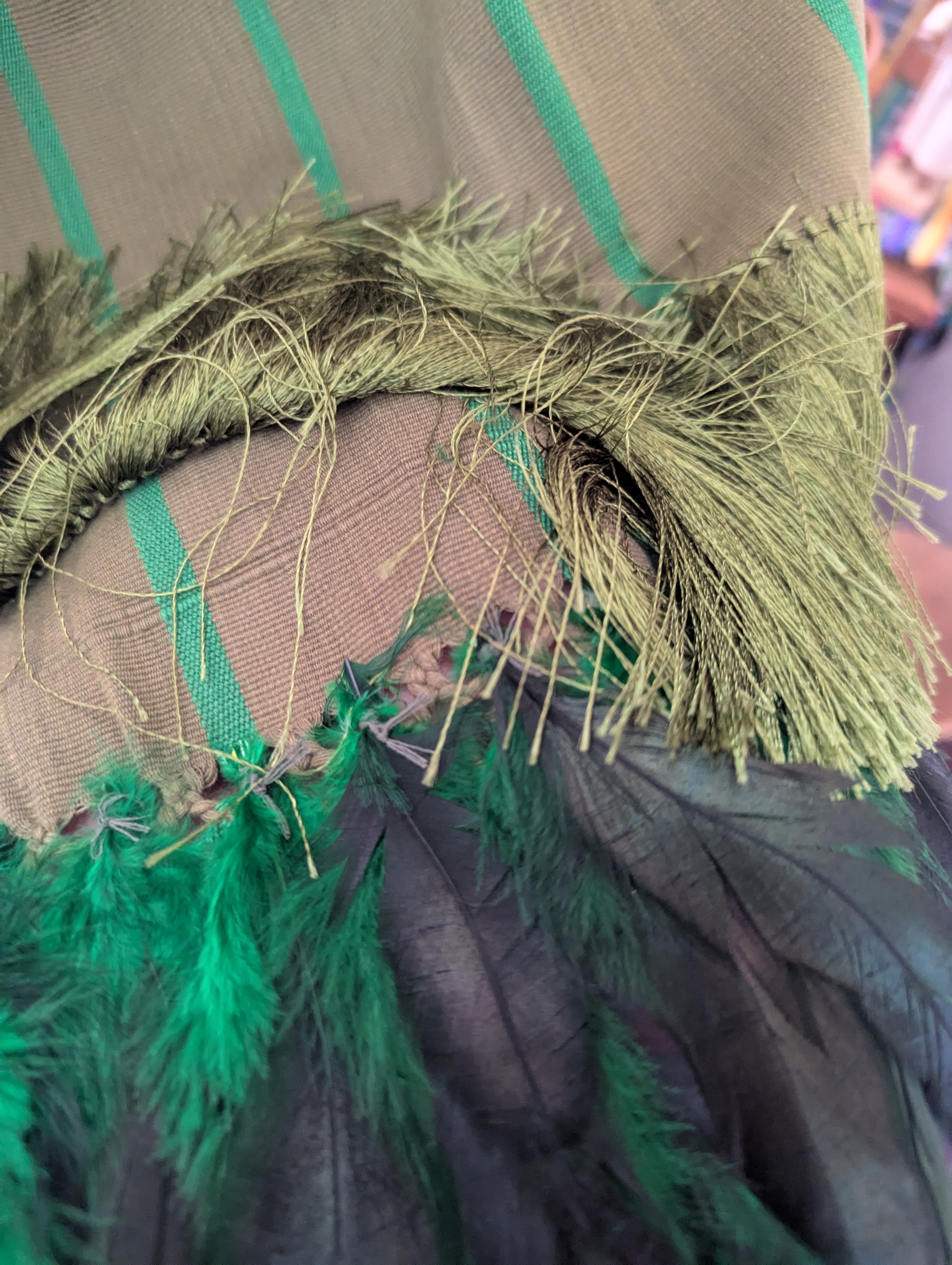
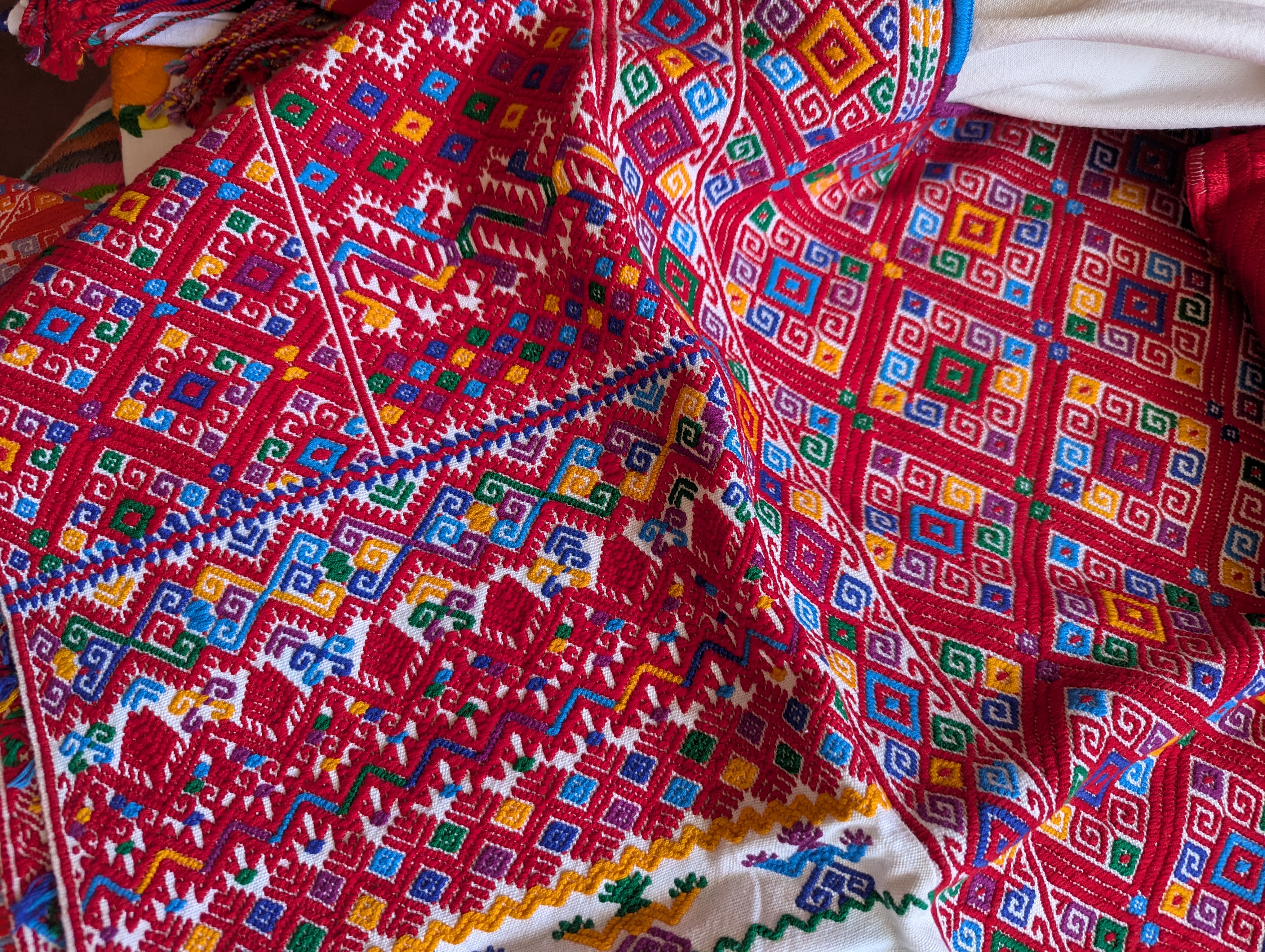
His work is grounded not in proximity to objects, to makers, and to the social worlds from which these textiles emerge. The depth of his knowledge reflects years of attentive collecting, dialogue with artisans, and an embodied understanding of technique, use, and meaning. In this sense, his collection operates not only as an archive, but as a site of an ongoing inquiry that resists the boundaries often imposed by disciplinary or institutional limits.
During my visit, Fraga Valle was extremely generous with both his time and his expertise. He not only shared access to a remarkable range of garments that were all presented with care and contextual insight; but also provided historical framing that enriched my understanding of their significance. Equally important, he offered a network of contacts and research leads that will undoubtedly shape the next stages of my work. Such acts of intellectual generosity and collegial exchange are foundational to the advancement of scholarship, even if they are rarely formalized within academic citation practices. It is therefore both appropriate and necessary to acknowledge the vital role of independent scholars, collectors, and cultural practitioners in the production of knowledge. Their contributions complicate and expand the terrain of research, reminding us that expertise is not the exclusive domain of the university, but is cultivated across a range of contexts; often in ways that are more immediate, relational, and materially grounded.
With sincere gratitude: thank you, Raymundo Fraga Valle, for your generosity, your insight, and your commitment to preserving and sharing the rich textile and sartorial traditions of Mexico.
REFERENCES
Ballet Folklórico de México. n.d. “Repertorio de danzas regionales.” General reference. Accessed April 7, 2026. https://es.wikipedia.org/wiki/Zapateo_tabasque%C3%B1o
Fraga Valle, Raymundo. 2026. Personal interview and collection visit with the author. Puebla City, Mexico. April 6.
Fraga Valle, Raymundo. Instagram Account. https://www.instagram.com/raymundo.f.valle/
Fraga Valle, Raymundo. “Tenangos in the Puebla House.” Google Arts & Culture, Cocina Cinco Fuegos. Accessed April 7, 2026. https://artsandculture.google.com/story/7wXBViWH9OIOXg?hl=en
Museo Nacional de Culturas Populares. 2025a. “La Huasteca poblana en la CDMX: tejidos que cuentan historia.” Facebook post. Accessed April 7, 2026. https://www.facebook.com/MuseoNacionaldeCulturasPopulares/posts/1229070505933584/
Museo Nacional de Culturas Populares. 2025b. “Muestra de indumentaria de la Huasteca poblana.” Instagram video. Accessed April 7, 2026. https://www.instagram.com/reel/DQSg_1Ekesr/
Museo Nacional de Culturas Populares. 2025c. “Danza de Negritos (Huasteca poblana).” Event documentation. Accessed April 7, 2026. https://mncp.cultura.gob.mx/events/lista/pagina/2/?eventDisplay=past&tribe-bar-date=2025-11-19
Fraga Valle, Raymundo. 2025. “El lenguaje de los textiles en los pueblos originarios.” Public lecture (documented via Instagram). Accessed April 7, 2026. https://www.instagram.com/p/DGZAtQKSlnh/
Nota Teziuteca. 2024. “Evaluación de prendas ganadoras del XV concurso…” Facebook post. Accessed April 7, 2026. https://www.facebook.com/NotaTeziuteca/posts/1110936901102179/
Universidad de las Américas Puebla (UDLAP). 2019. “Colores de nuestros pueblos – Zentzontle.” Performance documentation. Accessed April 7, 2026. https://blog.udlap.mx/blog/2019/06/24/muestra-orquestada-por-zentzontle-udlap-deja-prueba-de-mexico-es-cultura-musica-danza-textil/
Unknown creator. 2024. “Danza tradicional otomí con indumentaria bordada (estilo Tenango).” Instagram video. Accessed April 7, 2026. https://www.instagram.com/reel/DBfnKthgsMg/
[Spanish]
La Colección de Raymundo Fraga Valle en Puebla, México y la Coreografía del Significado Cultural
Raymundo Fraga Valle, radicado en Puebla, ocupa una posición distintiva dentro del campo de los estudios de la indumentaria mexicana como coleccionista, curador e interlocutor cultural cuya labor articula la cultura material, la etnografía y la historia de la moda. Su colección, conformada a través de una relación sostenida con artesanos, tradiciones regionales y sistemas de producción, constituye no solo un archivo de prendas, sino un repositorio dinámico de conocimiento cultural . Es particularmente rica en ejemplos de indumentaria indígena y vernácula provenientes del centro y sur de México, incluyendo Puebla, Hidalgo, Guerrero, Chiapas y Michoacán. En ella, piezas como huipiles, rebozos, enredos y textiles domésticos bordados se preservan no como artefactos estáticos, sino como encarnaciones vivas de identidad, trabajo y continuidad histórica.
La colección de Fraga Valle se distingue tanto por su amplitud geográfica como por su coherencia conceptual, constituyendo un conjunto estratificado de indumentaria tradicional procedente de múltiples regiones del país. Si bien se encuentra profundamente arraigada en Puebla —particularmente en la Huasteca poblana—, se extiende hacia las culturas textiles de Hidalgo (notablemente las comunidades otomíes como Tenango), así como Guerrero, Chiapas, Michoacán y otras regiones de notable riqueza textil. Este alcance transregional no se disuelve en la generalidad; por el contrario, se articula a través de Puebla como nodo cultural e interpretativo, un espacio desde el cual diversas tradiciones se reúnen, se reformulan y entran en diálogo.
Dentro de este conjunto, ciertos tipos de objetos recurren con resonancia formal y simbólica: rebozos de distintas técnicas y acabados; huipiles y blusas bordadas que articulan identidades regionales mediante corte, motivo y técnica; faldas y enredos cuya estructura y ornamentación remiten tanto a la vida cotidiana como a contextos ceremoniales; y textiles domésticos bordados —especialmente los tenangos— cuyas superficies densas operan como campos narrativos. En conjunto, estas piezas de arte vestible configuran una taxonomía de la indumentaria que es simultáneamente material y epistemológica, trazando relaciones entre cuerpo, comunidad y entorno.
Una característica definitoria del trabajo de Fraga Valle es su atención sostenida a la técnica y a las condiciones de producción. La colección pone de relieve procesos como el tejido en telar de cintura, las tradiciones de teñido natural y el bordado manual de gran complejidad, a menudo ejecutado en composiciones densas y rítmicamente estructuradas. En el caso de los tenangos, por ejemplo, se enfatiza no solo su riqueza iconográfica, sino también la organización social de su producción: la división del trabajo entre diseñadores y bordadores, la simetría y densidad calibradas de sus motivos, y las redes regionales a través de las cuales circulan. Este énfasis sitúa la colección firmemente dentro de metodologías basadas en el objeto y en el proceso, donde el significado emerge tanto de la práctica material como de la forma.
De igual manera, resulta central la interpretación de Fraga Valle de la indumentaria como un lenguaje: un sistema expresivo mediante el cual se articulan identidad, cosmovisión y experiencia histórica. Su análisis atiende de manera precisa a los motivos simbólicos —zoomorfos, vegetales y cosmológicos—, así como a las formas en que las prendas funcionan como marcadores de pertenencia regional. Al mismo tiempo, subraya el carácter dinámico de estas tradiciones, rastreando continuidades junto con procesos de transformación y adaptación. En este sentido, la colección ofrece un terreno particularmente fértil para la semiótica cultural y para lecturas poscoloniales de la indumentaria como espacio de negociación entre continuidad y cambio.
La relación de Fraga Valle con su colección trasciende la mera adquisición para convertirse en una práctica curatorial activa. Participa en exposiciones y presentaciones como prestador, colaborador e intérprete, aportando no solo objetos sino también el conocimiento contextual que los hace inteligibles. Destacan sus colaboraciones con instituciones académicas y culturales como la Universidad de las Américas Puebla (UDLAP), donde piezas de su colección han formado parte de exposiciones como Colores de nuestros pueblos, acompañadas de marcos interpretativos detallados. De manera similar, su participación en el Museo Nacional de Culturas Populares en la Ciudad de México ha puesto en primer plano tradiciones regionales —como las de la Huasteca poblana— mediante exposiciones que enfatizan técnica, significado y contexto vivido.
Además de estas colaboraciones, Fraga Valle ha desarrollado una autoría curatorial tanto en formatos físicos como digitales, articulando narrativas en torno a los textiles que los sitúan dentro de la vida cotidiana. Su voz curatorial resiste de manera consistente la aislamiento de los objetos dentro de marcos puramente estéticos o museográficos, enfatizando en cambio su uso doméstico, su inserción en la práctica diaria y su interrelación con otros ámbitos culturales, incluyendo la alimentación y la ritualidad. Este enfoque reposiciona los textiles no como artefactos estáticos, sino como participantes activos en procesos sociales y culturales.
Subyacente a este cuerpo de trabajo se encuentra una orientación conceptual que entiende la indumentaria como patrimonio cultural inmaterial: un repositorio de memoria, identidad y conocimiento colectivo en constante formación. El enfoque de Fraga Valle hacia el coleccionismo es notablemente no extractivo; se posiciona menos como propietario de los objetos que como guía y mediador, destacando a los artesanos y comunidades de los que emergen las prendas. De este modo, promueve la visibilidad, el reconocimiento y una práctica ética, cuestionando los modelos extractivos que históricamente han estructurado la circulación de la cultura material indígena.
Su trabajo dialoga estrechamente con las corrientes contemporáneas en los estudios de moda y textiles, particularmente en su alineación con metodologías de cultura material, su compromiso con los sistemas de conocimiento indígenas y su atención a la identidad poscolonial y la hibridez. Asimismo, subraya el papel de la indumentaria como medio de expresión política y social, un enfoque que encuentra paralelos claros en estudios del rebozo, la china poblana y el traje de charro como articulaciones de identidad y nación.
En Puebla, la colección no reside en un archivo institucional fijo; más bien, circula entre universidades, instituciones culturales y exposiciones temporales, funcionando como un archivo móvil y activo para la investigación. Esta movilidad es fundamental para su carácter, permitiéndole mantenerse como un sistema dinámico, dialógico y pedagógicamente comprometido.
Esta orientación se hizo particularmente evidente durante mi visita al taller de Fraga Valle en la ciudad de Puebla el 6 de abril de 2026. El espacio funcionaba menos como un estudio convencional que como un entorno íntimo y estratificado de textiles, donde las prendas estaban dispuestas de manera que invitaban tanto a la observación detallada como al despliegue narrativo. Durante la visita, Fraga Valle presentó generosamente una selección de huipiles, rebozos y otras piezas de su colección, cada una acompañada de explicaciones detalladas sobre su procedencia, técnica y significado cultural.
Los huipiles, en particular, revelaban una notable diversidad regional y sofisticación técnica: algunos densamente bordados con motivos policromos —animales, formas vegetales y estructuras geométricas— dispuestos en composiciones rítmicas casi cartográficas; otros más sobrios, donde los patrones emergían de la estructura misma del tejido. Varias piezas habían sido elaboradas en telar de cintura, mostrando las sutiles irregularidades y tensiones propias de esta técnica corporal, en la que la postura y el movimiento de la tejedora son parte integral del proceso. Los rebozos, por su parte, evidenciaban una extraordinaria diversidad de materiales y acabados, desde ejemplos finamente tejidos con complejos diseños de jaspe (ikat) hasta piezas más densas y táctiles cuyas puntas y bordes articulaban identidades regionales y destrezas individuales.
La narrativa de Fraga Valle no aislaba los objetos como meros especímenes estéticos, sino que los situaba dentro de un continuo de uso, significado e intercambio. De este modo, las prendas funcionan como “archivos vivos”: portadores de memoria, técnica y negociación cultural que continúan adquiriendo significado a través de su circulación e interpretación. Lo que emergió con mayor fuerza de este encuentro fue la comprensión de la colección como una constelación de relaciones: entre creador y material, entre región y forma, entre pasado y presente.
Una dimensión esencial de la práctica de Fraga Valle radica en la producción de eventos de moda y danza que activan las prendas como formas vivas y cinéticas, extendiendo su significado más allá de la exhibición estática hacia el ámbito de la performance encarnada. En estos contextos, la indumentaria no solo se muestra, sino que se ejecuta: se pone en movimiento mediante tradiciones coreográficas y vernáculas que revelan la plena capacidad expresiva del textil, el corte y el adorno. Tales eventos funcionan como espacios dinámicos de comunicación cultural, donde las prendas articulan identidad no solo a través de sus propiedades materiales, sino mediante el gesto, el ritmo y la presencia corporal.
Durante nuestro encuentro, Fraga Valle también explicó cómo las tradiciones de vestimenta españolas fueron introducidas en México y posteriormente hibridadas con las tradiciones indígenas, dando lugar a nuevas formas y lenguajes sartoriales. Para los estudiosos de la indumentaria mexicana del siglo XIX y sus derivas contemporáneas, su trabajo constituye un punto de contacto fundamental entre la investigación histórica y la práctica actual.
Asimismo, es importante reconocer que no toda investigación cultural significativa se desarrolla dentro de los marcos formales de la educación superior. Encuentros como mi visita con Raymundo Fraga Valle recuerdan de manera contundente que la producción de conocimiento crítico ocurre también fuera de las instituciones académicas, en espacios configurados por la experiencia vivida, las relaciones sostenidas y un compromiso profundo con la cultura material.
Con sincero agradecimiento: gracias, Raymundo Fraga Valle, por tu generosidad, tu conocimiento y tu compromiso con la preservación y difusión de las ricas tradiciones textiles y sartoriales de México.
 markoconnellstudio