
Juana Gutiérrez, Natural Dyes, and the Dyeing Traditions of Teotitlán del Valle, Mexico
Dr. Mark Joseph O’Connell
Seneca Polytechnic, Toronto, ON, Canada
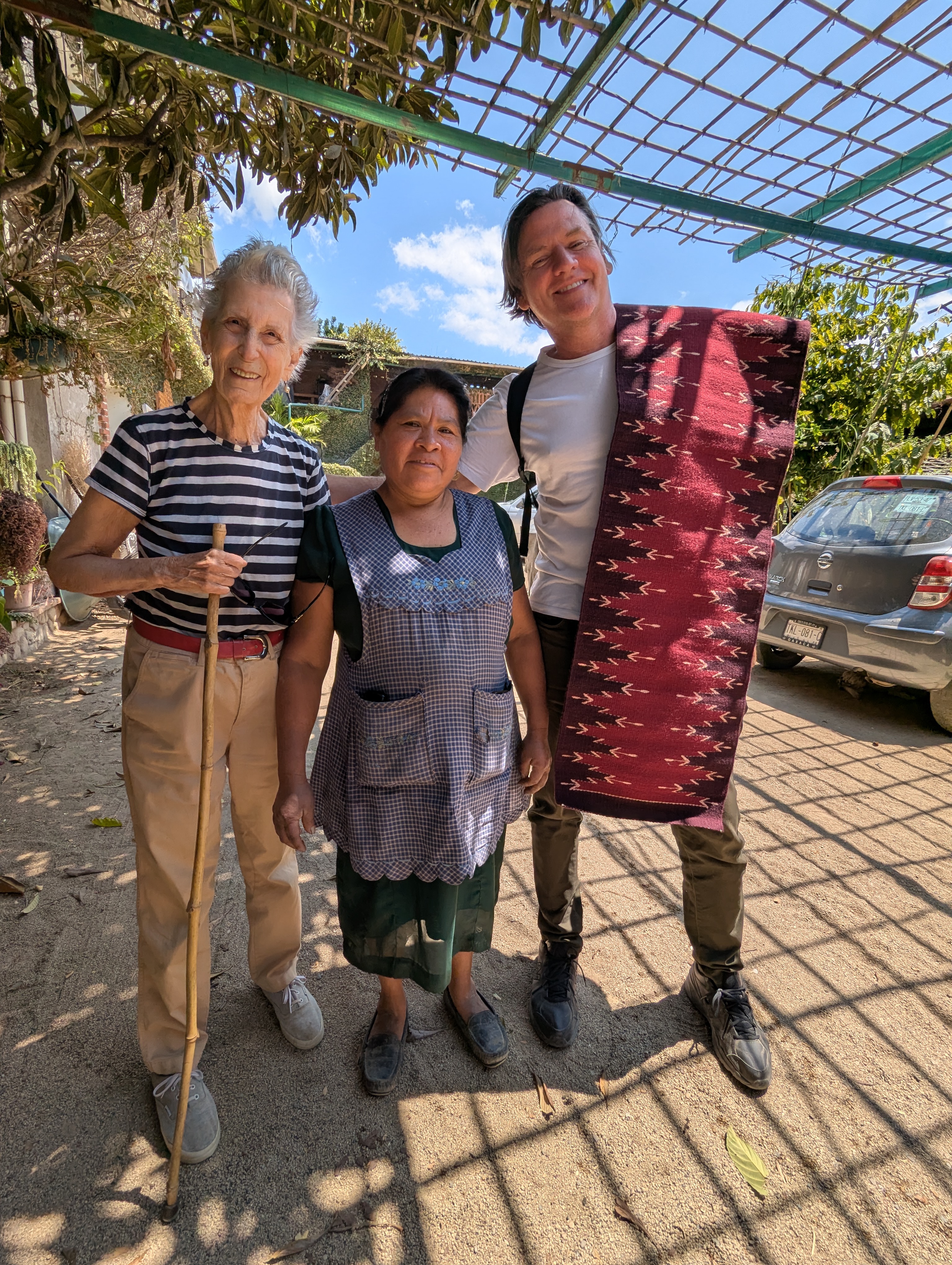
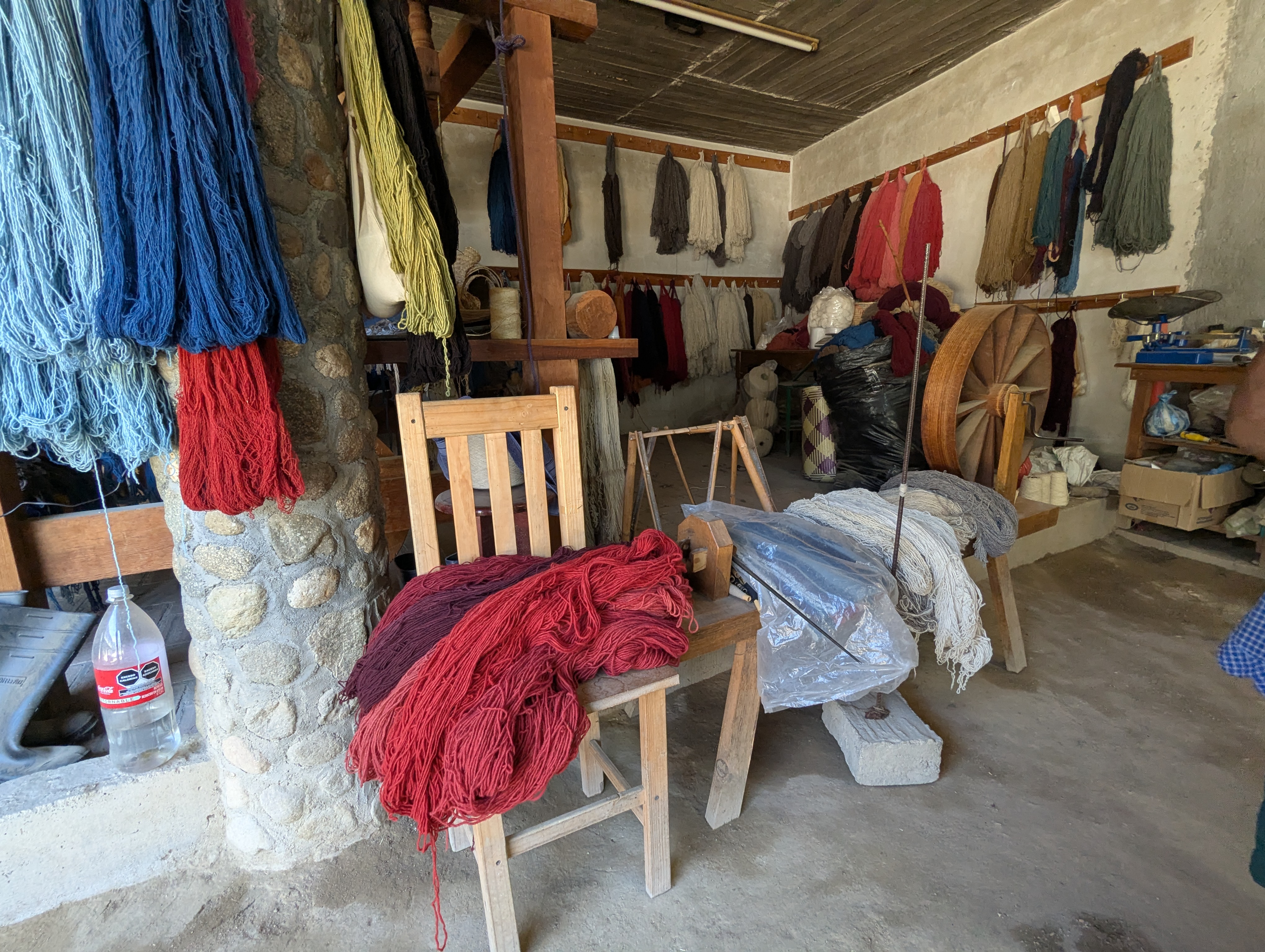
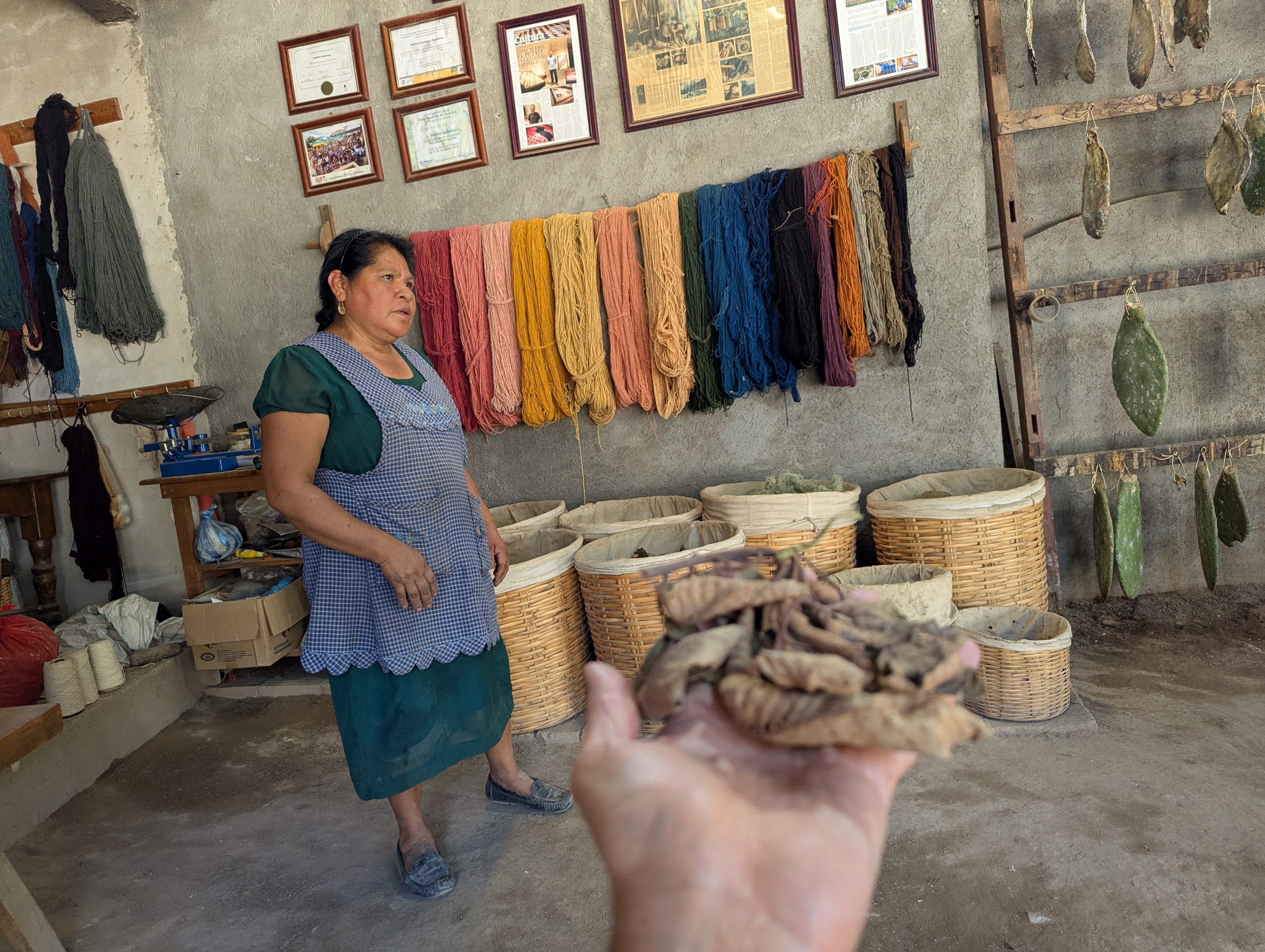
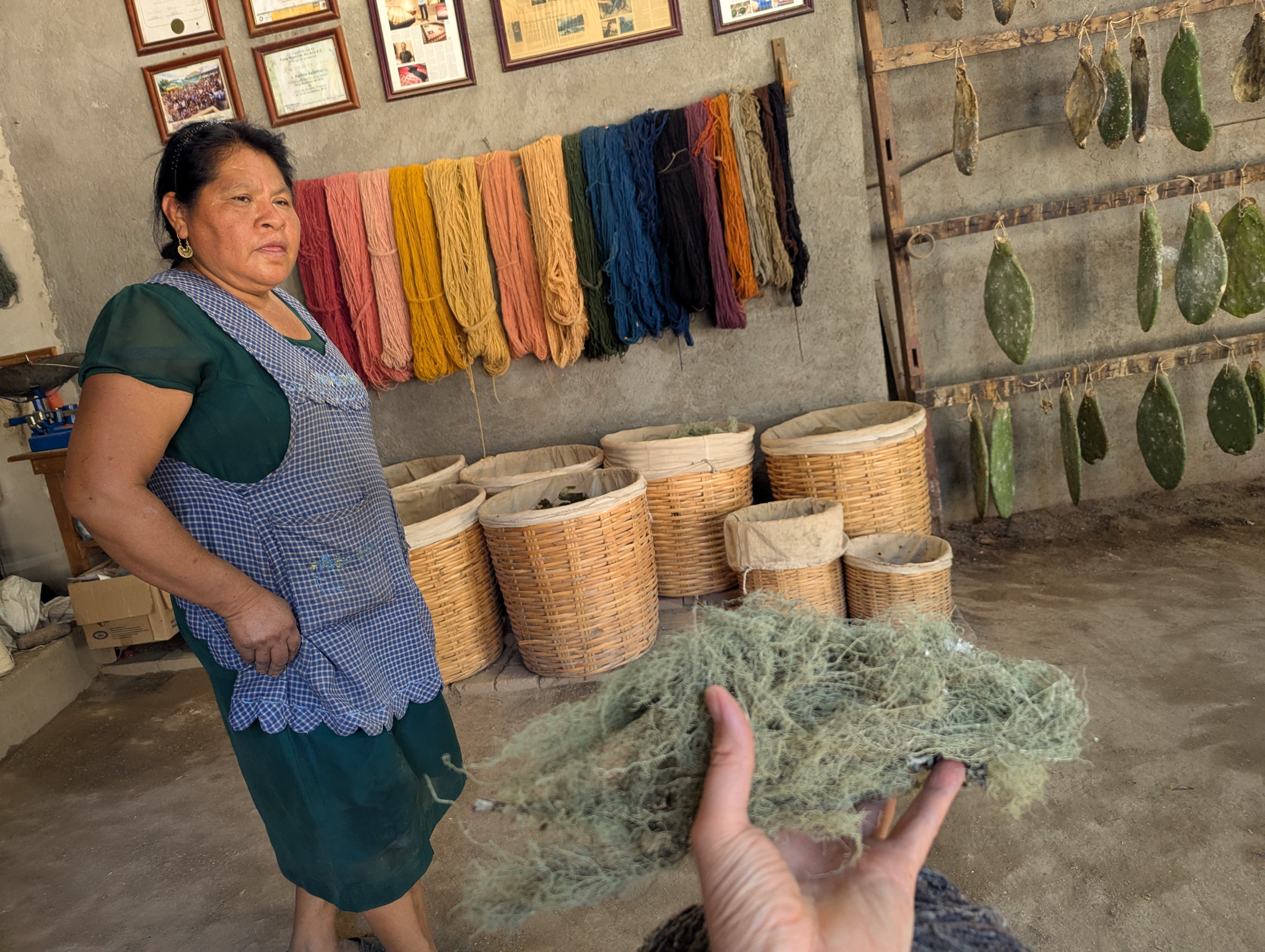
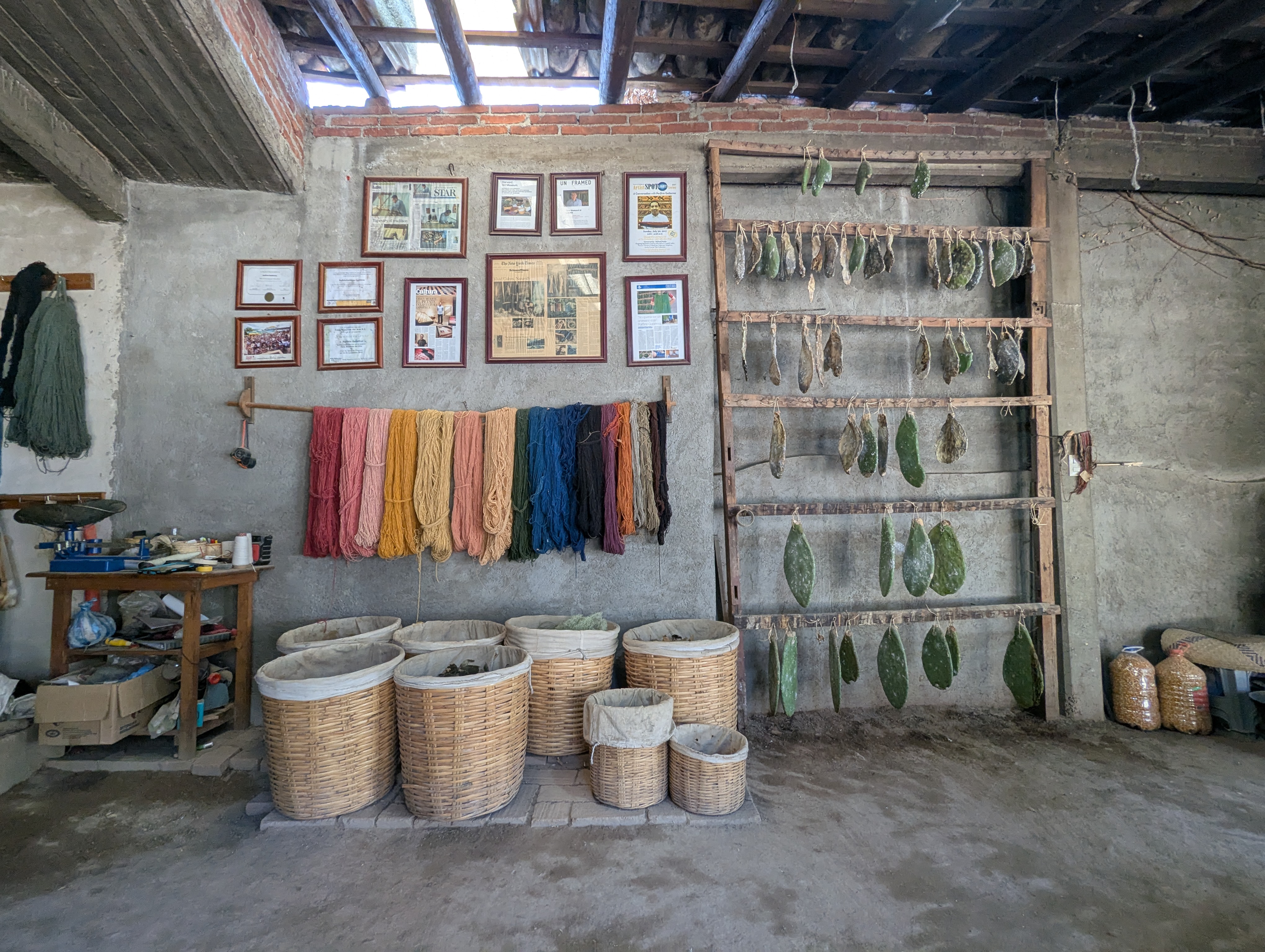
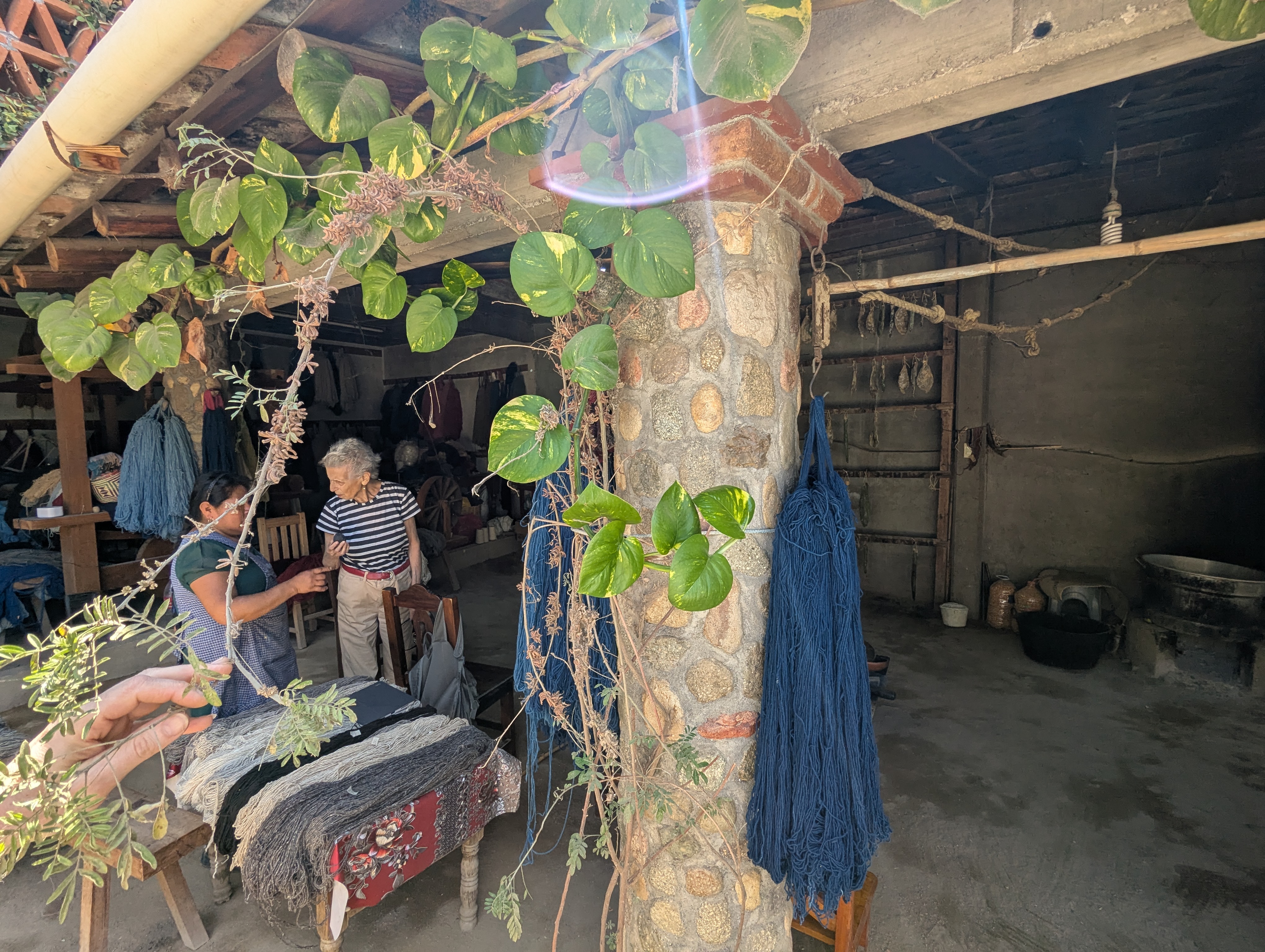
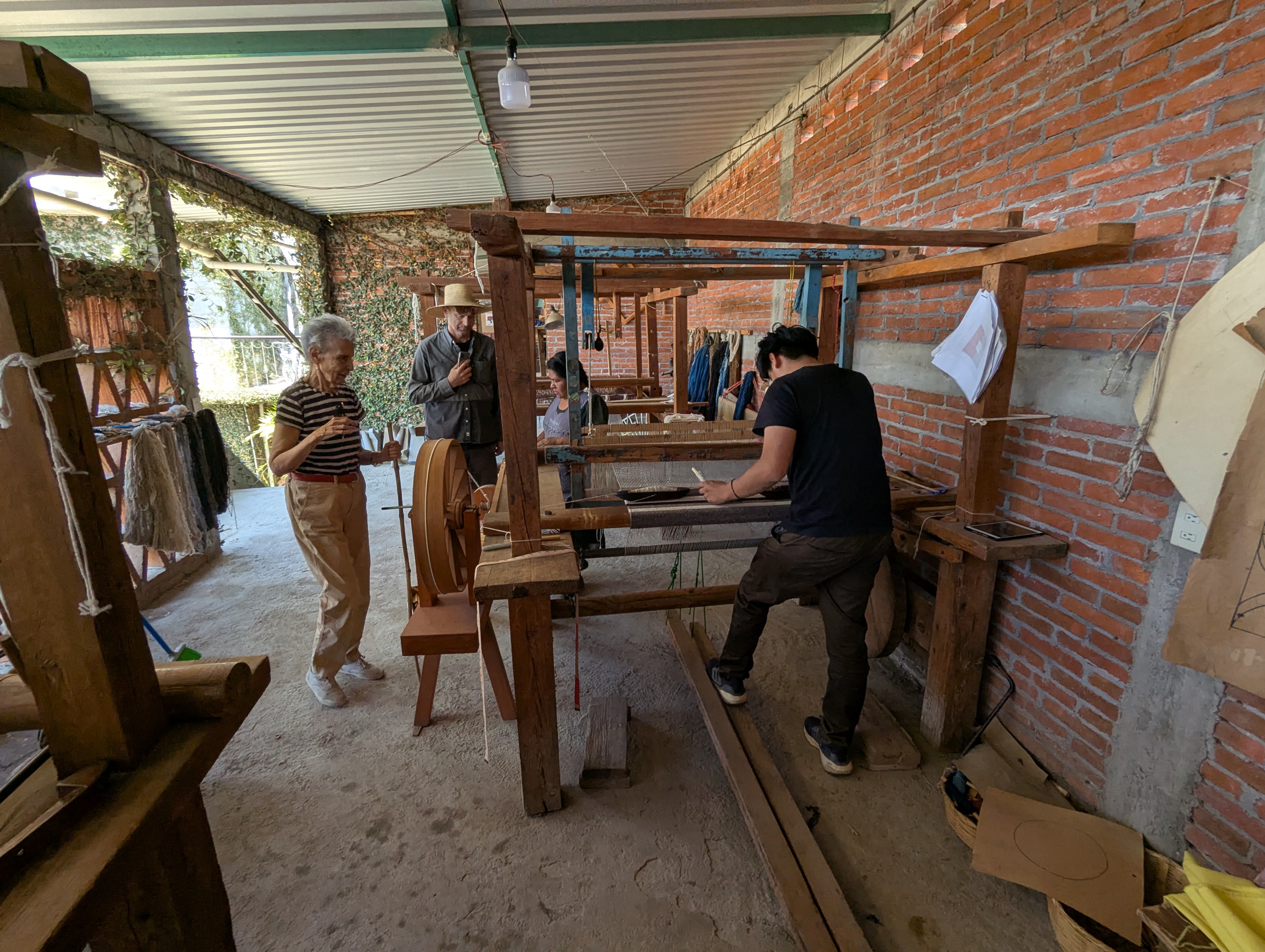
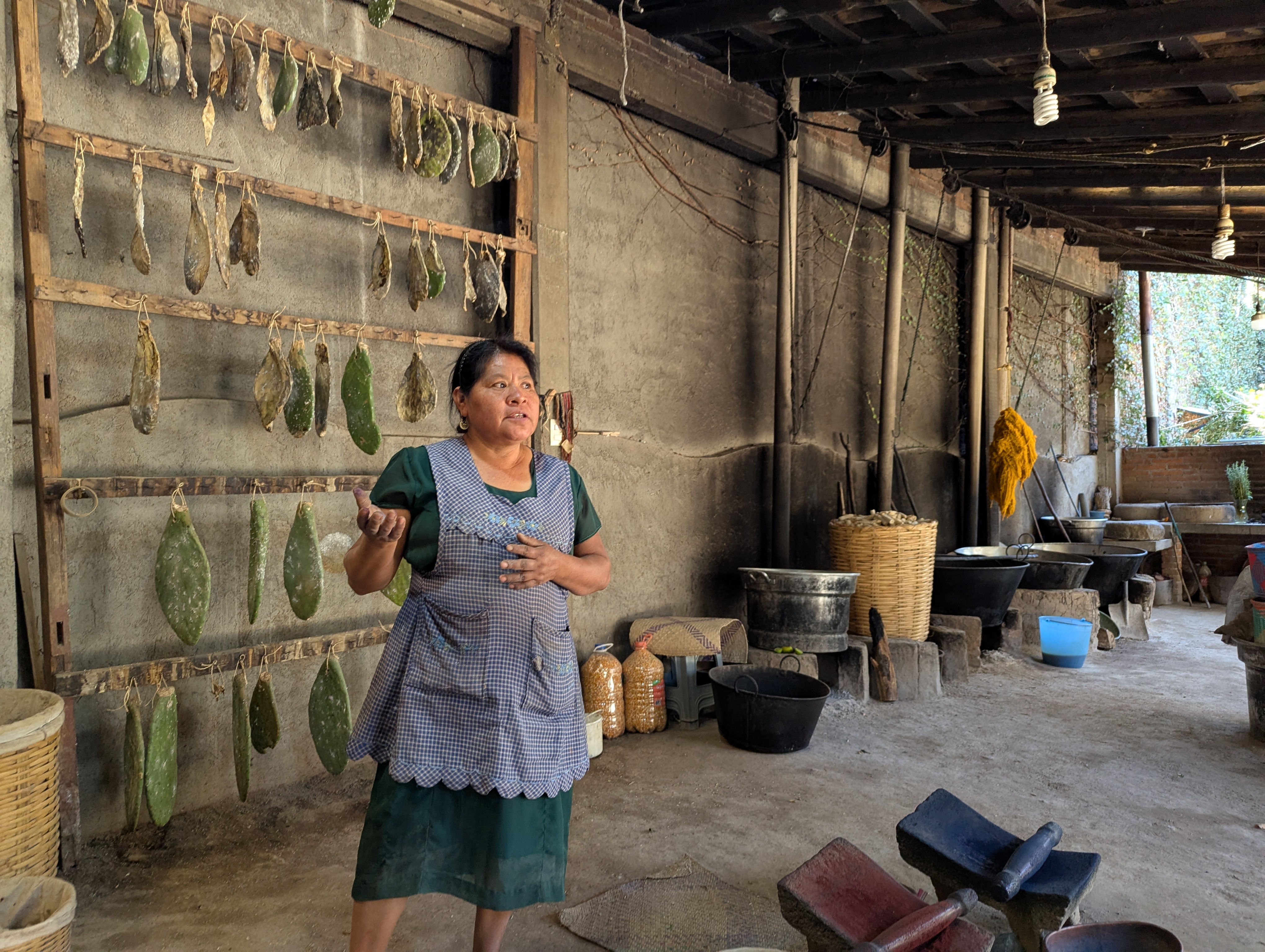
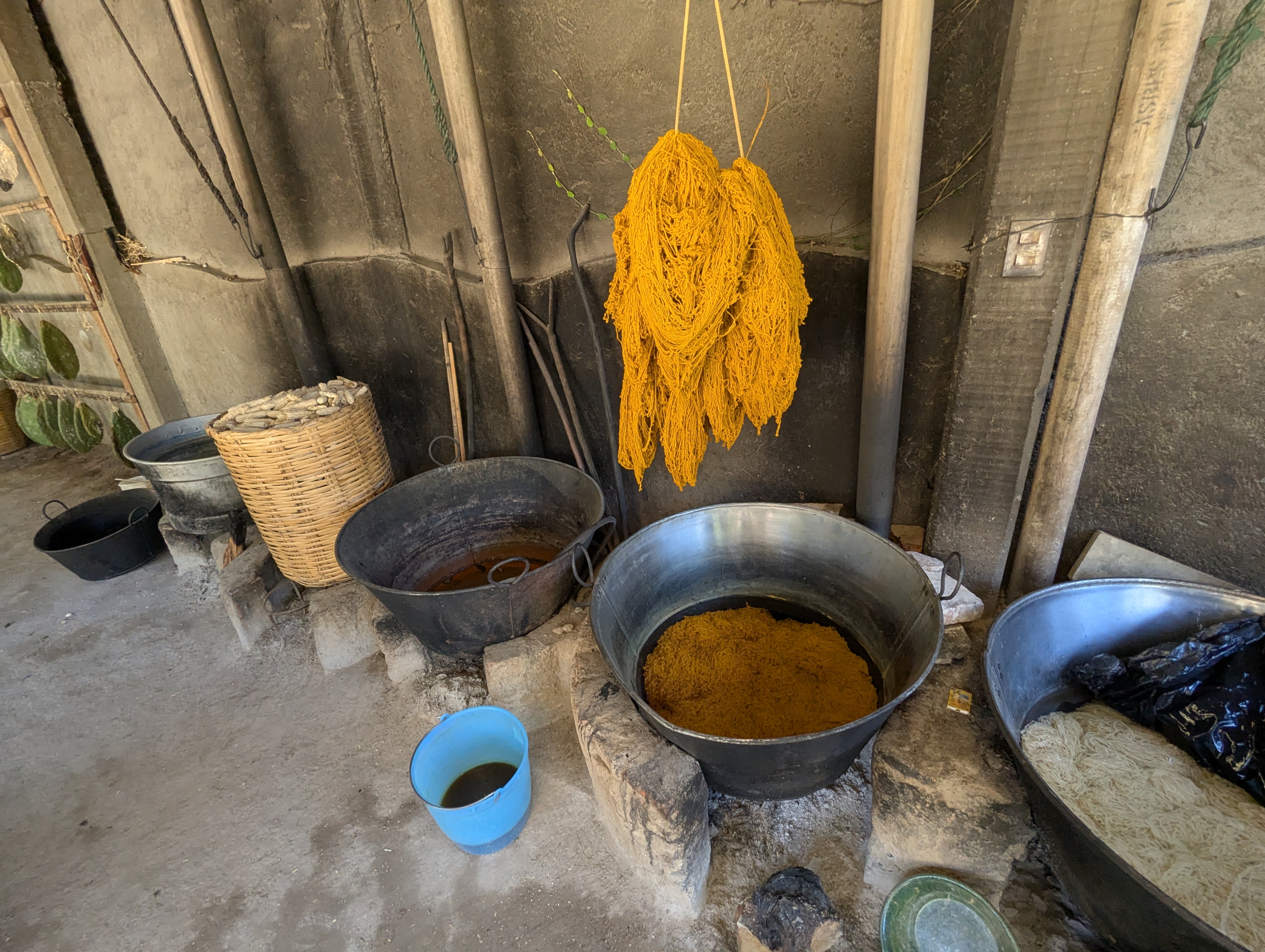
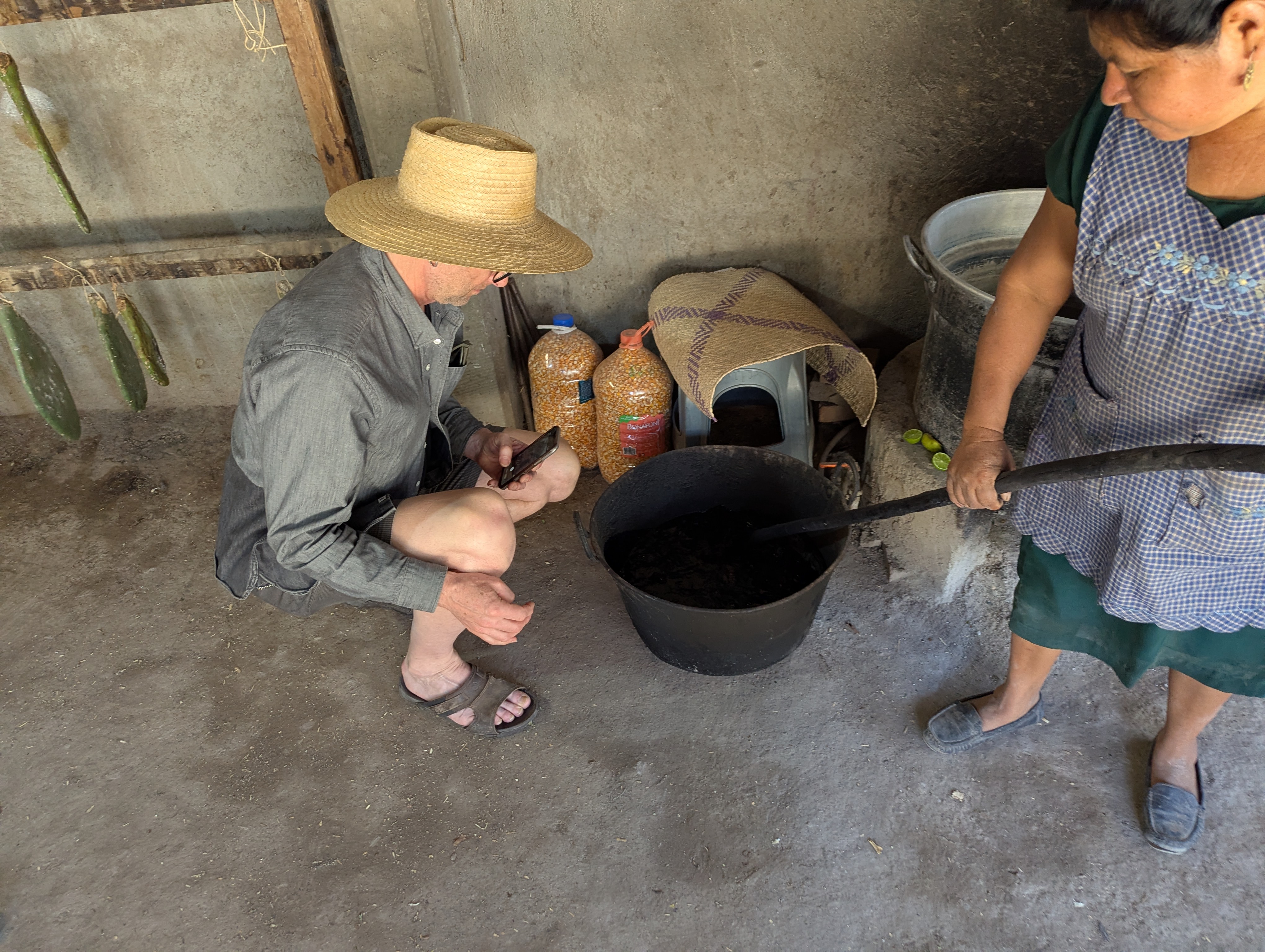
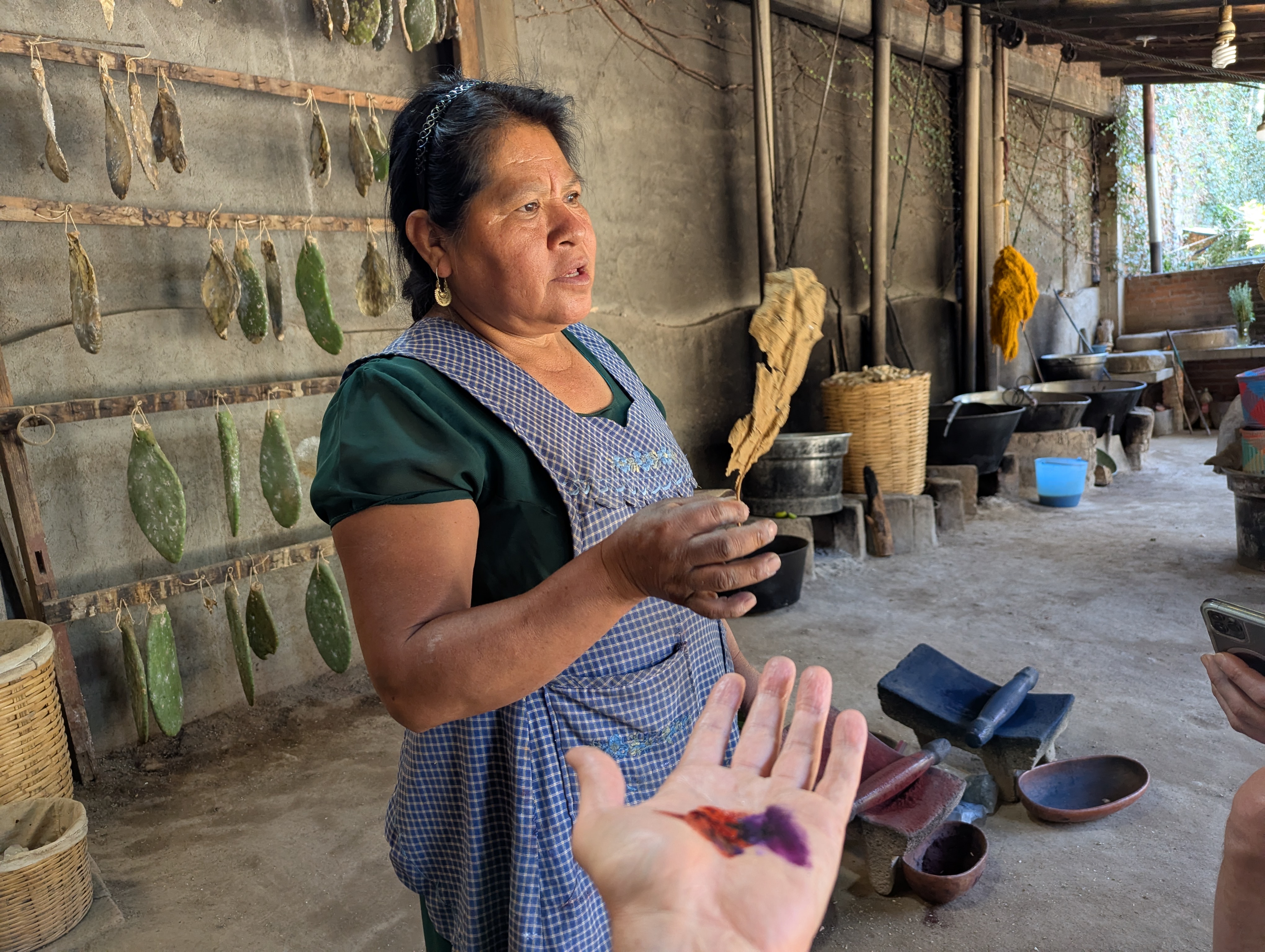
I recently had the great privilege of visiting the atelier of dyer and weaver, Juana Gutierrez where she gave a lecture and demonstration on natural dyes in Oaxaca. Gutiérrez was one of the first to bring back natural dying for the contemporary woven carpet trade in Mexico. Using traditional dyestuffs she has created thousands of gorgeous colours. She showed us her process, as well as how she uses cochineal and Indigo, two of the most important dyestuffs in the history of textiles in the Americas.
In my lecture I would like to cover three main topics:
The cultural and historical context of weaving in Teotitlán del Valle.
Juana Gutiérrez and the revival of natural dye traditions.
And an overview of important natural dyestuffs, including cochineal and indigo.
First Teotitlán del Valle, is a Zapotec town located in the Central Valleys of Oaxaca, Mexico. The community has been known for weaving for centuries, with roots going back to the pre-Hispanic period. Before the Spanish arrived in the 16th century, Zapotec weavers worked primarily with cotton and used backstrap looms, dyeing yarn with plants, minerals, and insects. After the Spanish conquest, several important changes occurred. Sheep were introduced, which made wool widely available, and the treadle loom, brought from Europe, allowed for the production of larger textiles such as rugs, blankets, and tapestries. These textiles became important trade goods, and weaving became a central economic activity in the town. There are even communities like San Pedro Cajonos, where the knowledge and techniques associated with sericulture (the local manufacture of silk) has endured.
For many generations, families in Teotitlán passed down knowledge of spinning, weaving, and dyeing. However, during the 20th century, synthetic dyes became common because they were cheaper, easier to use, and produced bright, consistent colours. As a result, many traditional dyeing techniques were nearly lost.
In recent decades, some families began working to revive the use of natural dyes. One of the most important figures in this revival is Juana Gutiérrez. Gutiérrez is a Zapotec weaver who is widely respected for her dedication to traditional methods. She comes from a family of weavers, but she became especially known for her work with natural dye processes, which require deep knowledge of plants, insects, minerals, and chemistry.
Her work is important not only because of the beauty of the textiles she produces, but because she has helped preserve knowledge that might otherwise have disappeared. Natural dyeing is complex. Each color requires different materials, different temperatures, and often different mordants, which are substances used to fix the dye to the fiber. Gutiérrez learned many of these techniques from older generations and from experimentation. She also became part of a broader movement in Oaxaca to value traditional knowledge and indigenous cultural practices.
Today, textiles dyed with natural colors are often more expensive than those dyed with synthetic dyes, but they are valued for their depth of color, durability, and cultural meaning. When Juana Gutiérrez dyes wool, she is not only making color, she is continuing a tradition that connects modern artisans with centuries of Zapotec history.
The weaving traditions of Teotitlán del Valle, Oaxaca, have been widely discussed in scholarship on Mesoamerican textiles, particularly in relation to continuity and change after the Spanish conquest. Pre-Hispanic Zapotec weavers produced cotton textiles using the backstrap loom and relied on natural dyestuffs derived from plants, insects, and minerals, practices documented in both archaeological and ethnohistorical sources (Anawalt 2001; Schevill 1986). Following the introduction of sheep and the European treadle loom in the sixteenth century, wool weaving became central to the regional economy, and communities such as Teotitlán developed a strong commercial textile tradition that continues today (Chibnik 2003). During the twentieth century, however, the adoption of synthetic dyes led to the decline of many traditional dyeing techniques because synthetic colorants were less expensive and easier to use (O’Connell 2021). In recent decades, artisans in Oaxaca have participated in a broader revival of natural dye practices associated with cultural preservation and the marketing of handmade textiles to national and international audiences (O’Connell 2021). Among the most important figures in this revival is Zapotec dyer Juana Gutiérrez, whose work has been noted for reintroducing complex natural dye processes into contemporary rug production and for preserving specialized knowledge of dyestuffs such as cochineal and indigo (O’Connell 2021). Studies of natural dye traditions emphasize that these materials are not only technical resources but also carriers of cultural meaning, linking present-day artisans to long-standing Indigenous knowledge systems in Oaxaca (Anawalt 2001).
To understand the work of Juana Gutiérrez, we need to look at the materials she uses. These materials are called dyestuffs. What Are Natural Dyestuffs? A dyestuff is any natural material used to produce colour. In traditional Mexican weaving, dyestuffs come from three main sources:
- Plants
- Insects
- Minerals
Each dyestuff produces a different range of colours depending on how it is prepared and what mordant is used.
Some common natural dyestuffs used in Teotitlán include:
- Cochineal (insect)
- Indigo (plant)
- Pericón (plant, yellow)
- Pomegranate skins (plant, yellow-green)
- Walnut husks (plant, brown)
- Mosses and lichens (plant/fungus, greens and browns)
Among these, cochineal and indigo are the most famous and historically important.
Cochineal is one of the most valuable natural dyes ever produced in the world. It comes from a small insect that lives on the nopal cactus, which grows in Mexico and other parts of Latin America.
The insect produces a substance called carminic acid, which creates a brilliant red colour when extracted.
To make the dye, the insects are collected, dried, and crushed into a powder. This powder can produce a wide range of colours depending on how it is used.
For example: with alum mordant a bright red; with iron a purple or brown, with lime, orange; and with tin, scarlet.
In colonial times, cochineal was one of Mexico’s most valuable exports, second only to silver. European painters and textile makers prized it because it produced a strong, long-lasting red that could not easily be made from European plants. In Teotitlán today, artisans like Juana Gutiérrez still use cochineal to dye wool for rugs and tapestries. The red produced from cochineal has a depth and richness that synthetic dyes often cannot match. Working with cochineal requires skill, because the final colour depends on: water quality; temperature; mordant; amount of insect used; and length of time in the dye bath. This is why natural dyeing is considered both a science and an art.
Another extremely important dyestuff is indigo, which produces a range of blue shades.
Indigo (or Añil in Spanish) comes from plants in the Indigofera family. The leaves contain a chemical that can be turned into blue dye through fermentation. Unlike cochineal, indigo does not dissolve easily in water. Instead, the dyer must create a special indigo vat, where the dye is chemically reduced so it can coat the fibre.
The process works like this: first leaves are fermented to release the dye compound, then the dye is reduced in a vat, turning the liquid yellow-green. Wool is dipped into the vat, then, when the wool comes out and touches the air, it turns blue. This transformation happens because the dye reacts with oxygen.
Indigo dyeing requires patience and experience. If the vat is not prepared correctly, the colour will not hold. Maintaining an indigo vat can take days or even weeks. In Teotitlán, indigo is used to produce: deep blues; light sky blues; blue-greens (when combined with yellow dyes); and rich purples when combined with cochineal.
Juana Gutiérrez and other natural dyers often combine indigo with other dyestuffs to create complex colours. For example: Indigo + cochineal = purple; Indigo + pomegranate = green; Indigo + walnut = dark blue-brown
Some might question: why use natural dyes when synthetic dyes are cheaper and easier?
There are several reasons. First, natural dyes are part of cultural heritage. In Teotitlán, dyeing is not only a technical process, it is knowledge passed down through generations. Second, natural dyes are environmentally important. Synthetic dyes can contain toxic chemicals that can pollute water, while traditional dyes are usually biodegradable. Third, natural colours have visual qualities that are difficult to reproduce artificially. They are more complex, with subtle variations that give handmade textiles their character.
Artists like Juana Gutiérrez help keep these traditions alive by teaching younger generations and by showing that traditional methods still have value in the modern world.
Conclusion
In conclusion, the work of Juana Gutiérrez shows us how natural dye traditions in Teotitlán del Valle connect history, culture, and art. Weaving in this Zapotec community has survived for centuries because knowledge has been passed from one generation to the next. By studying the work of Juana Gutiérrez, we see that natural dyeing is not only about colour, it is also about cultural memory, and the survival of traditional knowledge. Using traditional dyestuffs she has created thousands of gorgeous colours. On the day of our visit, she showed us her process, as well as how she uses cochineal and Indigo. Read the NYTimes article on her (and visit her atelier in Teotitlan) She is truly amazing!
References
Anawalt, P.R. and Nicholson, H.B., 1981. Indian clothing before Cortés: Mesoamerican costumes from the codices. Norman: University of Oklahoma Press.
Chibnik, Michael. 2003. Crafting Tradition: The Making and Marketing of Oaxacan Wood Carvings. Austin: University of Texas Press.
O’Connell, Mark Joseph. “Traditional weaving cultures in a global market: The case of Zapotec weavers.” International Journal of Fashion Studies 8, no. 1 (2021): 85-103. DOI: https://doi.org/10.1386/infs_00038_1
Schevill, Margot Blum. 1986. Textile Traditions of Mesoamerica and the Andes. Austin: University of Texas Press.
 markoconnellstudio