
“Terrestrial Paths and Restored Memories: Art, Craft, and Collective Histories at MUAC.”
Full lecture is here:
The Museo Universitario Arte Contemporáneo, widely known as MUAC, located on the campus of the Universidad Nacional Autónoma de México in Mexico City. Opened to the public in November of 2008 as part of UNAM’s Centro Cultural Universitario. It was conceived as the first public museum in Mexico designed specifically to collect, research, and exhibit contemporary art. While other institutions in Mexico had presented modern and contemporary practices, MUAC was distinctive in dedicating itself institutionally and architecturally to art produced from the second half of the twentieth century to the present. The museum houses and develops UNAM’s collection of contemporary art, which focuses particularly on works created from 1952 onward, a date that corresponds to the consolidation of postwar artistic practices in Mexico.
The building itself, designed by the Mexican architect Teodoro González de León, plays an important role in shaping the visitor’s experience. González de León was known for his use of monumental concrete forms and his engagement with modernist architectural language. At MUAC, the architecture balances monumentality with flexibility. The galleries are expansive and adaptable, allowing for installations, large-scale sculpture, video, and experimental display formats. The museum’s location within Ciudad Universitaria (recognized as a UNESCO World Heritage site) further situates it within a historically and culturally significant environment. As part of a major public university, MUAC is not only a museum but also a research center and pedagogical space, fostering dialogue between artists, scholars, students, and the broader public.
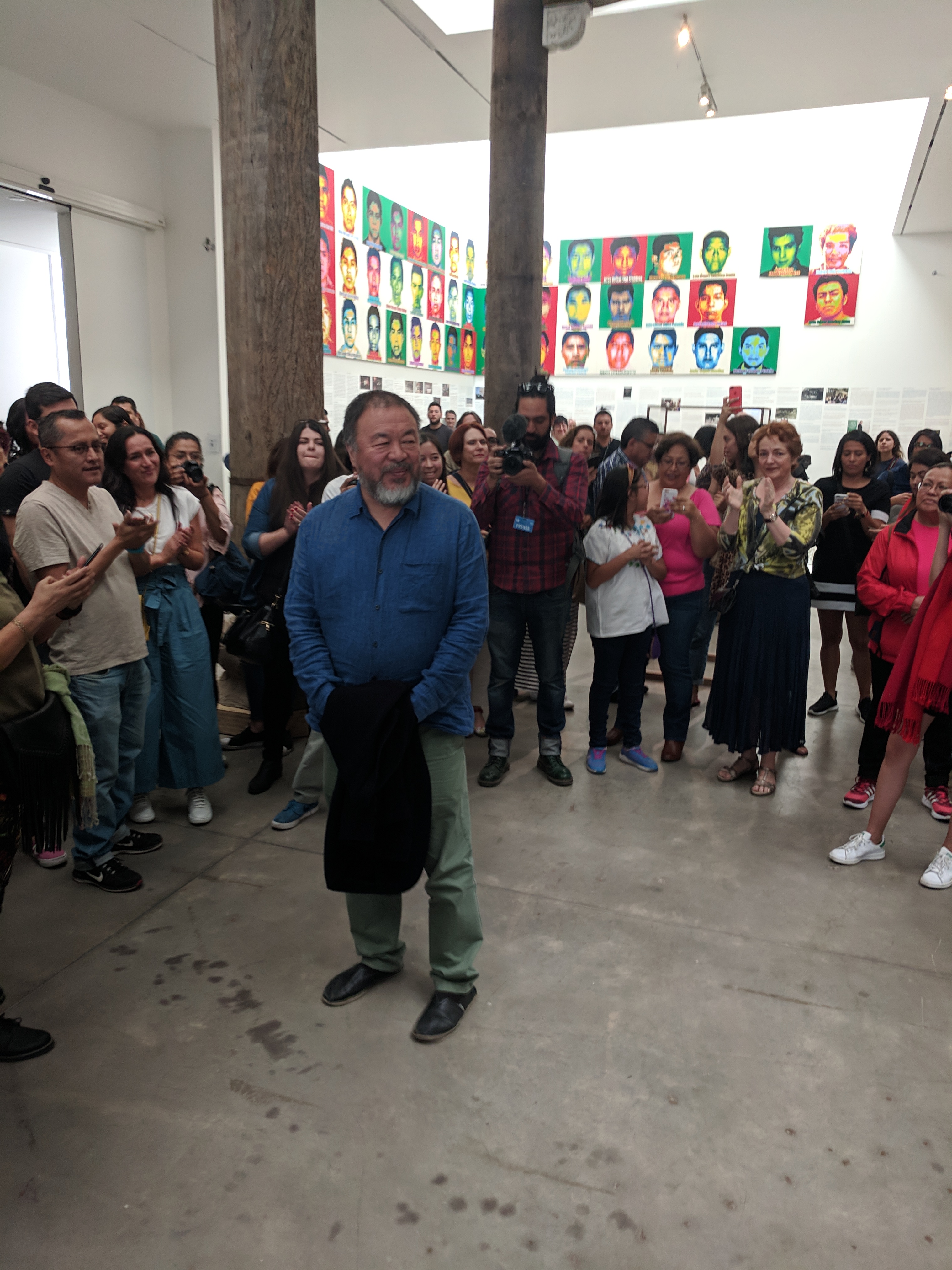
The last time I was here I met AI Wei Wei at the opening of his exhibition Restablecer Memorias in 2019. This project brought together works by the Chinese artist that explore constructions of social memory, cultural destruction, and collective responsibility across different historical and geographic contexts.
In this exhibition, Ai Weiwei addressed the construction of social memory through works that explore cultural destruction, trauma, and collective remembrance across very different contexts. The title Restablecer Memorias underscores the artist’s interest in how societies remember and forget, and in the obligations that memory imposes on the present and future.
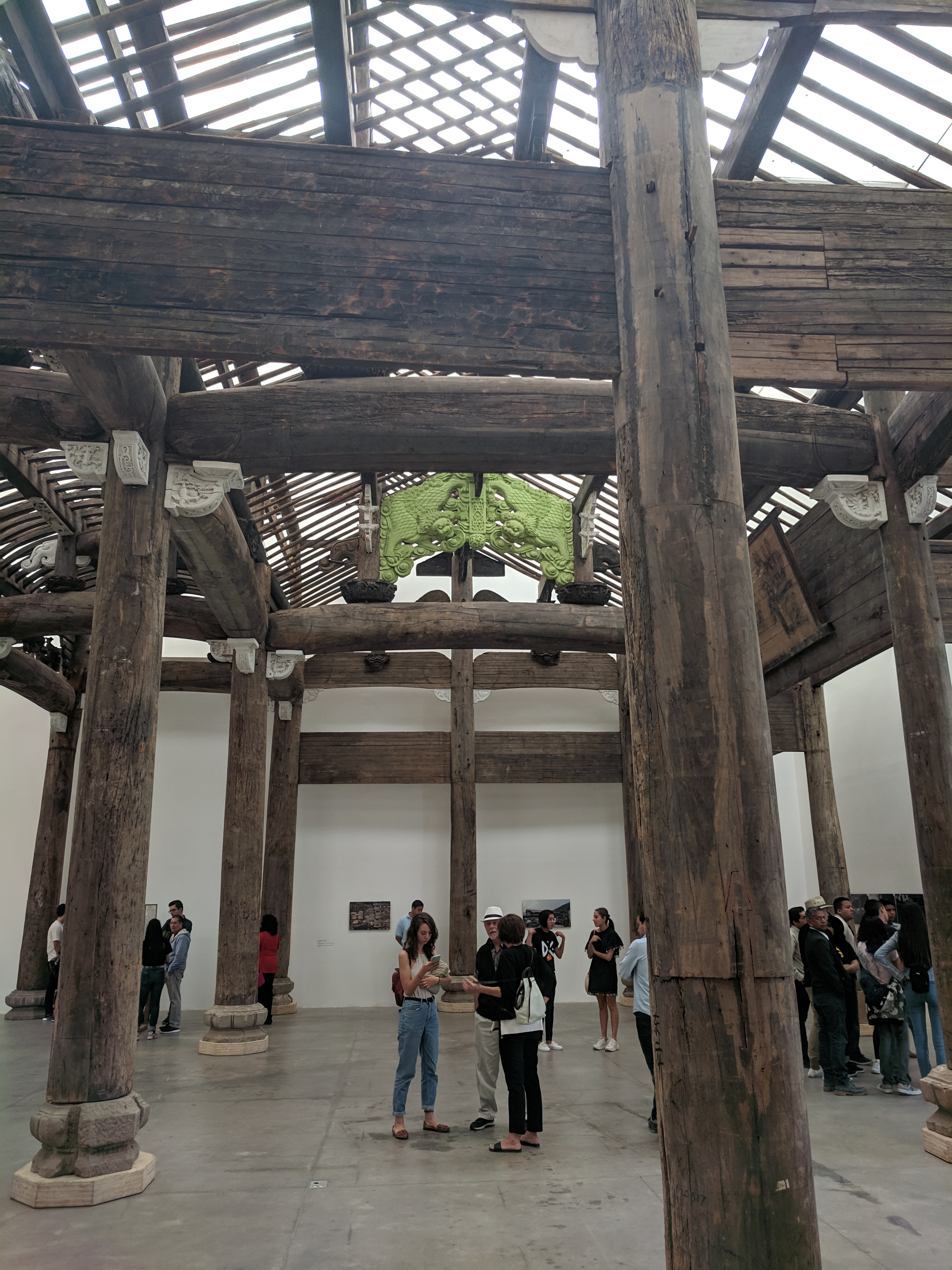
One of the central works in the exhibition was Salón Ancestral de la Familia Wang (2015), a four-hundred-year-old wooden temple from the Ming dynasty. This structure serves as a powerful readymade that encapsulates multiple layers of historical loss: the destruction of cultural heritage during periods of political upheaval in China, the erosion of traditional rural life, and the commodification of cultural artifacts. By presenting this ancestral hall within the museum space, Ai Weiwei makes visible the consequences of historical violence and the fragile status of cultural memory itself.
In conjunction with this historical piece, the exhibition incorporated more recent work that engages directly with Mexican social realities. After visiting Mexico in 2016, Ai Weiwei initiated a project focused on the disappearance of the 43 students from the Escuela Normal Rural de Ayotzinapa in 2014. This component of the exhibition included a documentary film and a series of large portraits made with Lego pieces. These portraits functioned both as individual commemorations of the missing students and as a broader meditation on the personal and social consequences of enforced disappearance. The use of Lego—an everyday material assembled through collective effort—emphasized the participatory dimensions of memory and the necessity of assembling narratives that must resist erasure.
Una modernidad hecha a mano (A Modernity Made by Hand)
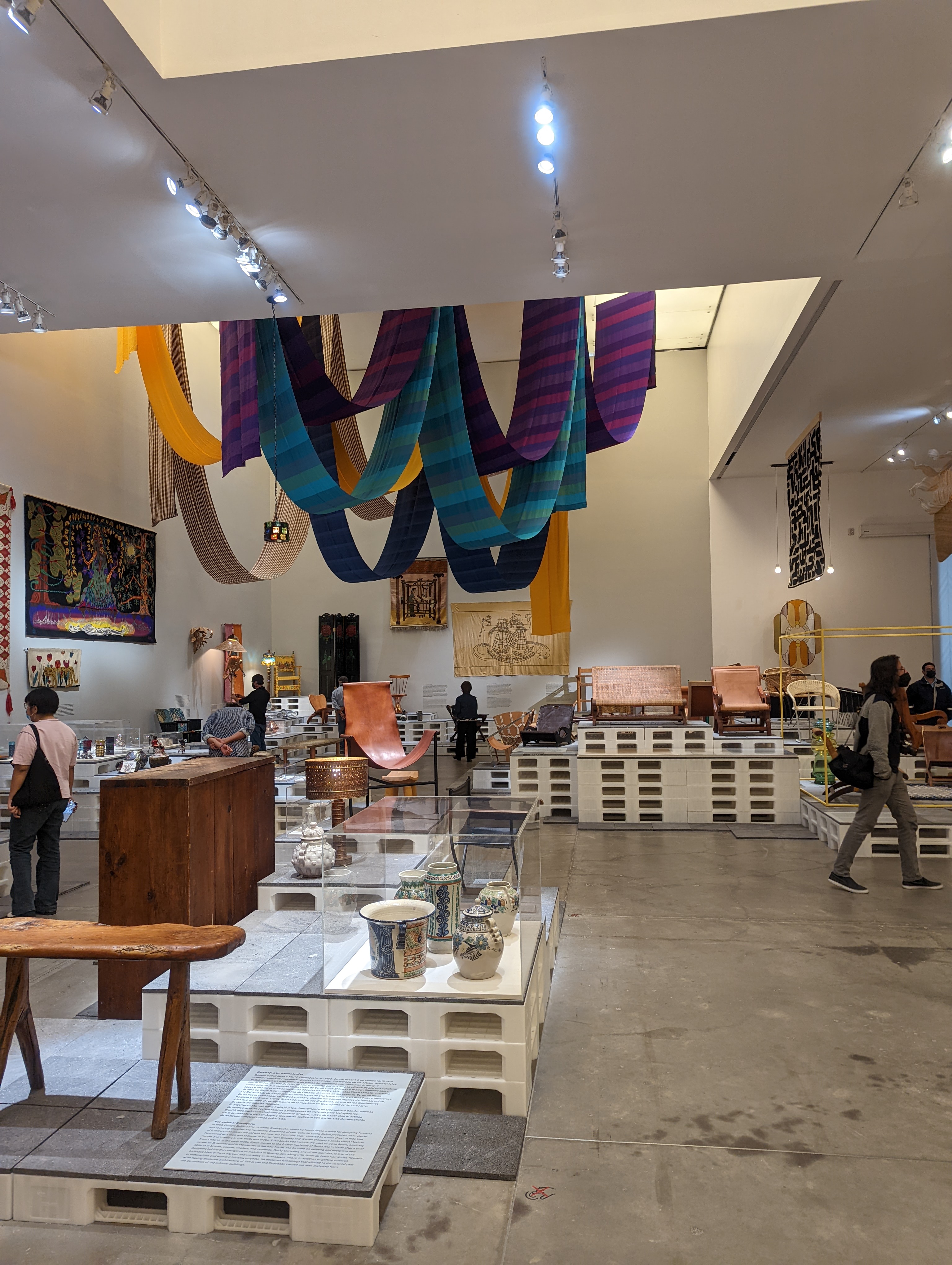
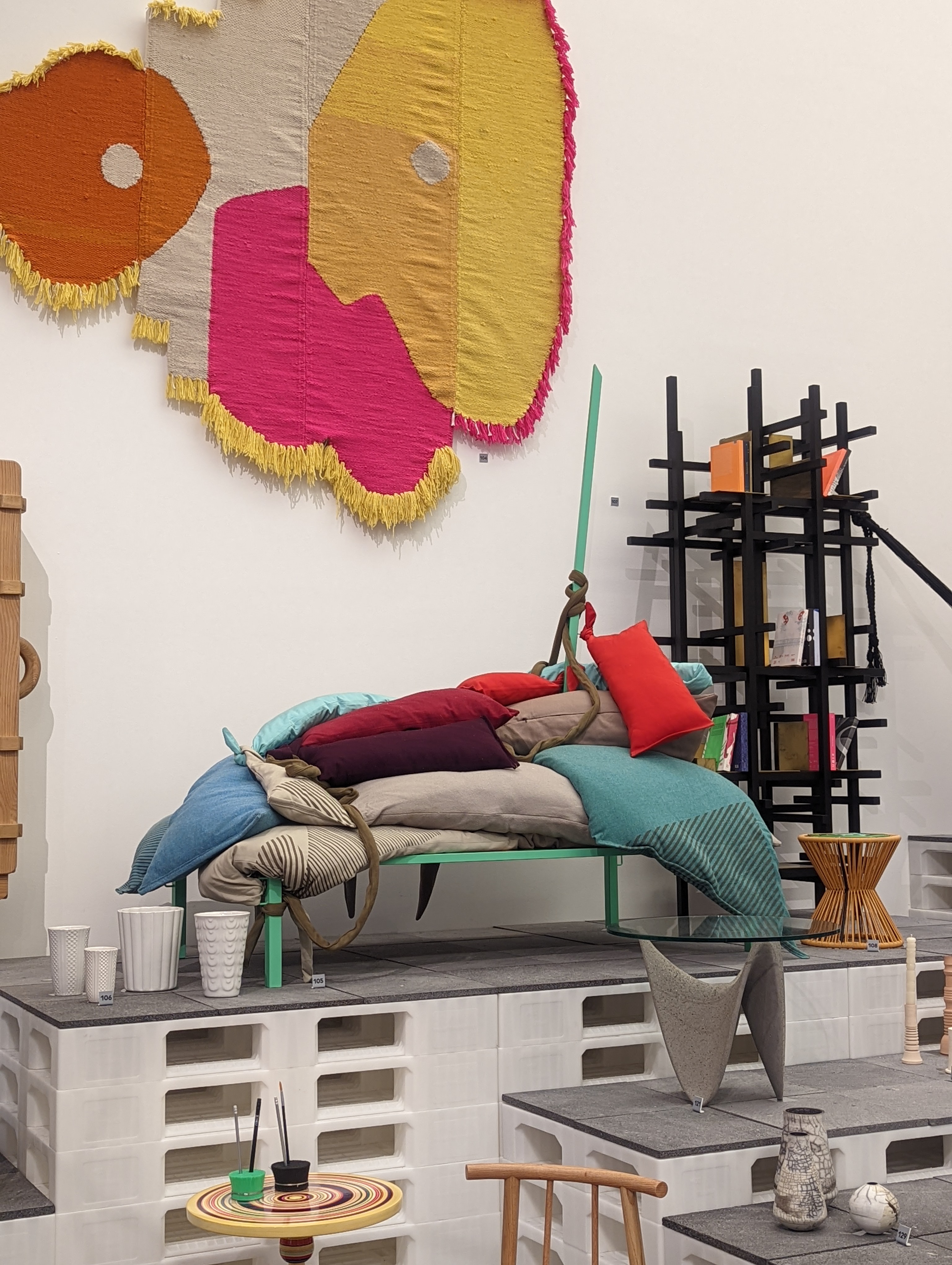
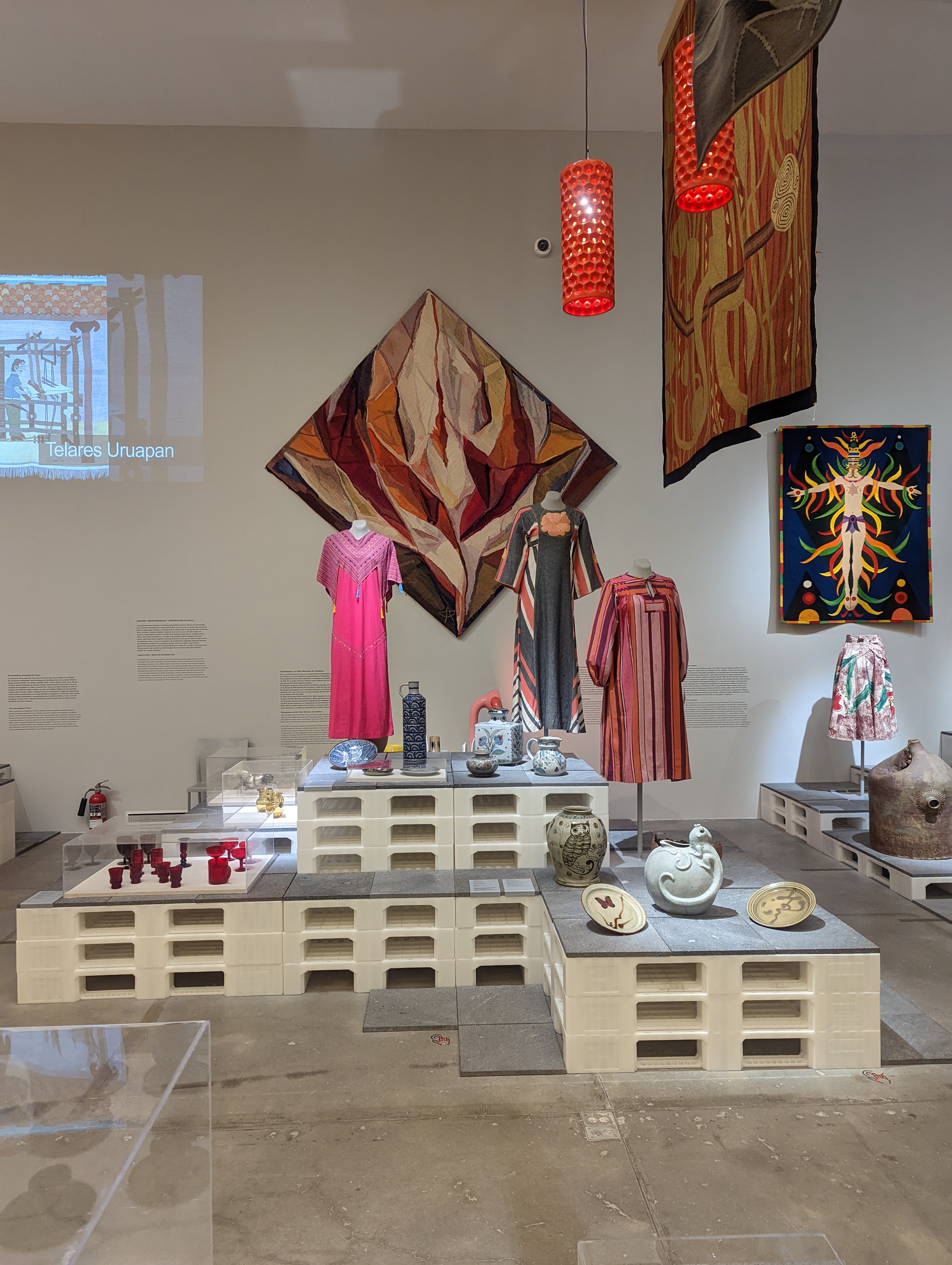
There was also the exhibition Una Modernidad Hecha a Mano (A Modernity Made by Hand) from 2022, curated by Ana Elena Mallet, which offered a comprehensive exploration of the development of Mexican design from the early 1950s through 2022, with particular emphasis on the intersection of handcrafted methods and modernist design principles.
The premise of Una Modernidad Hecha a Mano was to revisit the very notion of artesanal design in Mexico: design that arises from local conditions and artisanal practices, yet aspires to respond to the needs of modern life. The exhibition traced a genealogy of designers, artisans, and makers who sought to articulate a distinctive material culture rooted in both social purpose and aesthetic innovation. The project took as its point of departure the work of Clara Porset, the Cuban-Mexican designer who in 1952 organized El Arte en la Vida Diaria (The Art in Daily Life), the first major design exhibition in Mexico. Porset’s vision was premised on the idea that design, craft, and industrial production should not remain separate spheres but could be integrated to produce functional objects that were accessible and meaningful in everyday life.
Marta Palau
One of the major exhibitions I visited on this research trip is dedicated to the oeuvre of Marta Palau entitled Mis Caminos son Terrestres.”(My Paths belong to the Earth). Palau, a Spanish-born artist who developed much of her career in Mexico, is known for her engagement with themes of migration, exile, territory, and the body. Her work frequently incorporates organic materials, such as fibers, earth, and wood, creating sculptural and installation-based environments that evoke ritual, landscape, and memory. The exhibition foregrounds the relationship between corporeality and geography, suggesting that identity is not abstract but grounded in lived, embodied experience. In revisiting Palau’s work, the museum contributes to the reassessment of artists whose practices intersect feminist, decolonial, and ecological perspectives. The exhibition also highlights the transnational dimensions of Mexican contemporary art, acknowledging the flows of influence and displacement that shape artistic production.
Palau frequently employed natural fibers such as jute, sisal, henequen, and other plant-based materials, often working at a monumental scale. Through binding, knotting, twisting, and weaving, she constructed large sculptural forms that hover between textile, architecture, and ritual object. These works resist easy categorization: they are neither traditional tapestries nor conventional sculptures. Instead, they occupy an interstitial space that challenges hierarchies between so-called fine art and craft. In doing so, Palau reclaims textile labor, historically associated with domesticity, femininity, and Indigenous traditions, as a site of aesthetic and intellectual rigour.
Weaving in Palau’s work functions both materially and metaphorically. On a material level, the interlacing of fibers produces dense, tactile surfaces that evoke skin, hair, shelter, and earth. The viewer encounters these works not as flat images but as corporeal presences. Many of her fibre installations suggest organic forms: cocoons, nests, or protective enclosures, thus reinforcing the recurring themes of womb, refuge, and origin. The act of weaving itself becomes an embodied gesture, one that records the repetitive, accumulative labor of the artist’s hands. This physical investment of time and touch imbues the works with a palpable sense of process.
On a metaphorical level, weaving becomes a powerful model for thinking about identity and territory. Threads cross and bind, forming structures that depend on interconnection rather than singularity. In this sense, Palau’s fiber works articulate identity as relational and constructed through layered histories. Given her biography: born in Spain, exiled during the Civil War, and later based in Mexico, questions of displacement, diaspora, and belonging are central to her practice. The woven structure can be understood as an image of diasporic identity: strands from different origins intertwined to create new forms. The earth-toned fibres she favoured further reinforce the connection between body and land, suggesting that identity is grounded, terrestrial, and materially embedded.
Palau’s use of fibre also engages feminist discourse. During the 1970s and 1980s, many women artists across the globe turned to textile media as a means of challenging the male-dominated canon of painting and sculpture. Palau’s work resonates with these broader movements, yet it remains deeply rooted in the cultural and material histories of Mexico and Latin America. By foregrounding fibre and weaving, she not only destabilizes artistic hierarchies but also aligns herself with Indigenous and popular traditions that have long used textile practices as carriers of memory, cosmology, and communal knowledge.
“Los grupos y otras revueltas artísticas.”
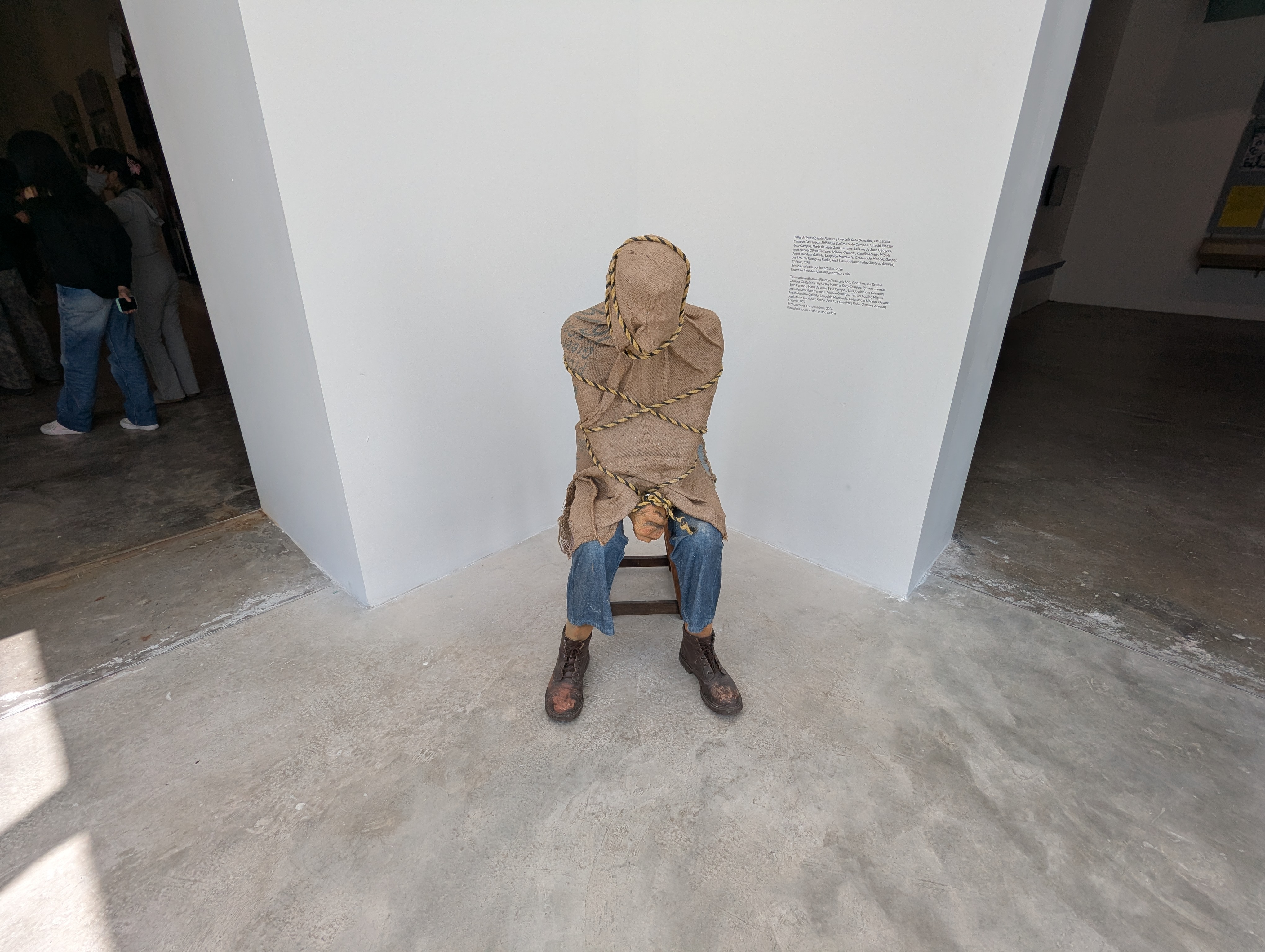
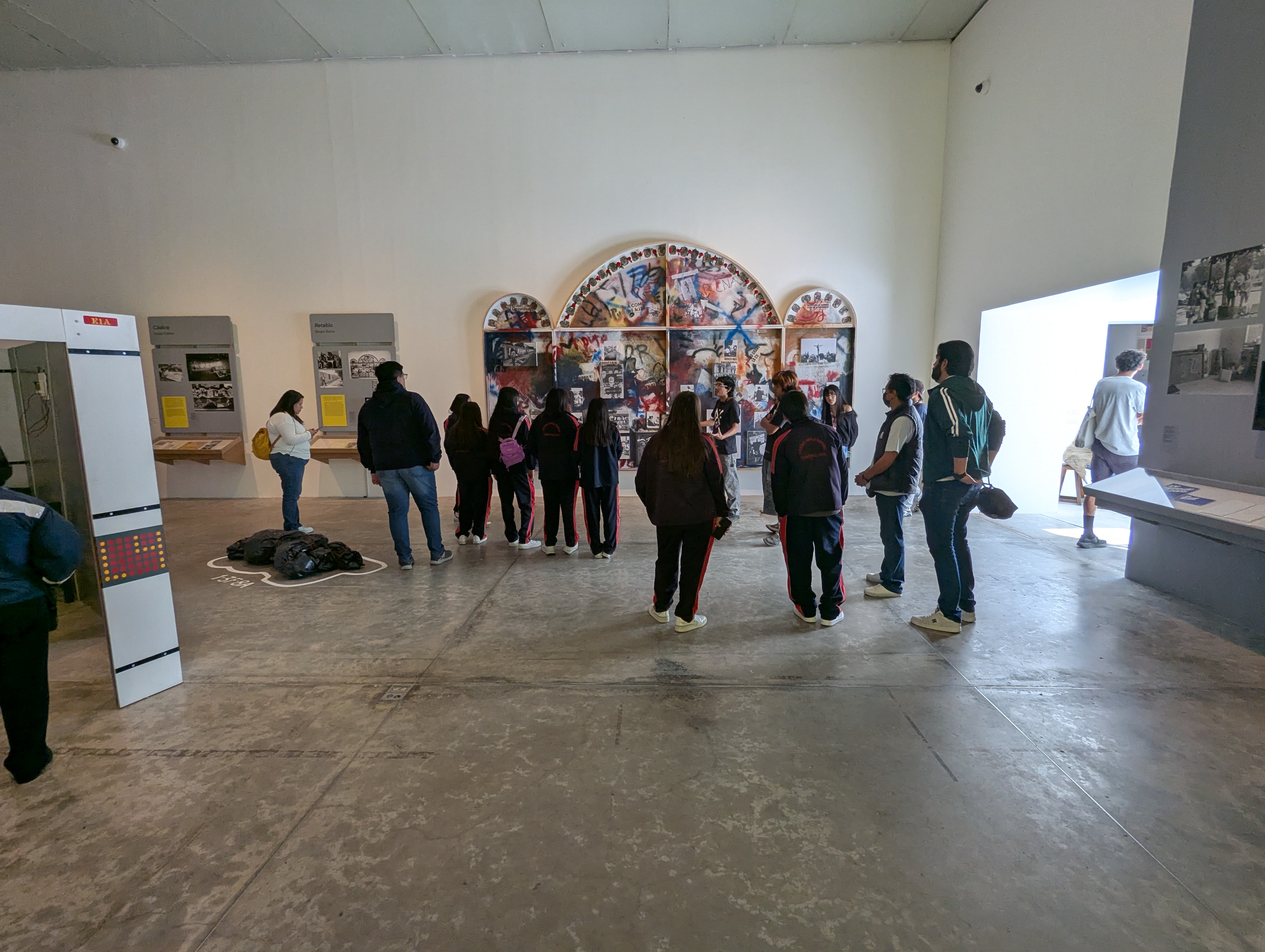
Another exhibition is entitled “Los Grupos y Otras Revueltas Artísticas.” This large-scale group exhibition occupies multiple galleries and examines the role of artist collectives and collaborative practices in reshaping the field of contemporary art. The title suggests a dual emphasis: on “groups” as formalized collectives and on “other artistic revolts,” meaning broader moments of rupture and dissent within artistic production. In the Mexican context, artist groups have played a significant role in challenging institutional structures, particularly from the 1960s onward, when collectives emerged in response to political repression, student movements, and dissatisfaction with dominant aesthetic paradigms. By revisiting these histories, the exhibition invites viewers to consider how collective action has functioned as both an artistic strategy and a political stance. It also encourages reflection on how collaboration can disrupt traditional notions of authorship and artistic genius.
Delcy Morelos
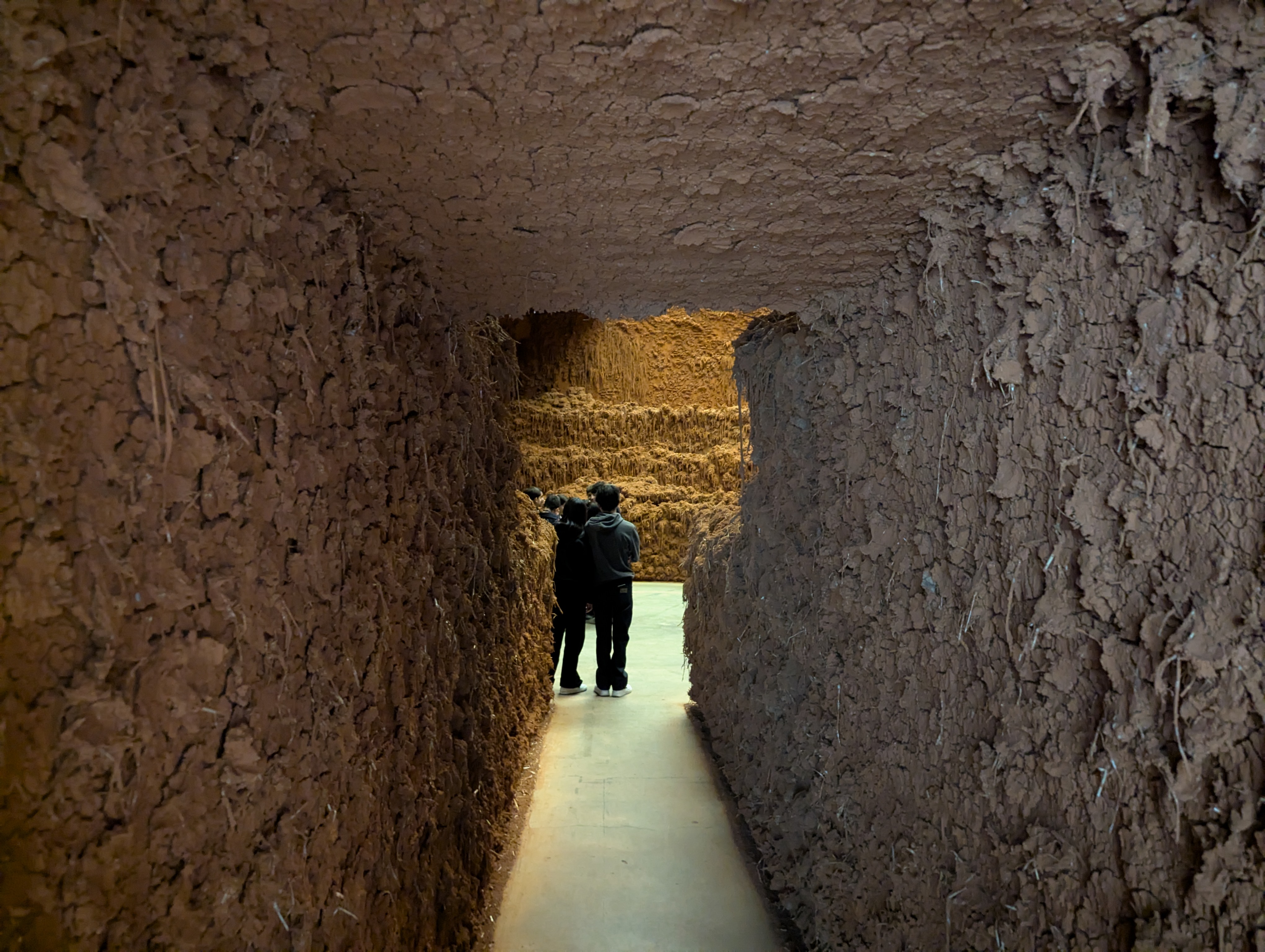
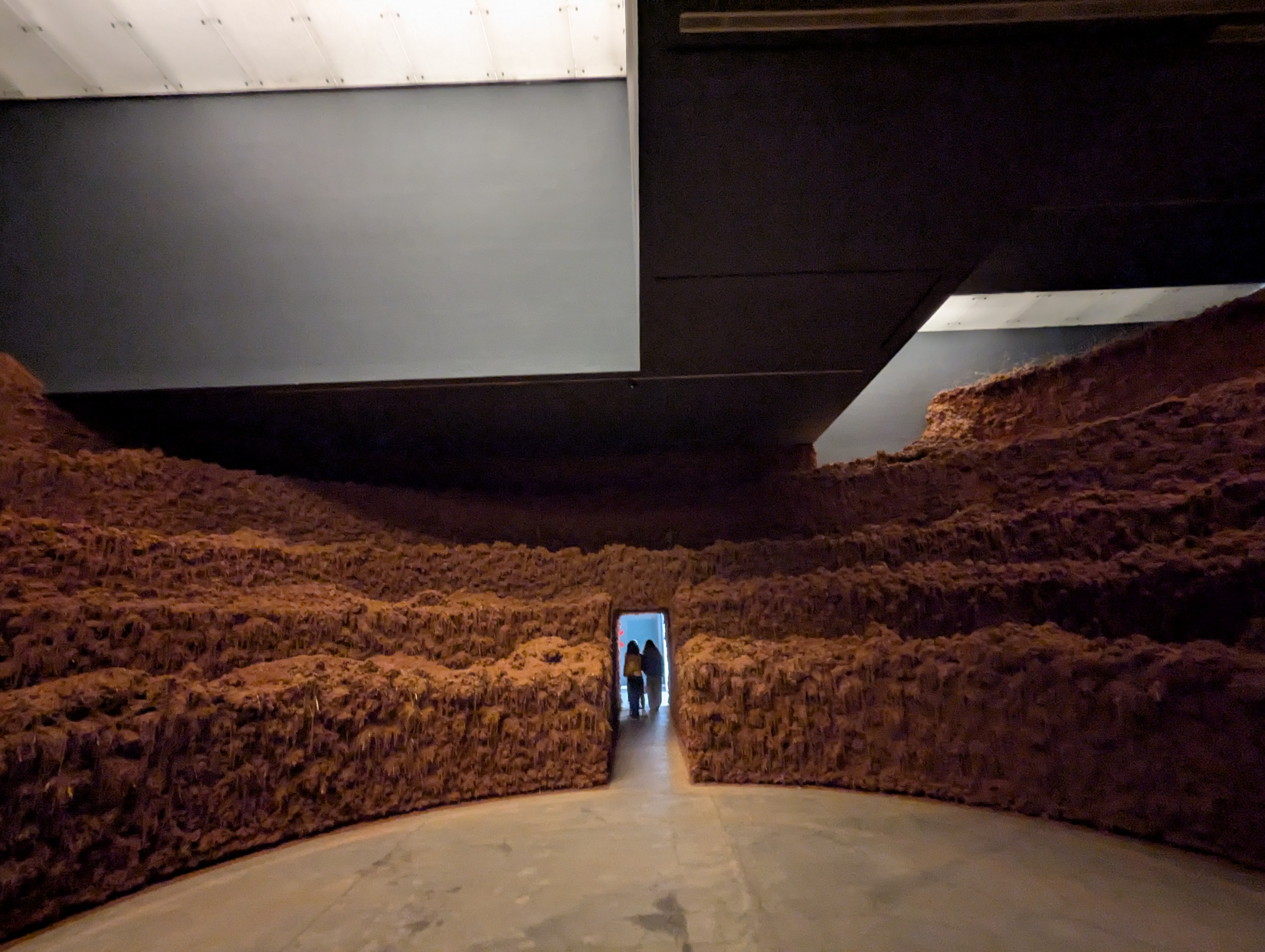
In a related but distinct vein to the explorations by Palau , the exhibition El Espacio Vientre by Delcy Morelos presents a site-specific installation that transforms the entire gallery into an immersive environment. Morelos, a Colombian artist, frequently works with natural materials such as soil and clay, creating enveloping spaces that evoke notions of origin, womb, and earth. The title, which translates roughly as “The Womb Space,” signals an interest in interiority and genesis. Visitors do not merely observe the work but enter into it physically and sensorially. Such installations complicate the traditional separation between artwork and spectator, instead proposing an experience that is bodily and affective. Within MUAC’s program, this exhibition exemplifies a broader interest in Latin American artists who rethink the relationship between land, memory, and collective history.
According to the exhibiiton didactics (quote:)
“The project presented at MUAC inaugurates a new series of commissioned works for the museum’s Gallery 9. Based on visits the artist made to Mexico City, Oaxaca, and Chiapas, she conceived an installation that occupies the entirety of Gallery 9. Morelos has been exploring various relationships with the earth, food, magic, and mythologies that have shaped her understanding of social relationships and our connection to nature. For her, the earth is a feminine entity, especially in relation to fertility and sustenance; what human beings have historically done is develop technologies that allow them to establish relationships with this entity. These food-related techniques depend not only on forms of production and consumption but are also based on possible relationships between the divine, the magical, the natural, and the social. Morelos understands the earth as a divinity that encompasses the cycles of life and death, but also as one that has always been at the center of cycles of exploitation, war, and violence. This is why his works seek to redefine our relationship with the earth, to reclaim its relevance and inspire awe at its vitality (End quote:)
Néstor Jiménez.
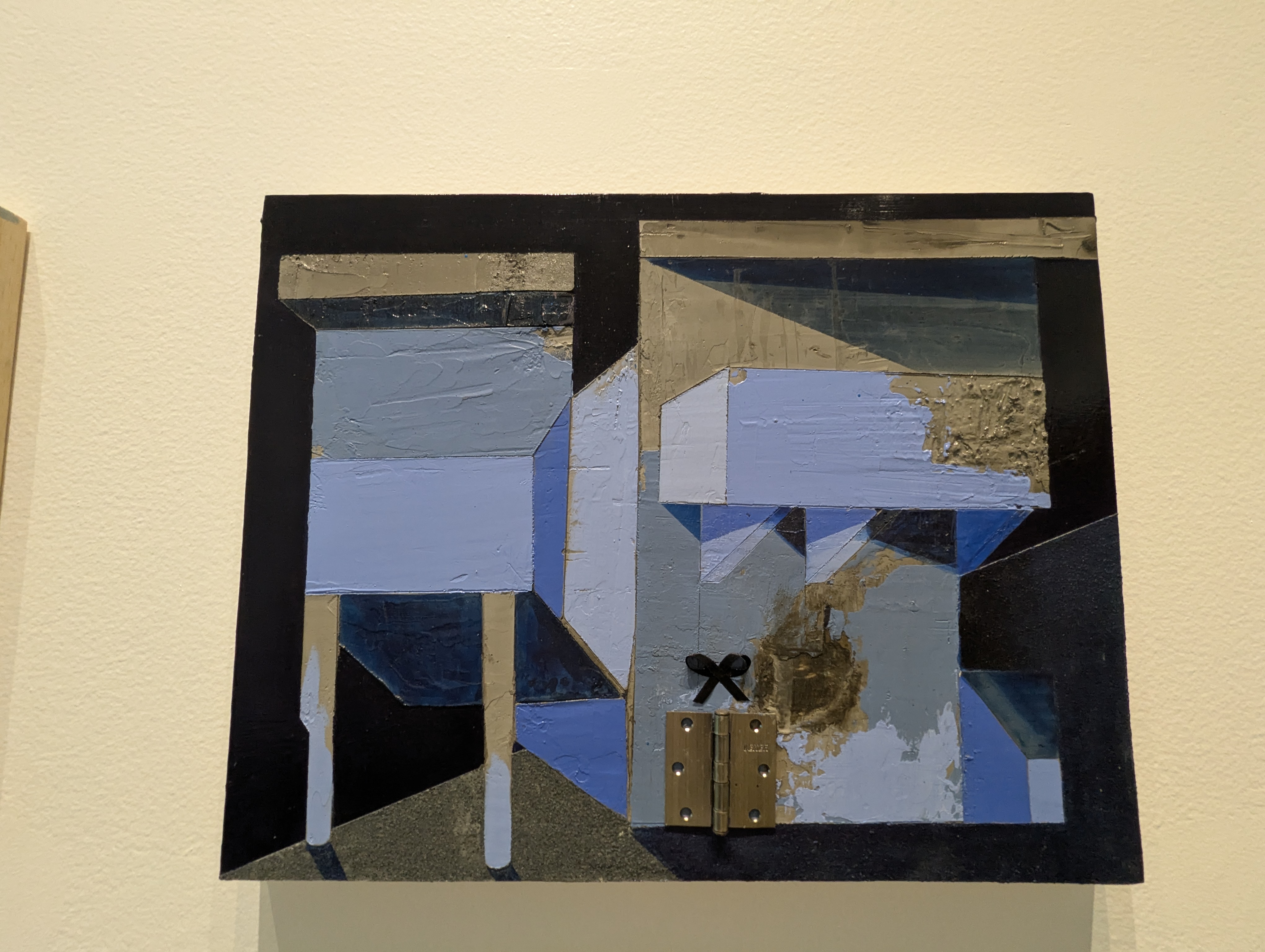
A smaller exhibition focuses on the work of Néstor Jiménez. whose work explores perception, materiality, and spatial intervention. Jiménez’s work often transforms everyday materials or architectural elements into perceptual experiences that unsettle viewers’ expectations. By manipulating scale, repetition, or subtle shifts in form, he prompts a reconsideration of how space is constructed and experienced.
He also uses subtle collage techniques with the addition of little hinges and bows.
In the context of MUAC’s architecture, such work acquires particular resonance, as it interacts with the building’s clean lines and expansive volumes. The exhibition underscores MUAC’s role in supporting sustained, research-based presentations of individual artists, allowing for a deeper understanding of their conceptual and formal concerns.
CONCLUSION
Taken together, these exhibitions reflect several recurring concerns within contemporary art: the politics of collective action, the reconfiguration of space, the entanglement of body and territory, and the critical interrogation of narrative; aslo the sophisticated use of craft techniques.
They also demonstrate MUAC’s dual commitment to historical reflection and present-day experimentation. By juxtaposing revisitations of earlier movements with newly commissioned or recent works, the museum situates contemporary practice within a continuum rather than as an isolated phenomenon.
In conclusion, all of the exhibitions I have seen at the MUAC have been thought-provoking, visually compelling and often quite gorgeous. The Museo Universitario Arte Contemporáneo occupies an important position within Mexico’s cultural landscape. As part of UNAM, it bridges academic research and public engagement. As an architectural landmark, it provides a space uniquely suited to contemporary artistic practices. And as a curatorial platform, it fosters critical dialogue around art’s capacity to respond to social, political, and ecological realities. There is a highly sophisticated understanding and expression of visual culture in Mexico and this has been beautifully articulated by the curatorial offerings at MUAC.

